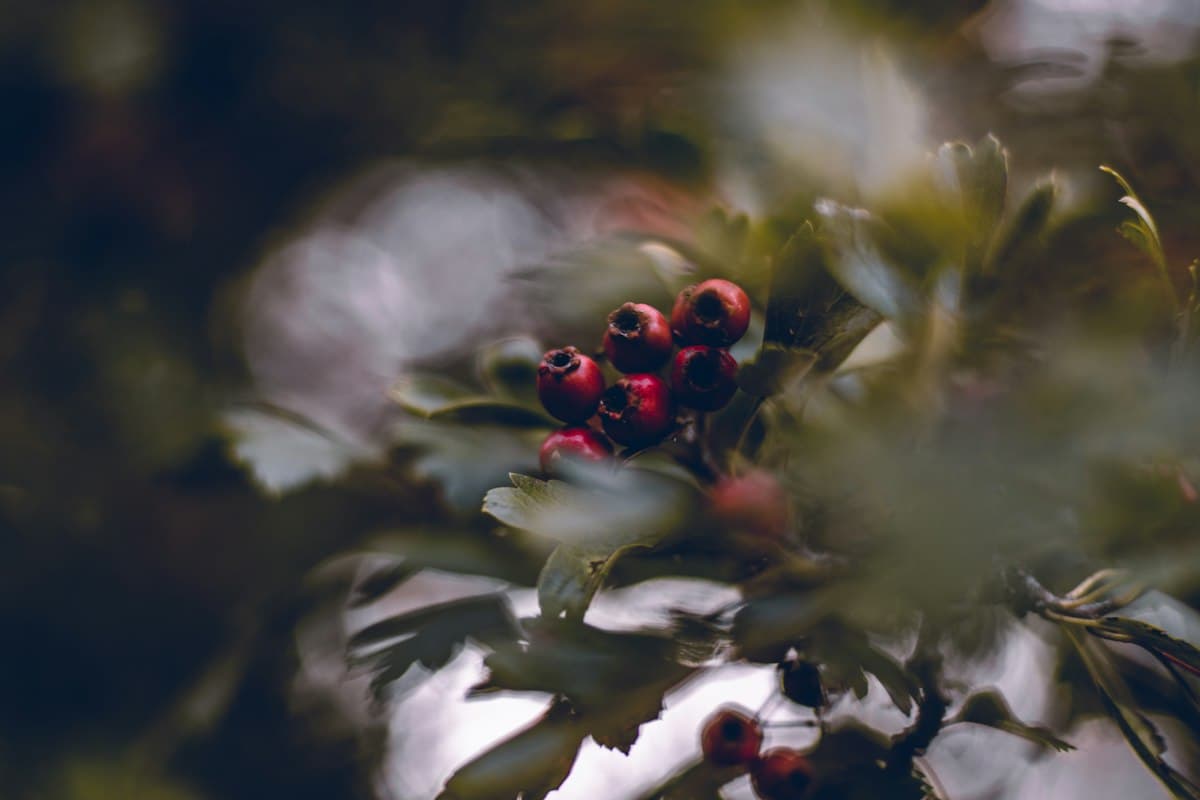
Foraging on Hikes: Wild Berries and Edible Plants Safely
⚠️ Important warning: Foraging for wild plants carries serious risks. Some toxic plants look almost identical to edible species. When in doubt, never consume any plant you cannot identify with absolute certainty. Consult a naturalist guide or an accredited pharmacist before eating anything foraged. This article is informational only — it does not replace proper training.
There's something deeply satisfying about pausing on a trail to pick ripe blueberries or recognize the wild thyme scenting the scrubland. Foraging on hikes is a millennia-old practice — a way to slow down and reconnect with the natural environment you're moving through.
But it's also a practice that kills people every year — people who confused an edible berry with its toxic double. In France alone, wild plant and mushroom poisonings cause several hundred hospitalizations annually. Caution isn't optional — it's the sine qua non of safe foraging.
Foraging Rules in France
Before discussing identification, you need to understand the legal framework and fundamental best practices.
What the Law Says
In France, foraging wild plants for personal use is permitted but regulated:
- Maximum quantity: the customary rule is 5 litres per person per day for berries and aromatic herbs. This limit varies by municipality and species.
- Private property: foraging is prohibited without the landowner's permission on private land.
- Protected species: certain plants are strictly protected at national or regional level and may not be picked, uprooted or destroyed.
- Protected areas: in national parks, foraging is regulated or prohibited. Always check before entering a protected zone.
- Roadsides and polluted areas: absolutely avoid road verges, treated agricultural land and areas near industrial sites.
The Golden Rule: When in Doubt, Don't
If you are not 100% certain of a plant's identification, you do not eat it. Not you, not your children, not your pets. This rule has no exceptions.
A good field identification guide for edible plants with colour photographs is an essential investment before you start. Photo recognition apps can help, but they make mistakes — they can never replace a reliable field guide.
Five Berries That Are Relatively Easy to Identify
Among the dozens of available species, a few berries are distinctive enough to be recognized by an attentive beginner. Here are five — with their key features and the look-alikes to watch for.
1. Wild Blueberry (Vaccinium myrtillus)
The mountain blueberry is probably the safest wild berry for a beginner to forage. It grows in low clumps (20–60 cm) on acidic slopes between 800 and 2,500 m altitude, often alongside heathland.
Key features: small blue-violet berry, purple flesh that stains fingers and tongue, sweet-tart flavour. Leaves are oval, toothed and deciduous (they drop in winter, unlike box).
Confusion risk: blueberries are hard to seriously confuse. Deadly nightshade (Atropa belladonna) has a larger, shiny black berry, large leaves and an unpleasant smell. The two species generally don't grow in the same locations.
2. Wild Strawberry (Fragaria vesca)
Recognizable by its tiny red triangular fruits and exceptional fragrance, the wild strawberry grows at forest edges and in light woodland.
Key features: low plant with trilobed toothed leaves, white five-petalled flowers, red fruits with seeds on the surface. The fragrance is characteristic and unmistakable.
Confusion risk: mock strawberry (Duchesnea indica) resembles wild strawberry but its fruits are tasteless and its flowers are yellow. It's not toxic, simply uninteresting to eat.
3. Blackberry (Rubus fruticosus)
The wild blackberry, fruit of the bramble, is virtually impossible to confuse. The thorny stems, compound leaves and aggregate fruit of drupelets are too distinctive.
Key features: thorny shrub, leaves composed of 3–5 leaflets, fruits green then red then black at maturity. Blackberries ripen August–September depending on altitude.
Confusion risk: near zero for ripe blackberries. Unripe green or red fruits are mildly irritating — wait for full ripeness (fully black fruit that detaches easily).
4. Lingonberry (Vaccinium vitis-idaea)
Cousin to the blueberry, the lingonberry grows in the same mountain habitats. Its bright red berries are more acidic than blueberries.
Key features: tough, persistent leaves, shiny on top and black-dotted underneath — the infallible distinguishing criterion. Bright red berries in clusters.
Confusion risk: with strawberry tree (Arbutus unedo) in Mediterranean zones, whose red fruits are also edible but have a mealy texture.
5. Elderberry (Sambucus nigra) — with precautions
The black berries of elder can be eaten cooked (jam, syrup, juice). They must never be eaten raw — they contain sambunigrine, a cyanogenic alkaloid that causes nausea and vomiting.
Key features: large shrub with strongly-scented compound leaves, flat white flower clusters in May–June, purple-black berries in drooping clusters.
Confusion risk: with dwarf elder (Sambucus ebulus), a herbaceous perennial with toxic berries. Dwarf elder is smaller, doesn't form a woody shrub, and its berry clusters point upward.
Look-alikes That Send People to Hospital
Three confusions account for the vast majority of serious wild plant poisonings in France. Learn these by heart before heading out.
Wild Garlic / Lily of the Valley or Autumn Crocus
Wild garlic (Allium ursinum) is a spring plant with broad leaves and a powerful garlic scent. Its leaves are delicious in pesto.
But its young leaves resemble those of lily of the valley (Convallaria majalis) and autumn crocus (Colchicum autumnale), both deadly. Deaths occur every year from this confusion.
The infallible test: crush a leaf between your fingers. Wild garlic gives off a powerful, immediate garlic smell. Lily of the valley and autumn crocus have no garlic scent. No garlic smell → do not consume.
Wild Chervil / Hemlock
Wild chervil (Anthriscus sylvestris) and several other edible umbellifers (wild parsley, angelica) belong to the same family as poison hemlock (Conium maculatum) and water hemlock (Cicuta virosa), two of Europe's most toxic plants.
Identifying umbellifers requires serious expertise. Absolute rule for beginners: don't consume any wild umbellifer without specific training. The resemblance between edible and deadly species can deceive even experienced practitioners.
Unknown Red and Black Berries
In woodland, confusion between plants with red or black berries is common. Holly (Ilex aquifolium) with its bright red berries is toxic. Yew (Taxus baccata) has red berries but its seed is extremely toxic. Deadly nightshade, bryony, daphne — too many red or black berries are dangerous to take risks.
A pocket magnifying glass lets you examine fine leaf details — veins, hairs, glands — that are often decisive for reliable identification.
Aromatic Garrigue Plants: The Safest Options
The Mediterranean garrigue is an aromatic larder accessible to beginners. These plants are hard to confuse thanks to their characteristic scents.
Wild Thyme (Thymus vulgaris)
A small woody shrub with narrow grey leaves, wild thyme is instantly recognizable by its intense fragrance. It grows on sun-exposed limestone slopes throughout the Mediterranean. Pick the flowering terminal sprigs from May to July for drying.
True Lavender (Lavandula angustifolia)
Above 600 m in Provence, true lavender replaces the cultivated lavandin. Its blue-violet flower spikes and delicate fragrance are unmistakable. Dried flowers scent linen or can be used in cooking.
Winter Savory (Satureja montana)
Less well known than thyme, mountain savory grows in the same habitats. Its slightly wider leaves have a peppery-menthol flavour. Excellent with pulses and goat's cheese.
Rosemary (Salvia rosmarinus)
A large shrub with persistent needle-like leaves and blue flowers, rosemary is ubiquitous in maquis and low garrigue. Its identification is unambiguous.
For hikes in Provence, our article on wild flowers of Provence complements this section on Mediterranean aromatics.
What You Never Pick Without Confirmed Expertise
Some categories of wild plants must remain off-limits for non-experts:
Mushrooms: mushroom foraging is an art that takes years of practice. A mistake can be fatal (death cap, spring amanita). Only forage if you can have your harvest validated by a competent pharmacist or mycologist.
Umbellifers: the entire family, as explained above. Wild parsley, chervil, wild carrot — without training, walk on by.
Unknown red berries: holly, deadly nightshade, bryony, daphne — too many red berries are toxic to take risks.
Unknown black berries: apart from blueberries, blackberries and elderberry (cooked), exercise caution.
Water plants: water hemlock grows at the edges of waterways and can be confused with various edible plants.
Quantities and Respect for the Environment
Responsible foraging takes no more than you need, always leaving enough fruit for natural regeneration and wildlife.
Practical Rules for the Respectful Forager
- Take a maximum of 1/3 of what's available in any one area
- Leave roots in place unless they're part of what you're looking for and the species is abundant
- Avoid trampling the surrounding environment unnecessarily
- Use a wicker basket rather than a plastic bag: fruits bruised in a closed bag ferment quickly, and a basket lets seeds escape on the way
- Avoid foraging after rain: wet plants mould quickly once picked
A wicker foraging basket is the experienced forager's tool of choice. It is far preferable to plastic bags for all harvests of berries, leaves and aromatic herbs.
Biodiversity as Your Compass
Foraging is not an absolute right — it's a privilege exercised with discretion. Some species once common have declined significantly because of intensive picking. Respecting the environment is the condition for keeping the practice sustainable.
Our article on eco-responsible hiking covers more broadly the gestures that allow you to enjoy nature without degrading it.
Getting Proper Training
Foraging is not a skill you acquire in an afternoon. Here are the best ways to develop it:
- Guided outings led by local naturalists: tourist offices, hiking associations and regional nature parks regularly organize supervised foraging trips.
- Reference books: François Couplan's Guide des plantes sauvages comestibles is the bible of the genre in France. A well-illustrated field guide is worth every penny compared to the risk of poisoning.
- Pharmacists: in France, pharmacists are qualified to identify foraged plants and mushrooms. Don't hesitate to bring your harvest in before consuming it.
- Apps, with caution: PlantNet, iNaturalist can help with identification, but do not constitute sufficient proof to consume an unknown plant.
Equip yourself with a lightweight airtight container to transport your harvest without crushing it, especially for delicate small berries like blueberries or wild strawberries.
On OpenRando, you can browse our hikes in Provence and the South of France to find routes that cross areas rich in aromatic plants and wild berries depending on the season.
Foraging on hikes can be a rich, sensory, gastronomic experience. But it deserves the same seriousness as navigating unfamiliar terrain or reading mountain weather. Learn gradually, start with the species that are easiest to identify unambiguously, and build your knowledge in the field — ideally alongside experienced people.
Nature is generous with those who know and respect it.
As an Amazon Associate, we earn from qualifying purchases. Links marked with an external icon are affiliate links.
Related reading
Reading Mountain Weather: Clouds, Wind, and Storms Without an App
How to anticipate mountain weather without a forecast app: identify storm clouds, read wind shifts, and estimate time before lightning strikes.
Hiking After Rain: Muddy Trails and Flooded Streams
Hiking after heavy rain: how to assess trail conditions, safely cross a flooded stream, and know when to turn back.
Solo Hiking: Safety Tips and Motivation Guide
Solo hiking is one of the most rewarding experiences on the trail. Discover our essential safety advice, gear recommendations, and mental preparation tips to hike alone with confidence.