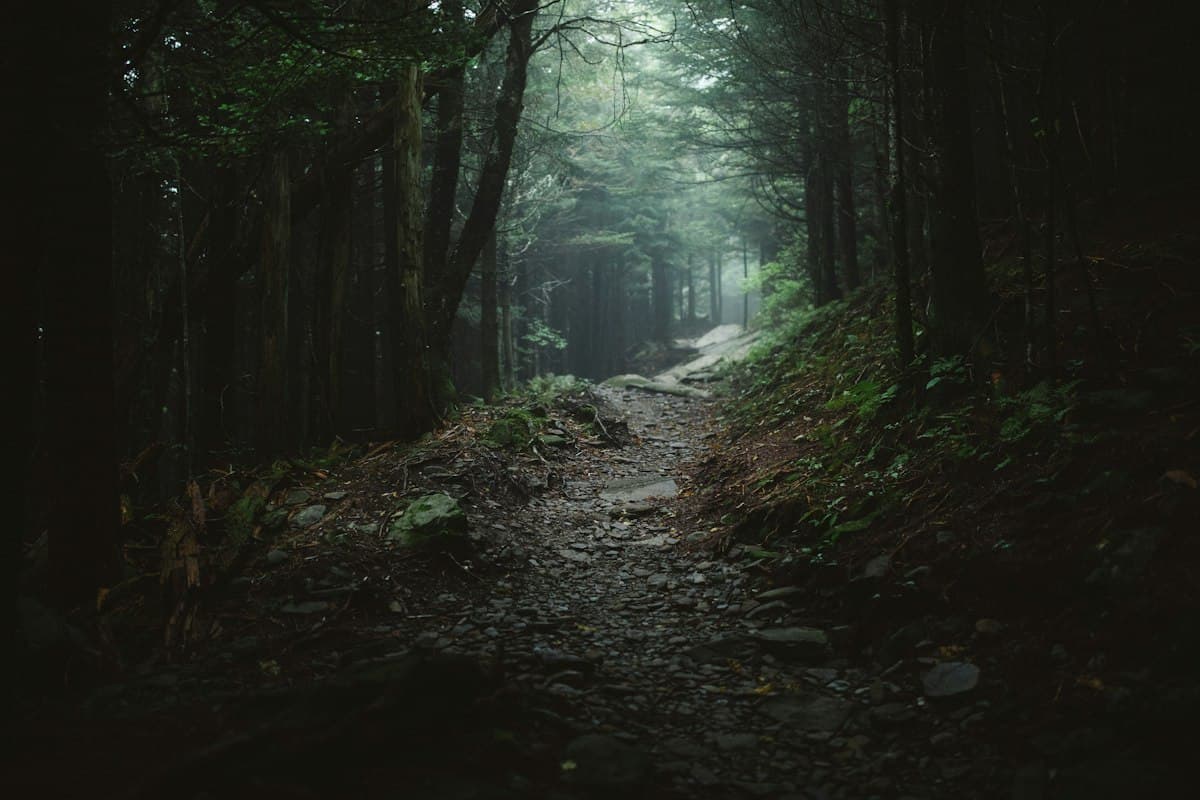
Daylight Saving Time: How to Hike Safely with Shorter Days
On the night of October 25–26, 2026, clocks fall back one hour. For most people, it means an extra hour of sleep. For hikers, it means one less hour of daylight in the late afternoon — and that one hour can completely change the picture out on the trails.
The switch to winter time is one of the most underestimated moments of the year for hikers. Not because it is inherently dangerous, but because it brutally disrupts well-established habits. A hike that used to finish comfortably before dark suddenly finds itself racing against twilight.
This guide explains what the time change actually takes away, how to calculate your safety buffer, and which simple adjustments let you keep hiking confidently through autumn and into winter.
What the Time Change Actually Takes Away
The sun now sets one hour earlier. Across France, that places sunset around 5:30 p.m. at the end of October, compared to 6:30 p.m. the week before. By December, it will be dark before 5 p.m.
This abrupt shift doesn't just affect the clock. It directly shrinks your usable hiking window:
- Walks started at 2 p.m. after lunch now have only 3.5 hours of daylight (instead of 4.5)
- Sunday afternoon family outings find themselves rushing against the clock
- Ridge or summit returns timed for the golden hour become genuinely risky
An added difficulty: the brain takes several weeks to adjust. 4:45 p.m. still feels like mid-afternoon. Biologically, it's almost evening.
Calculating Your Return Time in Reverse
The right way to plan a hike during short days is not to pick a departure time and see how far you get — it's exactly the opposite: start from the sunset time and work backwards.
Here is the reasoning to apply before every outing:
- Find the exact sunset time for your date and location (weather apps show this, or search "sunset [city] [date]")
- Subtract your safety margin (see next section): this gives you your latest arrival time at the trailhead
- Subtract your estimated hike duration: this gives you your latest possible departure time
A concrete example: sunset at 5:30 p.m., safety margin of 45 minutes → arrive at the car park by 4:45 p.m. A 3-hour hike → depart by 1:45 p.m. at the latest.
This reverse calculation feels counter-intuitive but it's the only method that guarantees you won't get caught in the dark.
Civil Twilight: The Real Usable Limit
Sunset is not the limit to remember. There is a less-known but far more useful concept for hikers: civil twilight.
Civil twilight is the period following sunset during which there is still enough natural light to see without artificial lighting. It lasts approximately 20 to 30 minutes depending on weather conditions and the season.
In practice:
- Under clear skies, you have about 25–30 minutes after sunset to see where you're putting your feet on a marked trail
- Under overcast skies or in forest, this window drops to 10–15 minutes
- In gorges, ravines, or under dense tree cover, night falls much faster than on an open ridge
The genuinely safe limit on an unlit trail without a headlamp is therefore sunset itself — not the end of civil twilight. Use civil twilight only as an emergency buffer, not as planned extra time.
The 45-Minute Safety Margin
Mountain professionals and hiking guides work with one simple rule: plan to arrive back at the trailhead (car park, car, village) at least 45 minutes before sunset.
Why 45 minutes and not 20?
- 10–15 minutes to absorb everyday hiccups: an undone lace, a photo stop, a child slowing down, a moment of route uncertainty
- 15–20 minutes to compensate for estimation errors (hike times are almost always underestimated)
- 10–15 minutes of real buffer for serious incidents: a minor fall, a necessary turnaround, someone hitting the wall
A 45-minute margin is not excessive caution. It's the sensible minimum that makes the difference between a return in the last glimmer of twilight and a situation requiring a headlamp or, worse, a call to mountain rescue.
The Headlamp Is Mandatory, Not Optional
From the autumn time change through to the end of March, a headlamp is mandatory kit to put in your pack — even for an "afternoon only" outing, even under clear skies.
Not in the car. Not "just in case". In the pack, accessible within 30 seconds.
Our comparison of the best hiking headlamps helps you choose based on your budget and hiking style. The most important criterion in autumn and winter is not maximum brightness (useful for bivouacking) but battery life: a headlamp that runs 6 hours at 150 lumens is far more useful than one that runs 2 hours at 500 lumens.
For autumn and winter outings, look for:
- At least 100 lumens on standard mode
- At least 4 hours of battery life on standard mode
- USB rechargeable battery (more reliable and more economical than disposable batteries)
A good rechargeable headlamp costs between €30 and €80. It's one of the best safety investments you can make to keep hiking through autumn and winter.
For more on night hiking, see our guide to night trails in Provence and our article on sunrise hikes — two ways to embrace short days rather than be defeated by them.
Choosing Routes That Work in Short Days
Adapting your hiking practice in autumn and winter doesn't only mean "leave earlier". It also means choosing routes that are more forgiving of the unexpected when daylight is limited.
Consider Aspect and Timing
In autumn, the sun sits low on the horizon. A south-east-facing slope will be lit from early morning but plunged into shadow by 3 p.m. if there is significant relief to the west. Check the orientation of your route before setting out.
Morning outings become more appealing: leaving at dawn in October means setting off around 7:30–8:00 a.m. The low morning light is often more beautiful, and you have the whole day ahead of you. Our article on sunrise hikes explains this approach in detail.
Shorten Rather Than Speed Up
When time is tight, the temptation is to walk faster. This is usually counterproductive: fatigue builds, navigation errors multiply, and the risk of a slip increases. It's better to:
- Choose a shorter route from the start (6 km instead of 10 km)
- Plan a shortcut option on the map before leaving
- Skip a detour or a summit if the window is closing
Shorter, More Frequent Outings
The short days of November through January suit 2–3 hour outings far better than full-day efforts. A 3-hour morning hike finished by noon is far better adapted to December than an attempt to cover 20 km by headlamp.
Browse short hikes on OpenRando — you can filter by distance and duration to find routes that fit perfectly within your available light window.
Summary: The Short-Day Hiker's Checklist
Before every outing from October to March:
- Check the exact sunset time for your date and region
- Calculate your latest trailhead arrival (sunset minus 45 min)
- Calculate your latest departure time (trailhead arrival minus estimated hike duration)
- Check that the headlamp is charged and in the pack
- Have a shortcut option in mind
- Tell someone your route and expected return time
The time change is not the end of hiking season — it's the beginning of a new season that simply requires a little more preparation. Autumn trails are among the most beautiful of the year: warm golden light, colourful woodland, solitude returning after the summer crowds. It would be a shame to miss them for want of a few minutes of planning.
As an Amazon Associate, we earn from qualifying purchases. Links marked with an external icon are affiliate links.
Related reading
Hiking After Rain: Muddy Trails and Flooded Streams
Hiking after heavy rain: how to assess trail conditions, safely cross a flooded stream, and know when to turn back.
Hiking safely: the mistakes you absolutely must avoid
Poor preparation, wrong gear, underestimated weather… Discover the 10 most common hiking mistakes and how to avoid them to enjoy the mountains with complete peace of mind.
Hiking in the Rain: Tips and Essential Gear
Rain doesn't have to mean turning back. Discover all the tips and essential equipment for hiking in the rain safely — and enjoy the trails from a whole new perspective.