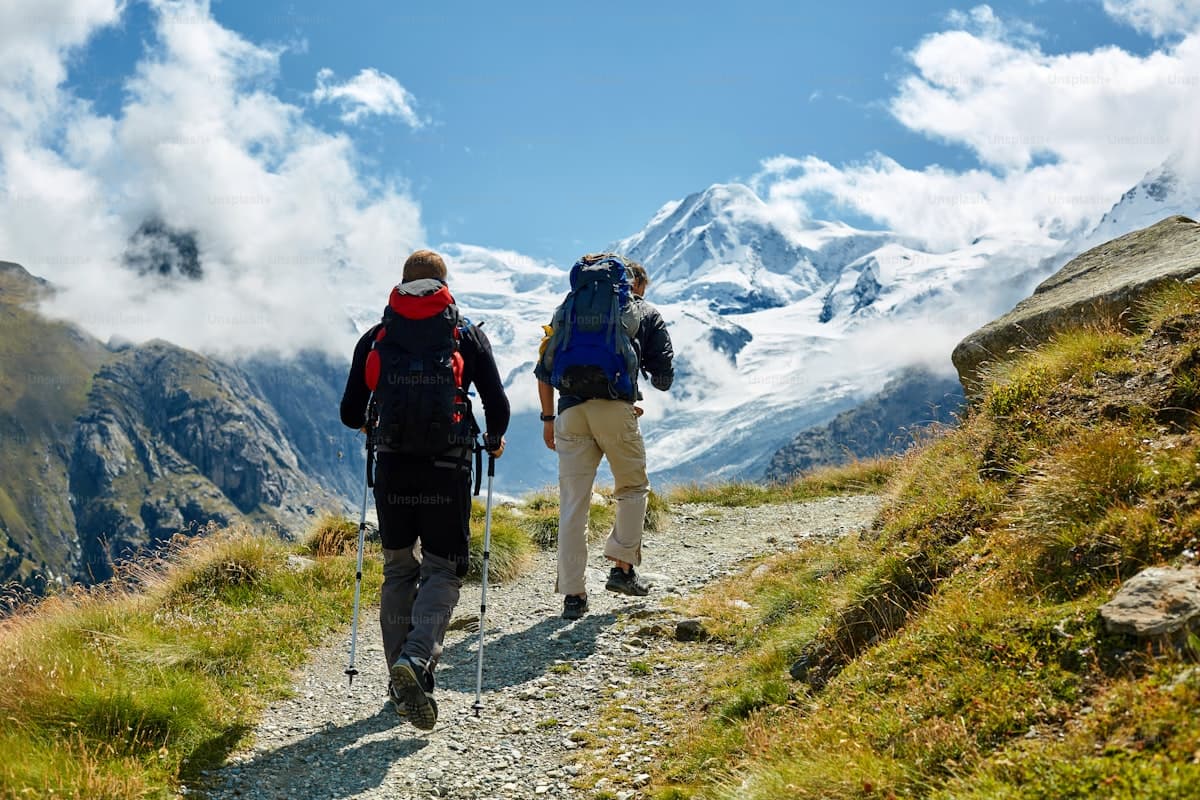
Hiking safely: the mistakes you absolutely must avoid
Every year in France, mountain rescue teams carry out thousands of operations. Behind these figures lies a hard truth: the vast majority of preventable accidents or dangerous situations stem not from bad luck, but from foreseeable mistakes — underestimating difficulty, poor gear choices, lack of preparation. The good news? These mistakes are easy to fix with a little method.
Here are the 10 most common hiking mistakes, from beginners to experienced hikers, along with concrete habits to avoid them.
1. Overestimating your fitness or underestimating the route
This is the number one mistake. People choose a hike based on distance in kilometres, without accounting for cumulative elevation gain, terrain technicality, or actual walking time. The result: exhaustion halfway through, or being caught by nightfall on the mountain.
The right reflex: Before every outing, always check the elevation gain (D+), the altitude profile, and other hikers' reviews of the terrain. On OpenRando, every trail card shows the recommended level, estimated duration, and specific challenges. Start with routes suited to your fitness on that particular day — not your best-ever performance.
2. Ignoring the weather
Mountains create their own weather. A sunny day in the valley can turn into a violent storm on the ridges within an hour. Lightning, hail, sudden fog — these phenomena kill hikers every year.
The right reflex: Check the forecast the night before and the morning of your departure using reliable sources like Météo-France (massif bulletins). In Provence, pay particular attention to the mistral: it can turn a pleasant hike into a physical ordeal, especially on the ridges of Mont Ventoux or the Alpilles. If afternoon thunderstorms are forecast, start early and head back before midday.
3. Not carrying enough water
Dehydration is one of the leading factors in hiking accidents. It impairs judgement, causes cramps and dizziness, and weakens joints. Yet many hikers set off with a single small bottle for several hours of effort in full sun.
The right reflex: Allow 0.5 L of water per hour of effort under normal conditions — more in hot weather. For a 5-hour hike, bring at least 2.5 L. A hydration reservoir in your backpack lets you drink on the go. If there are springs on the route, a filtered water bottle can be invaluable — but never rely on uncharted sources as your only supply.
4. Wearing the wrong footwear
Footwear is the most critical piece of hiking gear. Heading out in running shoes on rocky or wet terrain exposes you to sprains, slips, and blisters. Equally, overly heavy or poorly fitted boots cause unnecessary fatigue.
The right reflex: For mountain outings or uneven terrain, choose mid-cut hiking boots with a lugged sole. The ankle support protects you on scree and steep descents. Make sure your boots are broken in — never attempt a long hike in brand-new footwear.
5. Forgetting extra layers
Even in summer, temperatures can drop by 15°C between the valley and the summit. A hiker caught in unexpected cold without an extra insulating layer can quickly develop hypothermia, especially when wet from sweat.
The right reflex: Follow the three-layer system: a technical moisture-wicking base layer, a mid-layer for insulation (light fleece), and a waterproof windproof shell as outer protection. These three items weigh little and fit in any pack. Even in fine weather, never leave without your waterproof jacket.
6. No map and no navigation backup
Getting lost is easier than you think — on poorly marked trails, in fog, or after rain washes away footprints. A phone with a dead battery or no signal is useless.
The right reflex: Download your GPX tracks offline before you leave (our guide on how to use a GPX file covers everything). Always carry a hiking compass and, ideally, the paper IGN map of the area. A lightweight power bank ensures your phone doesn't die at the critical moment.
7. Heading out alone without telling anyone
In the event of an accident, rescue response time depends directly on how quickly someone realises you haven't come back. A twisted ankle on remote terrain can quickly become a life-threatening situation if no one knows where to look for you.
The right reflex: Always leave a trip plan with someone you trust: the trail name or route, planned departure time, estimated return time, and your phone number. Agree on a time after which this person should call emergency services if they have no news. If you hike alone regularly, a satellite communication device could one day save your life.
8. Ignoring your body's warning signals
Pain is a signal. Cramps, dizziness, nausea, chest pain — these are messages your body sends when something is wrong. Too many hikers push through out of pride, fear of disappointing their group, or not wanting to "ruin" the outing.
The right reflex: Stopping is not a weakness. If symptoms persist or feel unusual, take a long rest, eat, and hydrate — and if things don't improve, turn back without hesitation. On a mountain, descent is always possible. The worst-case scenario is not.
9. Starting out too fast
The classic mistake of an enthusiastic group: you set off at a brisk pace, burn through your energy and glycogen reserves in the first hours, and arrive exhausted at the halfway mark, unable to maintain pace for the rest of the route.
The right reflex: Adopt a slow, steady rhythm from the start, especially on ascent. A good rule of thumb: you should be able to hold a normal conversation without getting out of breath. Take your first break after 45 to 60 minutes to adjust laces, eat a small snack, and let your body find its stride. Trekking poles help distribute effort across all four limbs and protect your knees — particularly on the descent.
10. The confidence trap: experienced hikers letting their guard down
Paradoxically, serious accidents often happen to experienced hikers. Experience breeds confidence — sometimes too much. You head out without sunscreen because it's cloudy, without warm layers because you're used to it, without enough water because you "know how to manage."
The right reflex: Experience does not exempt you from preparation. The basic checklist applies to everyone: water, food, extra layers, navigation tools, means of communication, a minimal first-aid kit (compact first aid kit). Humility in the mountains is not optional.
Safety checklist before every hike
Here's a quick rundown to verify before each outing:
- Weather checked the night before and the morning of departure
- Trail difficulty matched to your fitness on that day
- Water: minimum 0.5 L per hour planned
- Food: energy snacks to cover the duration + a margin
- Clothing: waterproof layer + warm layer even in summer
- Navigation: GPX track downloaded offline + backup compass
- Communication: charged phone + power bank
- Trip plan shared with someone at home
- Alert time agreed with that person for calling rescue services
Hiking in Provence: trails for every level
If you're looking for routes suited to your level across Provence and the South of France, browse our Explore section to filter hikes by difficulty, duration, and area. You'll find:
- Family-friendly accessible hikes around Aix-en-Provence
- Technical routes through the Gorges du Verdon
- Panoramic outings in the Alpilles
The mountains are a remarkable privilege — so long as you respect them. With the right habits, every hike becomes a safe and deeply rewarding experience.
As an Amazon Associate, we earn from qualifying purchases. Links marked with an external icon are affiliate links.
Related reading

How to Prepare for Your First Mountain Hike
Gear, training, weather, and route planning: everything you need to know to successfully complete your first mountain hike safely and make the most of the experience.
Solo Hiking: Safety Tips and Motivation Guide
Solo hiking is one of the most rewarding experiences on the trail. Discover our essential safety advice, gear recommendations, and mental preparation tips to hike alone with confidence.
Hiking After Rain: Muddy Trails and Flooded Streams
Hiking after heavy rain: how to assess trail conditions, safely cross a flooded stream, and know when to turn back.