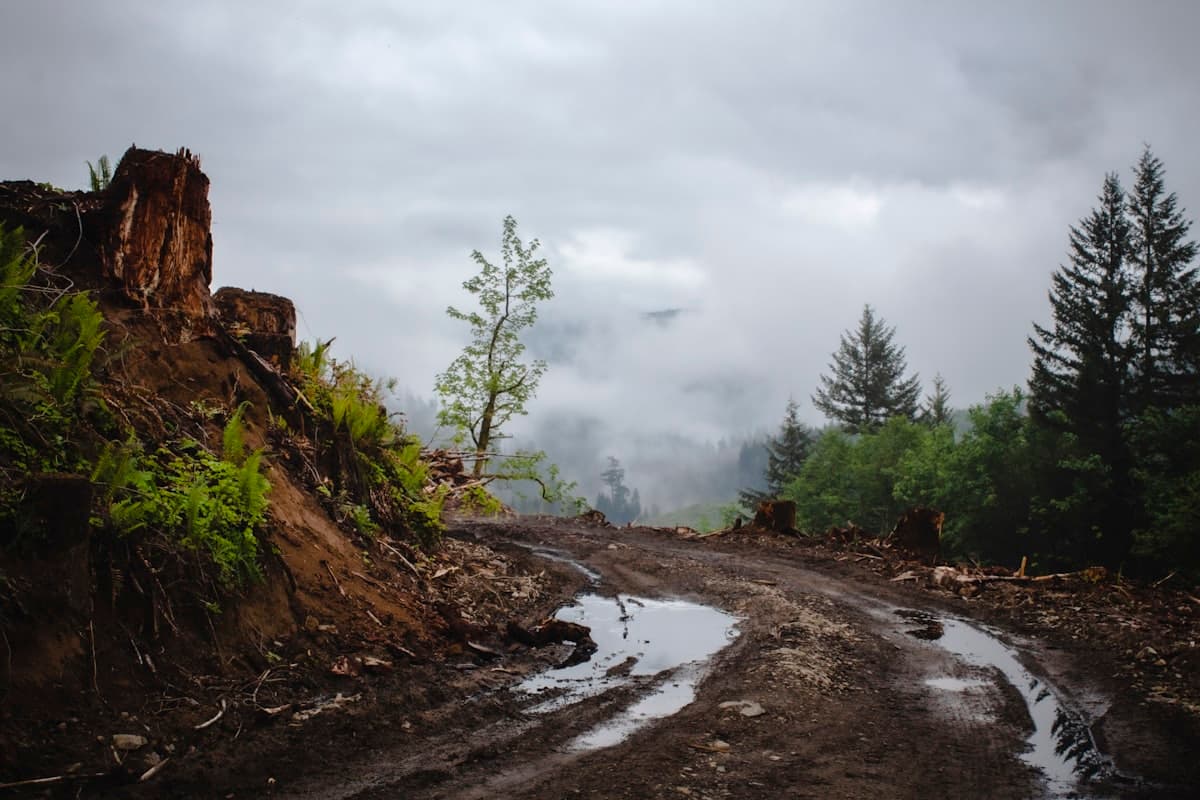
Hiking After Rain: Muddy Trails and Flooded Streams
The rain fell all night. This morning the sky is clear and the urge to lace up your boots is irresistible. But between a summer downpour and a trouble-free hike, there is a gap that too many hikers overlook: the time the terrain needs to recover. Waterlogged trails, streams turned torrents, clay that sticks to your soles — the post-rain environment concentrates underestimated risks that cause preventable accidents every year.
This guide gives you concrete decision criteria for assessing a wet trail, crossing a ford safely, and — above all — recognising the moment when heading back is the right call.
How Long Does a Trail Stay Impassable After Rain?
There is no universal answer, but here are the key benchmarks by soil type:
- Compacted-earth or forest trail: 2 to 6 hours after light rain (< 10 mm). After heavy rain or a thunderstorm, allow half a day to a full day.
- Clay trail (garrigue, red Vaucluse clay, Languedoc clays): 24 to 48 hours minimum. Clay dries slowly and remains slippery long after the rain has disappeared from the surface.
- Limestone trail (lapiaz, flat rock): a few hours is often enough for the rock itself to dry, unless moss is present — moss stays treacherous for far longer.
- High mountain and gneiss terrain: above 1,500 m, soils are often better-draining, but stones and roots remain dangerously slippery for 4 to 8 hours.
- After a violent thunderstorm (> 30 mm in one hour): regardless of terrain, wait at least 24 hours before venturing onto hillside trails. Streams may remain in flood for 12 to 36 hours.
The best source of real-time information is the local weather service, which provides cumulative rainfall figures and soil-saturation levels. Soil that was already saturated earlier in the week will take far longer to recover than dry ground.
Recognising Slippery Terrain
Knowing the ground is wet is not enough — you need to identify the genuinely dangerous zones.
Visual Warning Signs
- Standing water in ruts: if boot prints fill with water, the surface layer is saturated. Avoid.
- Smooth, shiny rock surfaces: a film of water on limestone or granite can cut grip by two-thirds.
- Matted wet leaves: in autumn or under tree cover, layers of wet leaves are as treacherous as black ice.
- Waterlogged earth on slopes steeper than 15 %: on clay above a 15° incline, a single misstep can trigger a fall.
- Gleaming moss and lichen: on boulders and flat rock, water-soaked moss is a classic trap.
The Foot Test
Before committing to a doubtful section, place one foot across the slope and press down gradually. If your sole grips, you can advance carefully. If it slides immediately, do not force it — the best solution is to find a way around.
Adapting Your Gait
On slippery terrain, consciously adjust your posture: flat-footed steps (not toes first), short strides, knees slightly bent, centre of gravity low. Telescopic trekking poles become essential here: they increase your contact surface and let you probe the ground before committing your full weight.
Crossing a Ford: The Absolute Rules
This is where the real post-rain danger concentrates. A stream that barely covers your ankles in dry conditions can become a torrent 70 cm deep with a current of 2–3 m/s after a storm. At 1 m/s of current, the force exerted on an adult is enough to knock them off balance.
Before You Step In
- Watch from the bank for at least two minutes. Water colour is a key indicator: brown, silt-laden water = flood in progress; clear water = flood has passed.
- Assess height and speed. Speed is consistently underestimated by looking at the surface. Toss a twig and time it: if it covers one metre in under a second, the current is strong.
- Look for a safer crossing point. The inside of a river bend often offers a calmer zone. A natural widening of the channel signals shallower water.
- Prepare your gear. Undo your backpack's chest and hip straps so you can shed it instantly if you fall. Clip on your gaiters if you are carrying them.
Safe Crossing Technique
- Solo: cross diagonally downstream, never facing directly into the current. Step one foot, stabilise, then the other. Do not cross your legs. Use a trekking pole or a solid branch planted upstream.
- In a group: the chain crossing (hands on the shoulders of the person in front, facing downstream) is far more stable than solo crossings. The heaviest person leads.
- Shoes on: never remove your shoes to cross. Grip and protection from underwater rocks are critical. Your waterproof hiking shoes will take a few hours to dry — a blister is a far better outcome than a twisted ankle on slippery river stones.
The Go/No-Go Line
If the water exceeds your knees or if you feel the current before even stepping in, do not cross. This is an absolute rule. Experienced hikers have drowned in streams that looked accessible. The primary risk factor is underestimation: "it doesn't look that deep." When in doubt, turn back.
When to Turn Back
Turning back is not a failure — it is a decision that saves lives. Here are the situations that demand you retrace your steps without hesitation.
Signs That Conditions Are Worsening
- The trail is turning into a stream on the ascent, making a safe descent impossible.
- You can hear a rumbling upstream from an ordinarily quiet watercourse (sign of a flash flood or dam release).
- Rain resumes while you are already exposed on difficult terrain.
- Your soles no longer inspire confidence despite all precautions.
The One-Third Rule
If you estimate you have used more than one-third of your physical reserves or your phone battery (GPS, weather apps) and conditions are deteriorating, go back. The return journey on difficult ground always takes longer than the approach — you will move more slowly.
Tell Someone
Before you set out, always leave your route and estimated return time with someone. If you are forced to turn back, notify them as soon as you have a signal. If you are stuck without coverage, the emergency number 112 sometimes connects on partial signal, and the GendLoc app can pinpoint your location even with a weak connection.
Protecting Your Feet and Gear
The Right Equipment for Post-Rain Hiking
Heading out after rain without the right gear turns a pleasant hike into an ordeal. The investments that make the biggest difference:
- Waterproof shoes with a Gore-Tex or equivalent membrane: effective as long as water does not exceed ankle height. Beyond that, they trap water inside — a trade-off to accept consciously.
- Low waterproof gaiters: essential on muddy ground, they stop soil entering the shoe and extend waterproofing up to mid-calf.
- Quick-drying socks: if you cross a ford, merino wool or synthetic socks dry two to three times faster than cotton equivalents.
- Waterproof over-trousers: in the mountains or on exposed slopes, a lightweight waterproof shell protects your legs from wet vegetation and the cold wind that follows high-altitude storms.
- Rain cover for your pack: even a bag marketed as "water-resistant" will gradually soak through in prolonged rain. A fitted rain cover is extra insurance for spare clothing, your phone, and food.
Foot Care on Arrival
Feet that have been damp for several hours have softened skin that is far more prone to cracks, fungal infections, and delayed blisters. As soon as you reach your refuge or the car:
- Remove shoes and socks immediately.
- Dry carefully between every toe.
- If you are continuing the next day, stuff your shoes with newspaper to absorb moisture — or use a boot dryer if available.
- Apply a protective cream (shea butter or foot cream) if the skin is irritated.
The Special Case of Clay Soils
In Provence, the Vaucluse, the Alpilles, and Languedoc, clay soils are everywhere. After rain, they behave like a bar of soap: sticky, heavy, and treacherous.
Why Clay Is Particularly Dangerous
Clay absorbs water and swells, but its layered crystalline structure means water does not distribute evenly: the surface becomes slippery while the soil remains hard underneath. The result: your foot sinks slightly, the sole finds no purchase, and a fall can happen with no prior warning.
What is more, clay builds up under your soles, creating a platform that feels stable but is completely smooth. Regularly clean the underside of your shoes with a stick or twig.
Spotting Clay Zones Before You Go
In the field, clay is recognisable by its colour (ochre red, beige, or grey-blue) and texture (smooth and compact when dry). Before a post-rain outing in Provence, check local hiking communities or browse OpenRando — local hikers know which trails recover quickly after rain and which are best avoided for 48 hours.
Fallback Routes
Some sectors remain walkable even after heavy rain because the underlying rock is well-draining limestone or granite: the ridge trails of the Alpilles, the lapiaz paths of the Gorges du Verdon, or the granite slabs of the Esterel, for example. Always have a shorter fallback route in mind, on well-draining terrain, in case your main trail is impassable.
The Right Mindset: Neither Recklessness Nor Paralysis
Hiking after rain is not forbidden, and some of the most beautiful outings happen in the hours that follow a storm — the air is crystal clear, colours are vivid, and trails are often deserted. But this is a context that demands active terrain reading that fair-weather hiking does not require.
The key is preparation: check the forecast and cumulative rainfall the evening before, choose a route with few or no stream crossings, pack the right equipment, and set your turn-back criteria in advance. A hiker who turns back is a hiker who will be able to head out again next weekend.
To find routes suited to your weather conditions and group level, explore the OpenRando map, which lists thousands of hikes in Provence and across southern France, ranked by difficulty and terrain type.
As an Amazon Associate, we earn from qualifying purchases. Links marked with an external icon are affiliate links.
Related reading
Hiking in the Rain: Tips and Essential Gear
Rain doesn't have to mean turning back. Discover all the tips and essential equipment for hiking in the rain safely — and enjoy the trails from a whole new perspective.
Reading Mountain Weather: Clouds, Wind, and Storms Without an App
How to anticipate mountain weather without a forecast app: identify storm clouds, read wind shifts, and estimate time before lightning strikes.

Hiking safely: the mistakes you absolutely must avoid
Poor preparation, wrong gear, underestimated weather… Discover the 10 most common hiking mistakes and how to avoid them to enjoy the mountains with complete peace of mind.