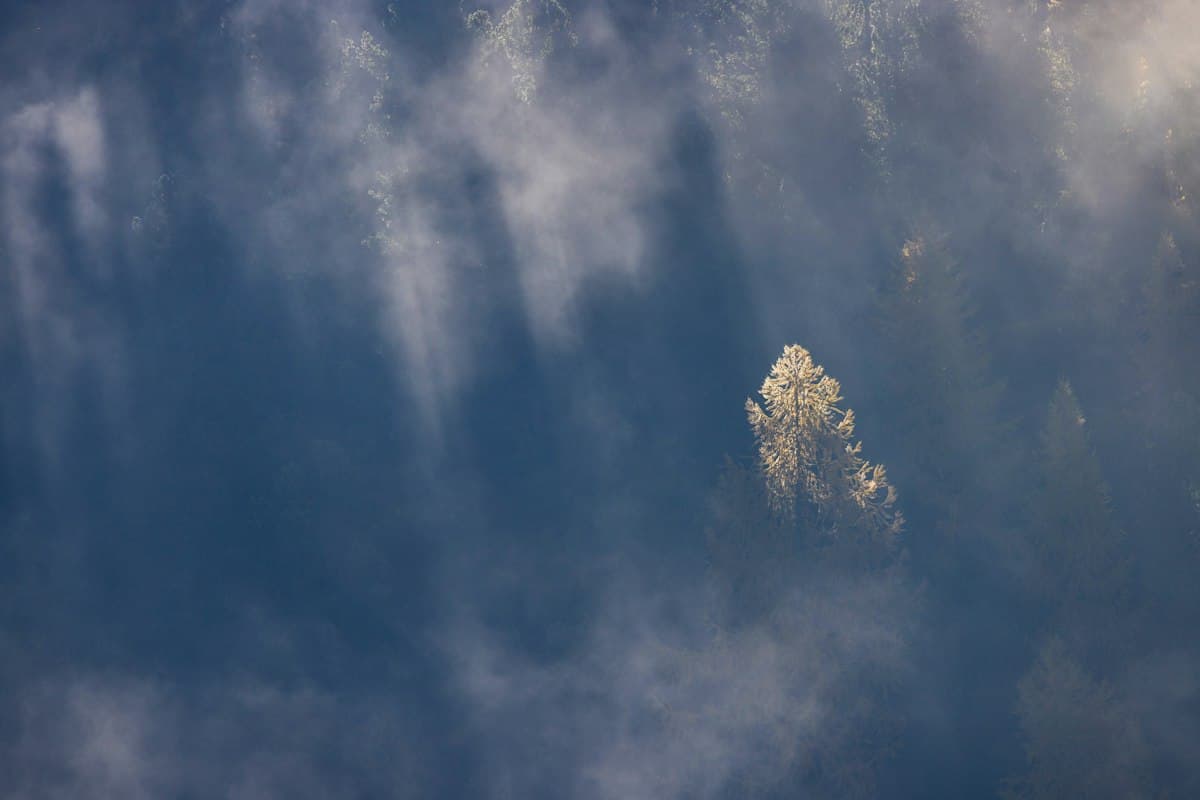
Autumn Equinox: Where to See the First Fall Colors on Your Hike
The autumn equinox officially marks the turn of the seasons, but in France's mountain ranges, the colors don't wait for that astronomical signal. At certain altitudes, larches turn golden as early as mid-September, beeches start blazing a week later. Understanding the logic of altitude and tree species means anticipating the narrow windows — sometimes just a few days — when forests are most spectacular, and arriving at exactly the right moment.
This guide gives you the tools to read autumn's calendar and the six mountain ranges to target right now.
1. Why Colors Rise Then Fall
The change in leaf color is triggered by the reduction in photoperiod (daily sunlight duration) combined with the first cool nights. Chlorophyll gradually breaks down, revealing the yellow (xanthophylls) and orange (carotenes) pigments that were present all year but hidden. Reds and purples (anthocyanins) actively form in response to sugars accumulated in the leaves.
This mechanism is proportional to altitude: the higher you go, the earlier daylight shortens and the faster temperatures drop. A beech forest at 1,800 m will be golden two to three weeks before the same species at 600 m. The color front then descends week by week, like a slow wave.
The practical takeaway: there are two appointments in autumn. The first, from the third week of September, in areas above 1,500 m. The second, from mid-October to early November, in hills and lowlands.
2. Altitude as a Calendar
Here's a quick reference grid for anticipating color peaks by altitude:
| Altitude | Peak Period | Species |
|---|---|---|
| 2,000 – 2,400 m | Sept 15–30 | Larch, green alder |
| 1,600 – 2,000 m | Oct 1–15 | Larch, mountain beech |
| 1,200 – 1,600 m | Oct 10–25 | Beech, sycamore maple |
| 800 – 1,200 m | Oct 20 – Nov 5 | Beech, sessile oak, chestnut |
| 400 – 800 m | Nov 1–20 | Downy oak, chestnut |
| Plains | Nov 10 – Dec 5 | Plane tree, horse chestnut, linden |
This calendar is indicative and depends on aspect (north-facing slopes peak later), summer weather (drought can advance yellowing), and exact species.
3. Larch, Beech, Maple: Three Different Rhythms
The Larch, Star of the Southern Alps
The larch is Europe's only deciduous conifer. Its needles turn a luminous, almost surreal yellow that photographers seek out. It is found mainly in the Southern Alps: Queyras, Mercantour, Haute-Ubaye. Its peak is among the earliest — often between September 20 and October 10 depending on altitude.
The good news: larches grow in nearly pure forests on entire hillsides. The landscape effect is massive and immediately visible from ridgelines.
Compact binoculars are very useful for scouting hillsides from a distance before committing to the climb.
The Beech, King of Mid-Elevation Forests
Beeches shift from copper to gold, from russet to bronze. They form cathedral-like groves in the Vosges, Jura, Pyrenees, and Massif central. Their peak comes about two weeks after the larch at equivalent altitude.
Beech canopy is denser than larch and creates extraordinary filtered light when walking beneath it. The Vosges (Route des Crêtes), Jura forests (Combe du Val de Mouthe), and the Montagne Noire in the Pyrenees are flagship beech locations in autumn.
The Sycamore Maple, the Quiet Artist
Less spectacular in its distribution (it often grows as isolated individuals or copses), the sycamore maple is autumn's great colorist. Its leaves shift from green to yellow to vivid orange before falling.
In the Pyrenees and Alps, look for it along streams and at the edge of high-altitude forests. Its scattered presence creates intense bursts of color that stand out like bright patches in a painting.
4. Six Mountain Ranges by Order of Earliest Colors
1. Queyras (Hautes-Alpes) — from September 15
The Queyras is France's first autumn appointment. Its larch forests cover entire hillsides between 1,600 and 2,200 m. The raking late-September light, occasional snow on the summits, and golden larches compose landscapes that make the trip worthwhile on their own.
Hikes around Ceillac, Molines-en-Queyras, and Château-Queyras are the most accessible. For a full immersion, explore the most beautiful Queyras autumn hikes on OpenRando.
2. Mercantour (Alpes-Maritimes) — Sept 20 – Oct 5
Two hours from Nice, Mercantour offers larch forests in the Tinée, Var, and Roya valleys. The advantage: snowfall comes later here than in Savoy, so the season is longer. Hikes around Saint-Dalmas-le-Selvage and Lac d'Allos are particularly beautiful.
3. Haute-Ubaye (Alpes-de-Haute-Provence) — Sept 25 – Oct 10
Less crowded than the Queyras and Mercantour, Haute-Ubaye offers still-wild larch landscapes. Jausiers, Barcelonnette, and the Col de la Bonette road (which usually stays open until late October) are the access points.
4. Vosges (Alsace-Lorraine) — Oct 10–25
The Vosges massif is the classic autumn destination for northeastern France. The mixed forest (beeches, oaks, firs) creates a rich palette. The Route des Crêtes offers panoramas over the Alsace plain with russet forests in the foreground. Lac Blanc and Lac Noir are unmissable entry points.
5. Massif central (Auvergne) — Oct 15–30
The Auvergne volcanoes, Monts du Forez, Cévennes: autumn transforms the Massif central into a Cézanne painting. Oaks and chestnuts dominate, with a warmer palette (russet, copper, bordeaux) than the Alps. The chestnut road in Ardèche is particularly spectacular.
6. Western Pyrenees — Oct 20 – Nov 10
The Pyrénées-Atlantiques and Hautes-Pyrénées hold their color longer thanks to a wetter climate. The Pyrenean beech forest (Iraty massif, Forêt d'Iraty — Europe's largest beech forest) peaks later than the Alps but with equally intense colors. The Ossau valley, Kakueta gorges, and the Benou plateau are must-hike destinations.
5. Tracking the Color Front in Real Time
A few useful resources for following the foliage advance:
Refuge and mountain pass webcams: many refuges and ski resorts publish real-time or daily images. Col de la Bonette, Galibier, and Tourmalet webcams let you assess vegetation from home before heading out.
Social media: searching local hashtags (#queyras, #mercantour, #automne) on Instagram and X shows recent photos from hikers already on the ground. Often the fastest way to know what's happening right now.
Météo-France: early snow can kill colors on the Alpine massifs almost overnight. Check forecasts at 2,000 m before you go.
OpenRando: explore hikes by area and filter by massif to find routes suited to the season. Photos shared by the community often reflect current trail and vegetation conditions.
6. Photographing Autumn Colors
Autumn light has two golden moments: morning golden hour (30–60 min after sunrise) and evening golden hour (30–60 min before sunset). Raking light makes leaves glow like stained glass.
Some practical tips:
- Partial backlighting: placing golden leaves between you and the sun diffuses warm, translucent light across the entire frame.
- Dark background: colors stand out far better against a backdrop of dark spruce or a stormy sky.
- Water and reflections: lake, stream, puddle after rain — reflections double the colors. High-altitude lakes offer the best mirrors in late afternoon when the wind dies down.
- Macro and detail: a single leaf, a mushroom between russet ferns, dewdrops on a spiderweb — autumn tells its story at the centimeter scale too.
A 25–30 L daypack is ideal for photo day hikes: large enough for your gear, light enough not to weigh you down.
Waterproof hiking shoes are essential from late September onwards: morning dew, wet leaves on trails, muddy shaded sections.
Autumn in the mountains is a short but intense window. By understanding the logic of altitude and tree species, you can anticipate it and find yourself in exactly the right place at exactly the right moment. The Southern Alps massifs open the season right now; the lowland forests will close it in November.
For a broader overview of autumn hiking across France, see our full guide on where to see the most beautiful fall colors.
As an Amazon Associate, we earn from qualifying purchases. Links marked with an external icon are affiliate links.
Related reading
Hiking During Hunting Season: How to Stay Safe in Autumn
How to hike safely during hunting season in France: know the hunting dates by region, how to spot an active drive hunt, how to stay visible, and what to do if you encounter a battue.
The Best Hikes in the Vosges Mountains
Eight hikes in the Vosges: summits, glacial lakes, highland meadows and ridge trails, through France's most spectacular autumn beech forests.
Hiking in Changing Weather: Managing Temperature Swings in Autumn
Hiking in autumn when temperatures vary by 15 degrees throughout the day: how to dress, manage perspiration, and anticipate weather changes.