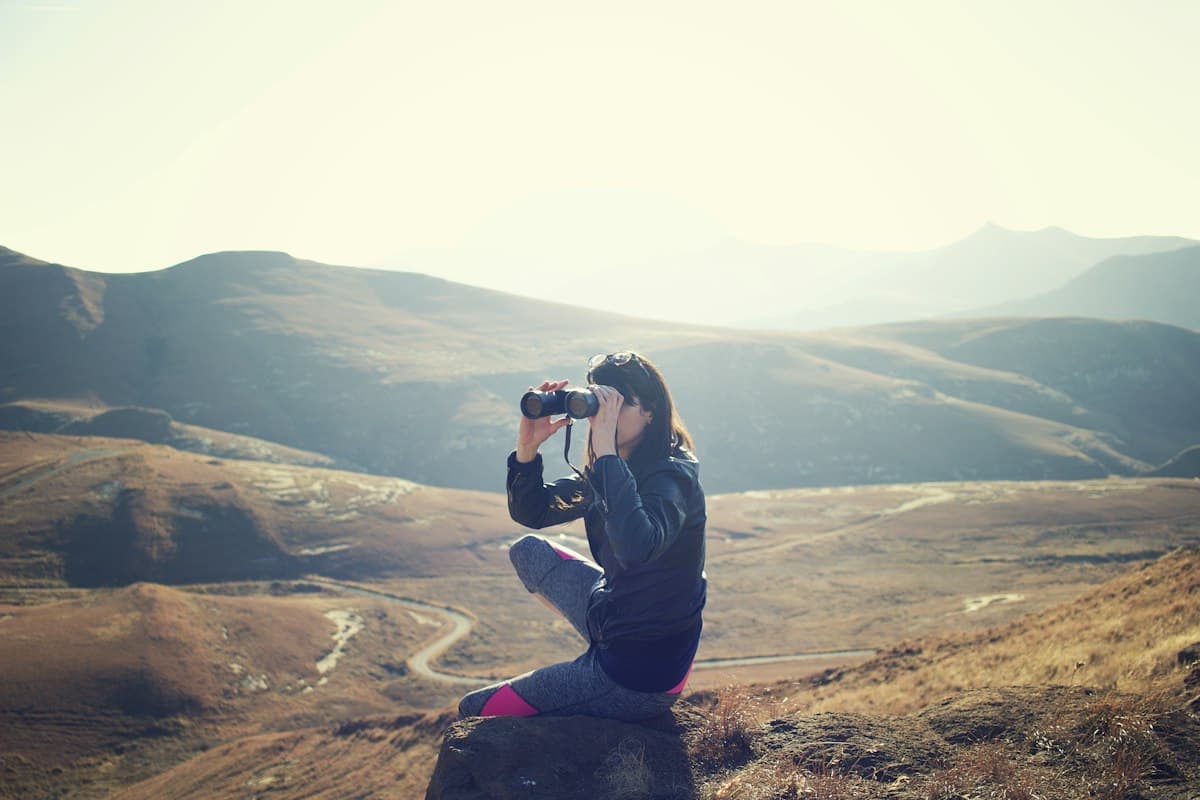
How to Watch Wildlife Without Disturbing It: Best Practices
Spotting a chamois on a rocky ledge, watching a marmot at the entrance to its burrow, or hearing the cry of a golden eagle soaring overhead — these are the moments that make mountain hiking truly unforgettable. But this magic is fragile, and it has to be earned. Observing wild animals requires following specific rules that most hikers don't know, rules on which both the animals' safety and the quality of your experience depend.
This guide gives you the practical tools to become a discreet, responsible wildlife watcher.
Flight Distance: The Concept Every Hiker Should Know
Flight distance is the minimum distance at which an animal begins to flee or show signs of distress when approached by a human. It varies by species, individual, and conditions.
For a chamois in the Alps, flight distance is roughly 100 to 150 metres in open terrain. For a golden eagle on its nest, it can exceed 300 metres depending on the individual's sensitivity and the season. For an alpine marmot, it ranges from 30 to 80 metres, depending on how accustomed the animal is to human presence.
Flight distance increases in several situations:
- During the breeding season (stress is amplified when animals have young to protect)
- In bad weather (animals conserve energy and flee earlier)
- When you move quickly or noisily
- When several people walk together
It decreases, however:
- When the animal heard you approaching gradually (it had time to integrate your presence into its environment)
- On regularly visited sites (some chamois or marmots near mountain huts are less wary)
Visually identifying when you've reached the flight threshold is straightforward: as soon as the animal raises its head, fixes your direction and stops grazing or moving normally, you've entered the critical zone. Stop immediately. If you continue advancing, the animal will flee — and in some cases, especially on steep terrain, that flight can be fatal.
The Best Times for Wildlife Observation
Mountain fauna follows precise biological rhythms, closely tied to light and temperature cycles. Understanding these rhythms transforms an ordinary hike into a genuine naturalist experience.
Dawn and Early Morning: The Golden Window
The first two hours after sunrise are by far the most productive. Predators — fox, eagle — are still active, herbivores — chamois, isard, roe deer — are grazing in the cool morning air, and horizontal light creates optimal visibility across the alpine meadows.
In autumn, this is also when the red deer's roar carries farthest, just before and after dawn.
Late Afternoon
Between 4pm and sunset, animals gradually emerge from their midday rest. This window is especially interesting in summer, when daytime heat has pushed wildlife toward cooler, shaded areas.
Midday: A Quiet Period
In summer, between 11am and 3pm, observations are rare. Most ungulates rest in the shade, digest and ruminate out of sight. In autumn and spring, this lull extends slightly.
Practical tip: to maximise your chances, plan a pre-dawn departure. Morning trails are also less crowded, which further improves observation conditions. Our article on hiking at sunrise gives you everything you need to prepare this type of outing.
Moving with the Wind and Positioning Yourself Correctly
Smell is the primary sense for most wild mammals. A chamois can detect you from hundreds of metres away before it sees you, if you're upwind.
The golden rule is simple: always approach from downwind or crosswind. Never try to approach an animal with the wind at your back — your scent will reach it long before you're in view, and it will vanish before you see it.
Reading Wind in the Mountains
Mountain winds are complex. Topography creates predictable thermal currents:
- In the morning, air drains downslope from ridges toward valley floors (katabatic drainage winds from overnight cooling)
- During the day, air rises from valley floors toward ridges (anabatic, thermal winds)
In practice: if you spot chamois on a sun-exposed slope in mid-morning, approach from below, from the valley side, with the rising wind in your face. Stay below the ridgeline so you don't silhouette yourself against the sky.
Sound Discipline
Wild animals also pick up abnormal sounds. Minimise equipment noise: pack buckles, carabiners, bottles clinking together. A non-rustle softshell jacket is preferable to a loud, crinkly hard shell.
Speak quietly or communicate by hand signals. If you're hiking in a group, avoid loud laughter and raised voices in areas with high wildlife potential.
Chamois, Ibex, Marmots: Species-Specific Tips
Chamois
The chamois (Rupicapra rupicapra) is the most widespread ungulate in the Alps and Pyrenees. Timid but curious, it alternates between watchful observation and flight depending on your behaviour.
How to approach: locate a stable group using binoculars. Stay at least 150 metres away and advance slowly in stages, using rocks as visual screens. If one individual watches you, hold eye contact but don't move for at least two minutes — it will often resume normal activity.
Avoid approaching females with young kids, particularly from May to July. The mother may put her kid at risk by fleeing too quickly across difficult terrain.
Good 10x42 compact binoculars are ideal for chamois watching: light enough to carry all day, powerful enough for typical observation distances.
Alpine Ibex
The alpine ibex (Capra ibex) is more placid than the chamois. In protected areas where it regularly encounters hikers — Vanoise, Mercantour, the Italian Grand Paradis — its flight distance can drop to 50-80 metres. Elsewhere, patient observation at 100-200 metres is realistic.
Old solitary males with large curved horns are often the easiest to approach. Avoid approaching them during the rut (November to December), when they can be unpredictable.
Alpine Marmot
The alpine marmot (Marmota marmota) is probably the easiest mammal to observe in the Alps. Its piercing whistle — a short, powerful shriek — will often alert you to its presence before you see it.
Approach technique: locate an active burrow (freshly turned soil, visible droppings nearby). Settle quietly 30-40 metres from the main entrance, avoiding sudden movements. If the marmot retreated when you arrived, wait in silence — it will often reappear within 10-20 minutes.
Golden Eagle
The golden eagle (Aquila chrysaetos) is extremely sensitive to disturbance near its nest. French law prohibits approaching within 300 metres of an occupied nest, with significant fines for violations.
To observe them, use binoculars or a spotting scope exclusively. Locate thermal columns and watch for silhouettes soaring during the warmer hours of the day.
Periods to Avoid Absolutely
Certain periods of the year are particularly sensitive for mountain wildlife. A disturbance during these windows can have direct consequences on animal survival or the survival of their young.
Nesting Season (March to July)
For birds, the nesting period is critical. Cliff-nesting species — golden eagle, peregrine falcon, Egyptian vulture, bearded vulture — nest on rock faces that sometimes adjoin marked hiking trails. Any disturbance near the nest can cause the birds to abandon their clutch entirely.
In practice: check for temporary trail closures (usually posted at mountain huts or on national park websites). These closures are not symbolic — they correspond to precise locations of active nests.
Birth Period (May to July for Ungulates)
Chamois, ibex, deer and roe deer give birth between May and July. Newborns, unable to flee effectively, are extremely vulnerable to stress. A doe fleeing too fast may abandon her fawn, which is usually doomed without maternal protection.
Never try to approach a young animal alone to photograph it or "rescue" it — its mother is almost certainly nearby and watching from a distance.
Winter (November to March)
In winter, mountain animals live on drastically reduced energy reserves. Each flight represents an energy expenditure that can sometimes be fatal for an already weakened animal.
Winter quiet zones established by national parks exist precisely for this reason. Respect them strictly, even if your passage seems brief and harmless.
Binoculars and Responsible Distance Photography
Responsible observation almost always requires good optical equipment. Getting within 20 metres to photograph a chamois "up close" is not a naturalist achievement — it's an unnecessary disturbance that can harm the animal.
Choosing Binoculars for Wildlife Hiking
For wildlife observation on hiking trails, the standard format is 8x42 or 10x42. The first number is the magnification, the second the objective lens diameter in millimetres.
- 8x: wider field of view, easier to stabilise handheld, better for scanning large areas
- 10x: more detail on distant subjects, useful for species identification
Quality binoculars feature multi-coated optics and a waterproof body — essential in mountain conditions. A forthcoming article will provide a comparison of the best hiking binoculars with field tests.
Wildlife Photography on the Trail
For photography, a minimum focal length of 300mm is needed to get decent images at regulatory distances. In practice, bridge cameras with long zoom lenses offer the best weight-to-performance ratio for non-specialist hikers.
A bridge camera with 50x-60x zoom lets you photograph a chamois at 150 metres with a tight frame, without disturbing it.
Simple rule: if your subject is looking at you and has paused its activities, you're too close. Back up ten metres and wait for the animal to resume normal behaviour before continuing to shoot.
Going Further
Wildlife observation on hiking trails is a discipline that improves with experience and knowledge of individual species. Our article on fauna on Provence hikes covers the species you're likely to encounter in the PACA massifs, with their characteristic behaviours and the best observation areas.
In autumn, the red deer rut is one of the most impressive wildlife spectacles in France. Read our upcoming guide on hiking during the deer rut to prepare a dedicated outing for this exceptional event.
Responsible observation is also a form of gentle advocacy. By setting an example in groups, by quietly explaining to a child or an uninformed hiker why you stop and lower your voice, you contribute to a culture of respect that benefits everyone — and most of all, the animals themselves.
To explore trails across the region and discover the areas with the greatest wildlife potential, visit OpenRando's Explore page, which lists thousands of routes with detailed terrain information.
Happy watching, and stay discreet.
As an Amazon Associate, we earn from qualifying purchases. Links marked with an external icon are affiliate links.
Related reading
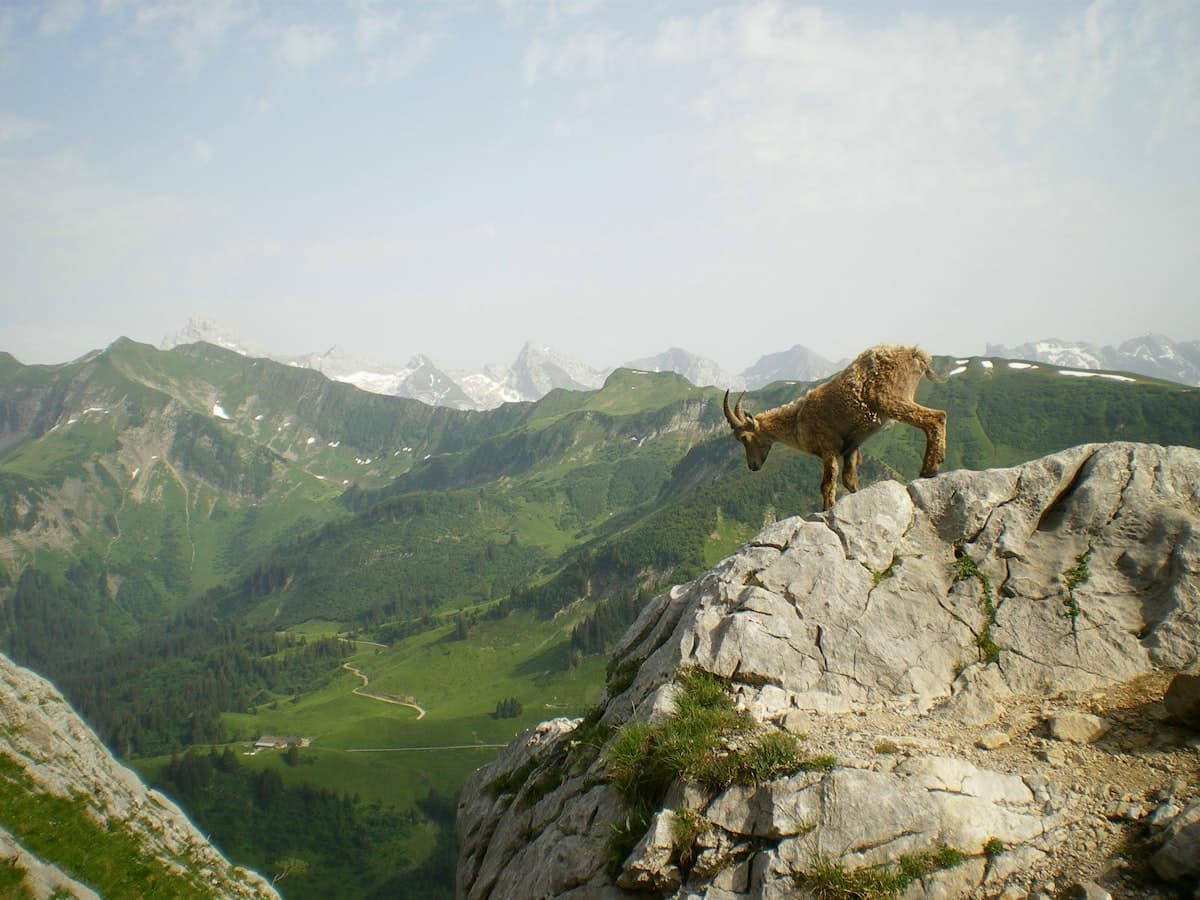
Wildlife to Spot While Hiking in Provence
Mouflons, Bonelli's eagles, wild boar, ocellated lizards or cicadas: Provence shelters a rich, often discreet wildlife. Here's how and where to observe it on the trail — without disturbing it.
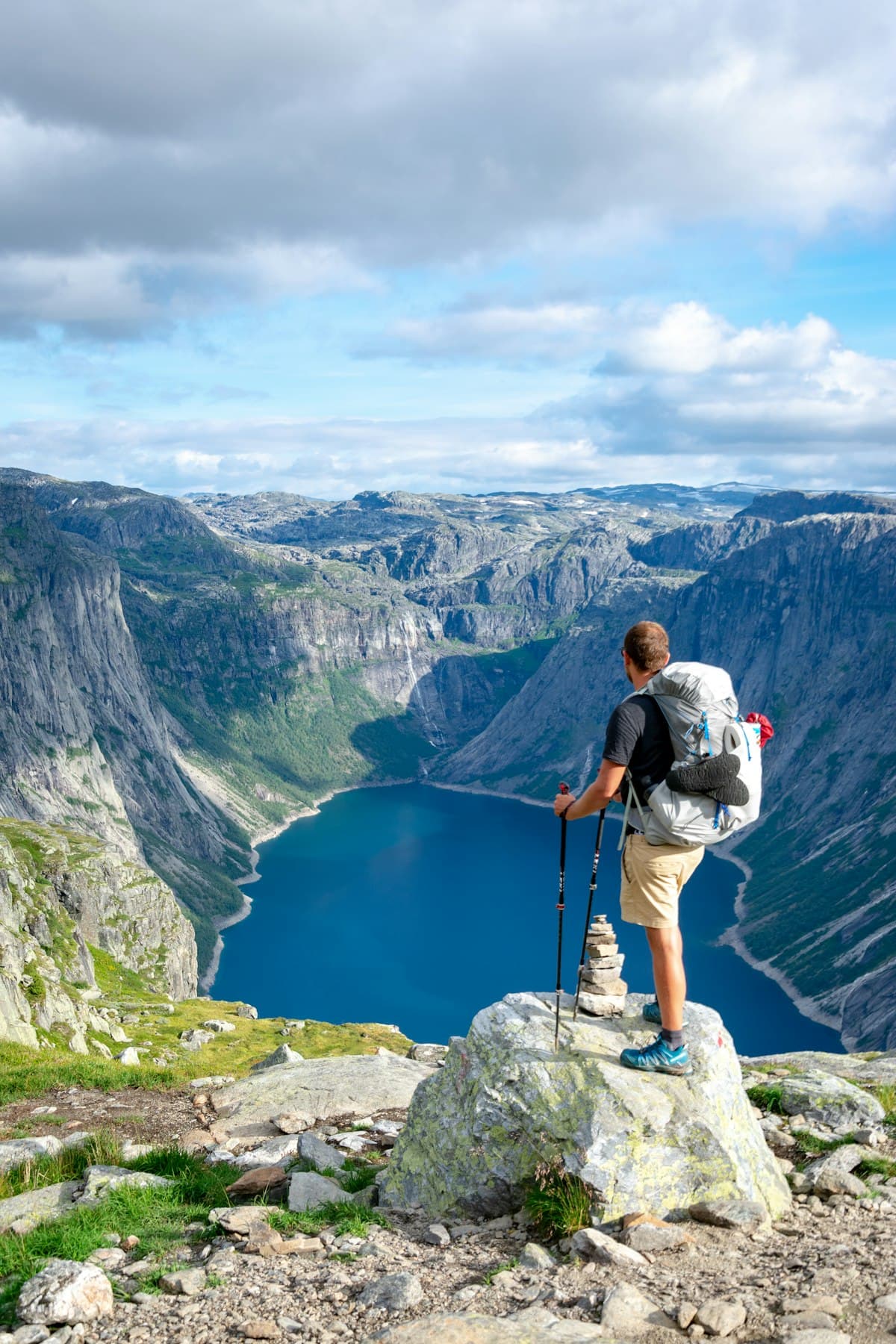
Geology While Hiking: Learning to Read the Landscape
Limestone, granite, ochre, glacial valleys: learn to read the geology beneath your feet. A guide to understanding how the landscapes you cross were formed and enriching every hike.
Best Hiking Binoculars: Which Model Should You Choose?
Which binoculars to take hiking? Magnification, brightness, weight and waterproofing: six compact models compared to find yours.