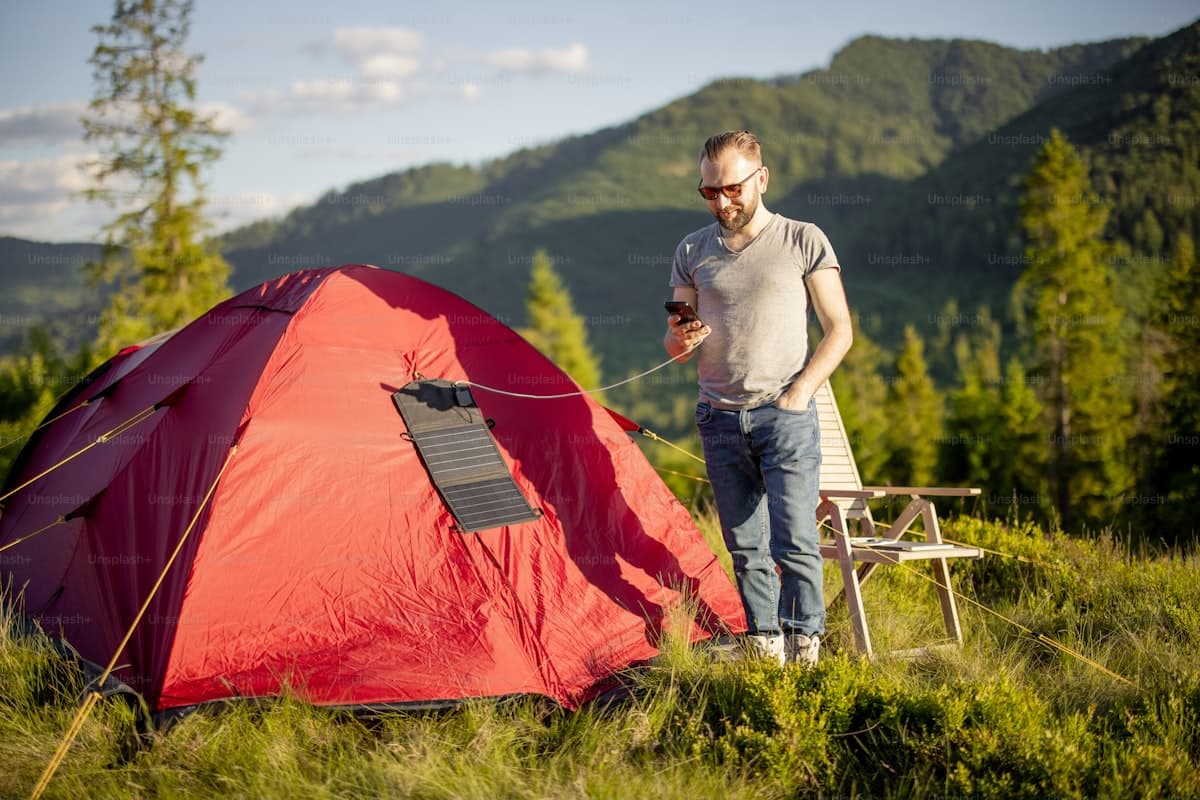
Best Portable Solar Panels for Hiking 2026
On a hike, your smartphone battery is often the most precious resource in your pack. It is your map, your GPS, your emergency line. Yet a long day of walking with the navigation app running can drain it completely. On a multi-day trek with no power outlet in sight, energy autonomy quickly becomes a central concern.
Portable solar panels offer an elegant solution: converting the abundant solar energy of the mountains into usable electricity, without adding excessive weight to your pack. But not all models are equal, and the numbers on the packaging are often optimistic. This guide helps you make the right choice.
Why Bring a Solar Panel Hiking?
The main argument is simple: energy independence. On a 3-day or longer trek, carrying enough power banks becomes heavy and bulky. A quality solar panel produces between 5 and 30 Wh per hour of direct sunlight — enough to charge a 3,000 mAh smartphone in 2 to 4 hours depending on conditions.
For hikers using their phone as a GPS, this is no luxury. The active navigation app can consume up to 15–20% battery per hour. Over an 8-hour outing, the math speaks for itself.
Solar power is also useful for:
- Charging a dedicated GPS watch (Garmin, Suunto) overnight or at the midday rest stop
- Powering bivouac lighting via a power bank
- Keeping your emergency phone charged without thinking about it
- Recharging a compact camera between shots
How a Portable Solar Panel Works
Portable panels use monocrystalline silicon photovoltaic cells — the same principle as large solar installations, in miniaturised form. Monocrystalline cells offer the best efficiency (18–24%), ahead of polycrystalline cells (15–18%) which are less common in recent models.
The rated power (expressed in watts) is measured under STC conditions: 1,000 W/m² of light and 25°C cell temperature. In real hiking conditions, you will typically get 50–70% of the rated power depending on:
- The angle of incidence of sunlight on the panel
- The quality of sunlight (clouds, haze, altitude)
- Partial shade from a branch or blade of grass (which can drastically reduce output on certain panel architectures)
- Ambient heat (paradoxically, very hot days slightly reduce efficiency)
A panel rated at 20W therefore produces in practice between 8 and 14W in good mountain conditions. Keep this in mind when comparing spec sheets.
Key Criteria for Choosing Well
Power Output: Finding the Right Balance
This is the most prominently listed parameter, but not necessarily the most decisive. Here are the useful thresholds:
- 5–10 W: ultra-light panels (under 200 g). Sufficient for daily top-up on sunny outings, provided the panel is exposed for several hours during the day.
- 15–20 W: the best compromise for day hiking and 2–3-night bivouacs. Produces enough energy to fully charge a smartphone in 2 to 3 hours of direct exposure.
- 25–40 W: for long treks with multiple devices to charge (dedicated GPS, camera, tablet). Heavier (300–600 g), but a genuine field power station.
Weight and Folded Dimensions
A well-designed 15W panel weighs 250 to 350 g and folds to the size of a paperback book. On day hikes where every gram counts, opt for 10W models around 200 g. For multi-night treks, a 20W model at 400 g remains very reasonable.
Connectors and Compatibility
Make sure the panel has at least one USB-A port and, ideally, a USB-C Power Delivery port. The latter charges recent power banks and phones much faster (up to 18–45W depending on the model).
Some models include a smart charge controller (MPPT technology) that continuously optimises voltage based on sunlight variations — a real plus when the panel is clipped to your pack and the angle changes constantly.
Durability and Water Resistance
In the mountains, IP65 or IP67 waterproof panels make a real difference when an unexpected storm hits. Reinforced plastic frames and abrasion-resistant polyester surfaces are essential for serious field use. Beware of models with unprotected connectors: a rusted USB port after a damp night can put your entire setup out of service.
How to Use It Effectively in the Field
Attached to Your Pack
The most practical technique: fix the panel to the rear pocket of your pack using the hooks or fixing straps built into most models. The panel then charges continuously while you walk, without interrupting your progress.
Tip: adjust the orientation at the start of the day, then check regularly during breaks. In summer in southern France, the ideal angle shifts from east in the morning to south at midday, then west in the late afternoon.
Pairing Panel and Power Bank
Do not try to charge your phone directly from the panel while walking. Variable sunlight creates voltage fluctuations that can stress the internal battery over time. The optimal workflow:
- Panel → Power bank (during the hike or at the lunch break)
- Power bank → Phone / GPS (in the evening at camp or during rest stops)
A 20,000 mAh power bank stores enough energy to charge a smartphone 5 to 6 times — more than enough for a 5-day trek paired with a 20W solar panel.
Maximising Output
- Avoid partial shade: even a thin branch obscuring a single cell can halve or reduce output by two-thirds, depending on the internal architecture of the panel.
- Orient towards the sun: correct tilt often matters more than panel size.
- Make the most of sunny breaks: lay the panel flat, facing the sky, during lunch. 30 to 45 minutes in full summer sun at altitude can be enough to charge 40–50% of a 10,000 mAh power bank.
Our 2026 Selection by Profile
For Day Hiking (Lightness First)
Look for a 10W model around 200–250 g, with USB-A port and integrated charge controller. The key: it should fit in the front pocket of your pack and weigh as little as possible. An ultra-light 10W solar panel is more than enough for daily top-up.
For Multi-Day Trekking in Full Autonomy
A 20–25W model with USB-C PD is the answer. The extra power compensates for overcast days that punctuate any mountain trek, and the USB-C port charges modern devices much faster. Pair it with a 20,000 mAh power bank to build your complete autonomous field power system.
For Demanding Expeditions (Multiple Devices)
Foldable 30–40W panels allow you to simultaneously charge a dedicated GPS, a phone and a power bank. Some models offer two independent USB outputs with separate regulation — essential if you are charging a GPS watch and a smartphone at the same time.
Limitations to Know
Overcast Days
A solar panel produces between 10 and 30% of its rated power in cloudy conditions. On a mountain trek where afternoon storms are frequent (Alps, Pyrenees in summer), count on 4 to 6 hours of good production in the morning, before clouds build up.
Altitude Is Not Always an Advantage
The thinner atmosphere at altitude slightly improves the UV radiation received by the cells. But low temperatures and winds often offset this advantage, and cells can be covered with dew or frost early in the morning. In practice, the improvement is marginal.
The Weight of the Complete Solution
A 20W panel (350 g) + 20,000 mAh power bank (400 g) = 750 g. That is the equivalent of a good pair of gaiters. It is up to you to assess whether this autonomy is worth this weight investment — on a multi-day trek, absolutely; for a day hike, a simple 10,000 mAh battery (180 g) is enough.
Realistic Power Assessment
Beware of overly optimistic spec sheets. Some brands advertise peak power under ideal conditions that are never reached in real-world use. Look at field user reviews rather than raw figures.
Maintenance and Precautions
- Clean the cells with a damp cloth after each outing: trail dust and sunscreen reduce efficiency.
- Store the panel folded in its protective case to avoid scratches that reduce light transmission.
- Avoid storage at high temperatures (car boot in full sun) which degrades cells over time.
- Protect the connectors with a rubber cap between uses.
Portable solar panels have evolved considerably in recent years: lighter, more efficient, more robust. For hikers who regularly head out for multiple days, this is now one of the most useful pieces of gear to slip into the pack. To prepare your next outings and discover routes in the region:
- Explore all hikes on OpenRando
- Preparing a multi-day trek: the complete checklist
- Hiking in extreme heat: prevention and adaptation
- Bivouac in France: regulations and best practices
As an Amazon Associate, we earn from qualifying purchases. Links marked with an external icon are affiliate links.
Related reading
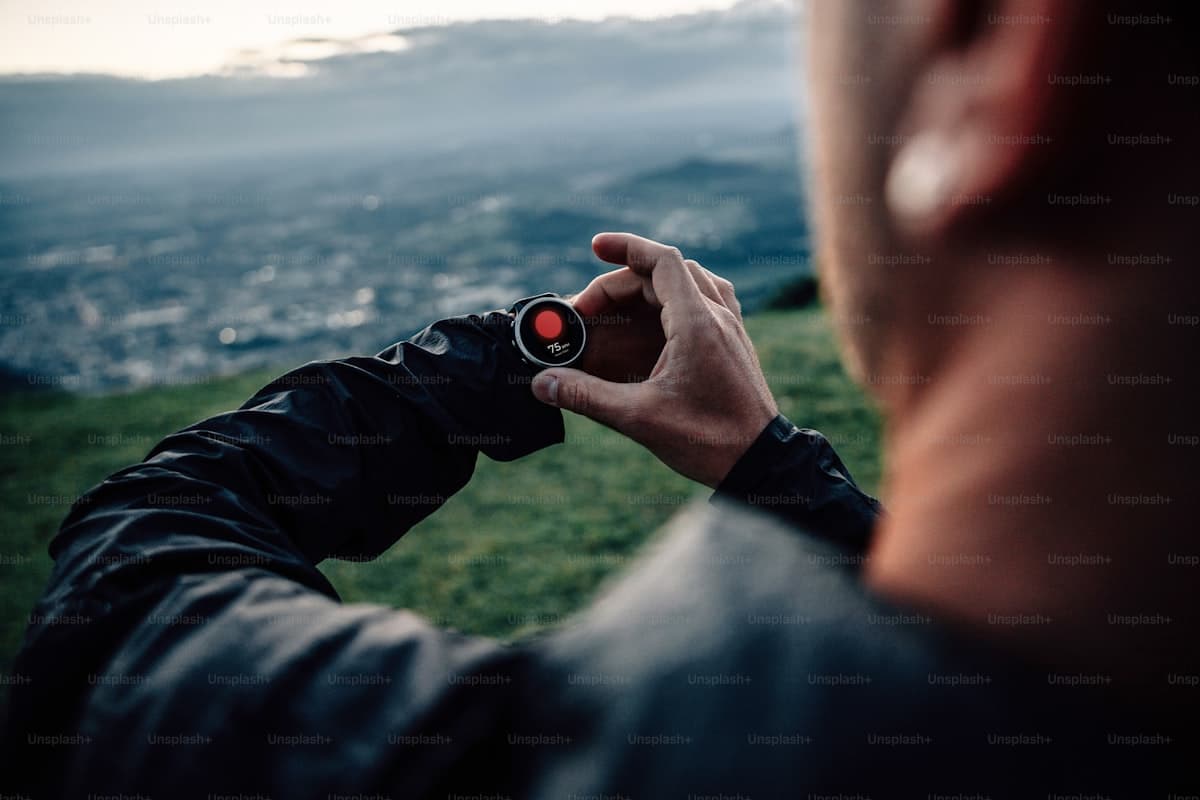
Best Hiking Smartwatch 2026: GPS Watch Guide
Garmin, Suunto, Coros, Apple Watch: which hiking smartwatch is worth it in 2026? Compared by battery, GPS accuracy, weight and price.
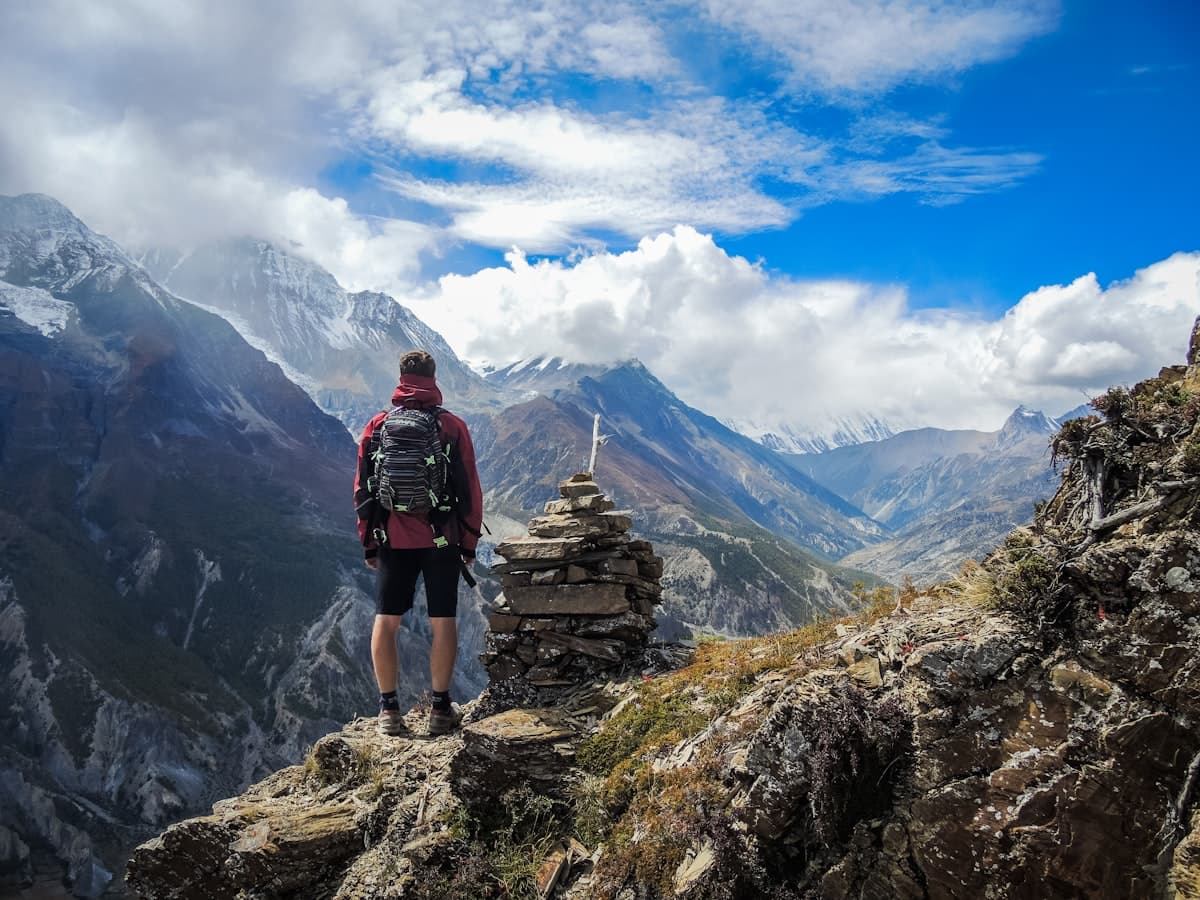
Best Hiking Apps in 2026: Complete Comparison
Komoot, AllTrails, Wikiloc, IGN Geoportail, OsmAnd: which hiking app is best in 2026? Compared on maps, offline use, price and profile.
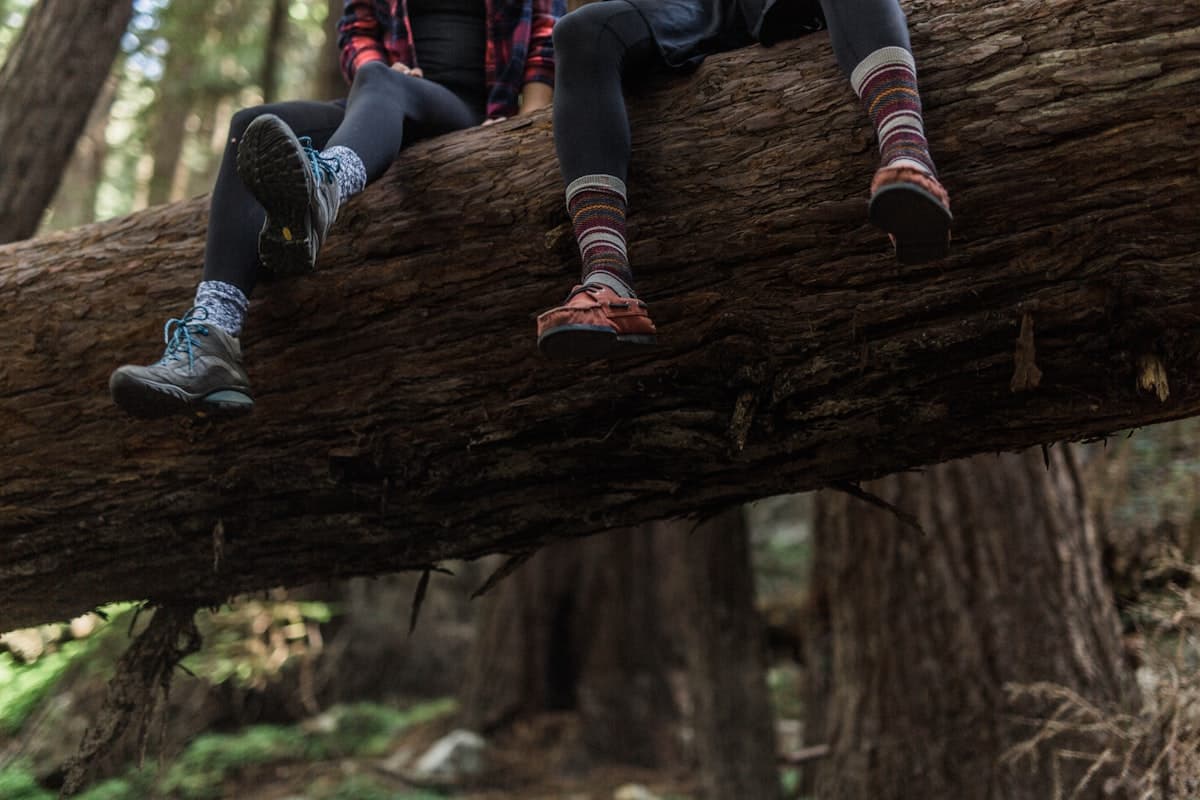
Hiking Socks Comparison: Merino Wool, Synthetic or Blend?
How to choose the right hiking socks: merino or synthetic, height, cushioning and seams. Comparison of six tested models to avoid blisters.