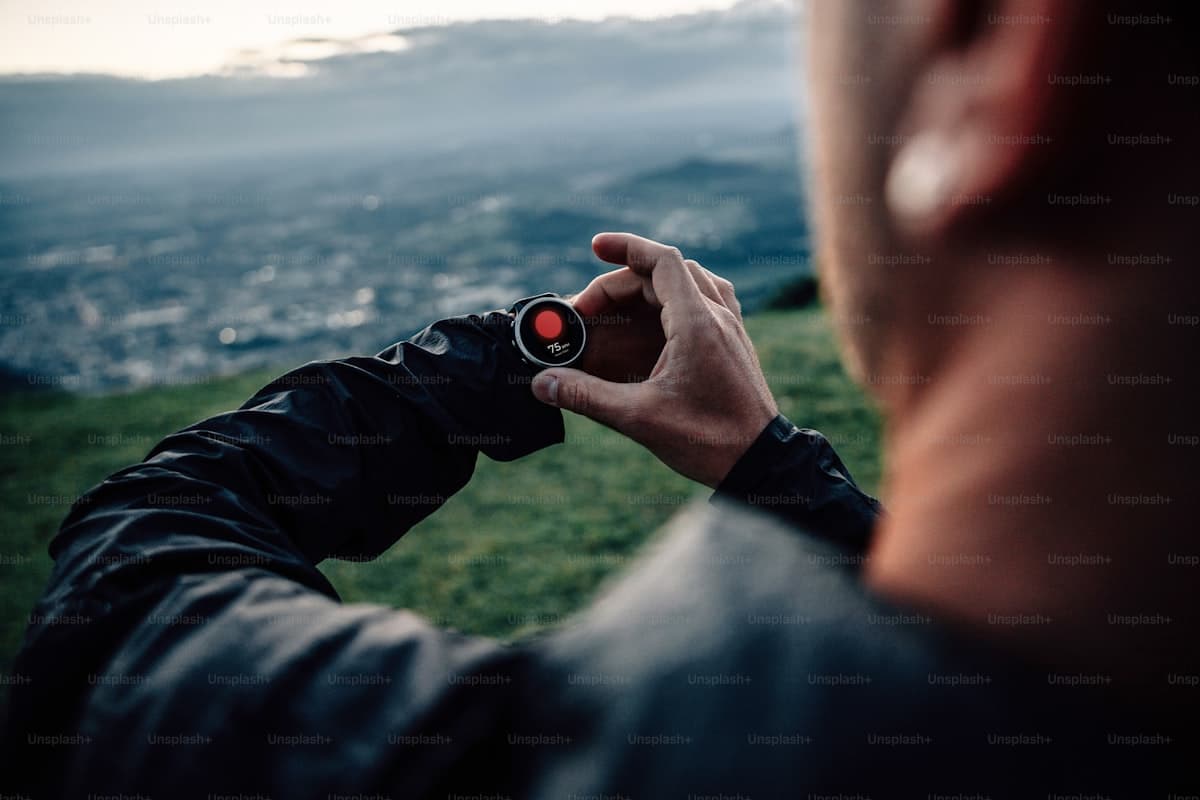
Best Hiking Smartwatch 2026: GPS Watch Guide
The GPS hiking watch has fundamentally changed how hikers navigate, plan their outings, and track their performance. In 2026, the market is overflowing with options: ultra-technical models at €900 sit alongside solid alternatives at €150 that cover most needs. How do you make sense of it all? This comparison reviews the key criteria, the best watches on the market, and helps you find the right model for your style of hiking.
Why Choose a GPS Watch Over a Smartphone?
Fair question. Your smartphone already does GPS — why invest in a dedicated watch?
- Battery life: A dedicated GPS watch lasts 20 to 100 hours in continuous GPS mode. Your smartphone? 5 to 8 hours maximum.
- Ruggedness: GPS watches are waterproof (10 ATM minimum), shock-resistant, and built to handle temperature extremes. A phone in a pocket offers none of these guarantees.
- Instant readout: Check altitude, heading, distance, or heart rate at a glance without pulling out your phone.
- Built-in sensors: Barometric altimeter, compass, barometer — essential mountain data that GPS alone can't provide.
- Weight: A watch adds 40 to 80 g on your wrist. A phone in your pack means 150 to 250 g extra, plus the power bank you'll inevitably need.
Key Criteria for Making the Right Choice
1. GPS Battery Life
This is the number one criterion for hikers. In standard GPS mode (without multiband), expect:
- 20–30 h: entry-level and mid-range models
- 40–80 h: endurance watches (Garmin Instinct, Coros Apex)
- 100–200 h in low-power mode: ultra-endurance specialists
For a day hike (6–10 h), almost any watch will do. For a multi-day traverse without recharging — three days through the Ardèche gorges, an Alpine crossing — aim for at least 50 h of continuous GPS.
2. Barometric Altimeter
GPS altimeters alone are imprecise (±10–20 m). A barometric altimeter measures atmospheric pressure and delivers accuracy of ±3–5 m — essential for calculating accurate elevation gain. It also detects weather changes, invaluable in the mountains for spotting an incoming storm.
All mid- and high-range watches in 2026 include one. Beware of budget models that display "GPS altitude" without a true barometric altimeter.
3. Topographic Maps
Some watches display topo maps directly on the wrist. Hugely convenient, but it consumes more battery and requires sufficient storage (16 GB minimum).
The Garmin Fenix 8 and Epix come with worldwide topo maps. Suunto and Coros offer downloadable maps. For France and the PACA region, IGN maps are available on most Garmin Connect platforms.
4. Connectivity and Apps
The watch alone isn't enough: the software ecosystem matters as much as the hardware.
- Garmin Connect: the gold standard, with built-in Strava, advanced analysis, GPX trace sharing, and OpenRando compatibility.
- Suunto App: clean interface, good route and POI management.
- Coros Training Hub: performance-focused, ideal if you combine trail running and hiking.
GPX import/export is non-negotiable: make sure the watch accepts traces in .gpx or .fit format.
5. Weight and Comfort
On long-distance hikes, wrist weight adds up. GPS watches range from 38 g (Coros Pace 3) to 89 g (Garmin Fenix 8 Solar with titanium strap). For multi-day hikes with a heavy pack, a lighter watch reduces cumulative fatigue.
Our 2026 Selection: Best GPS Watches by Profile
Garmin Fenix 8 — The Absolute Reference
The Garmin Fenix 8 is the most comprehensive hiking watch on the market in 2026. Worldwide topo maps, precision barometric altimeter, 3-axis compass, optical heart rate sensor, pulse oximeter (SpO2), 72 h battery in multiband GPS mode, AMOLED or solar display depending on the version — it lacks nothing.
Its weaknesses: price (€750–950 depending on version) and weight (89 g for titanium, 63 g for standard). It suits demanding hikers, alpine mountaineers, and those who want one watch for life.
Recommended for: expert hikers, alpinists, multi-sport athletes (trail, skiing, cycling), unlimited budget.
Garmin Instinct 3 — Best Value Endurance Watch
The Garmin Instinct 3 is the watch for ultra-hikers and minimalists. Rugged polycarbonate case (MIL-STD-810 certified), multi-constellation GPS, barometric altimeter, 60 h in standard GPS mode (and up to 40 days as a regular watch), priced around €350–450.
It doesn't display color maps (monochrome transflective display, readable in bright sunlight), but it provides all the essential navigation features: track following, heading, back-to-start. Its light weight (48 g) and toughness make it the ideal companion for long traverses and harsh conditions.
Recommended for: endurance hikers, long distances, extreme conditions, mid-range budget.
Suunto Vertical — Scandinavian Mountain Expertise
The Suunto Vertical is Suunto's answer for mountain hikers. Its barometric altimeter is among the most precise on the market, its compass is reliable even in high magnetic disturbance areas, and its battery life reaches 60 h in multiband GPS mode. It displays color maps and supports GPX route import.
The Suunto App ecosystem is more limited than Garmin Connect, but the watch excels in mountain environments (snowy couloirs, rocky terrain, high altitude). Priced around €400–600.
Recommended for: mountain hikers, alpinists, high-altitude trekkers, Suunto ecosystem users.
Coros Apex 2 Pro — The Ultra-Endurance Specialist
The Coros Apex 2 Pro is built for long adventures. Up to 75 h in standard GPS, 40 h in multiband, color map display, barometric altimeter, 52 g weight — and a price around €450–500.
Its standout feature: economy mode that stretches GPS battery to 140 h by reducing recording frequency. Perfect for major traverses (Hautes-Alpes, Mercantour) where recharging isn't possible.
Recommended for: ultra-trail runners, long-distance hikers, maximum autonomy seekers.
Amazfit T-Rex 3 — Best Absolute Value for Money
For hikers who want essential features without emptying their wallet, the Amazfit T-Rex 3 is a revelation. Rugged case (MIL-STD-810 certified), multi-constellation GPS, barometric altimeter, 30 h in continuous GPS mode, AMOLED display — for under €200.
Its limits: the Zepp Health ecosystem is less mature than Garmin Connect, and GPS precision is slightly inferior to high-end Garmins. But for a day hike or weekend in Provence, it handles everything you need.
Recommended for: occasional to regular hikers, tight budget, day hikes.
Apple Watch Ultra 2 — For the Apple Ecosystem
If you're already in the Apple universe, the Apple Watch Ultra 2 deserves consideration. With 60 h GPS battery life, map display, 100 m water resistance, and an ultra-bright display, it has become a genuine outdoor watch.
Its hiking limitations: iPhone-only, the GPX trace ecosystem is less developed than Garmin's, and the price (€799) is high for its GPS performance. But if you already wear one daily, it'll handle the trails of the Calanques or the Luberon without breaking a sweat.
Recommended for: committed Apple users, regular hikers, multi-use (daily + outdoor).
Quick Comparison Table
| Watch | Price | GPS Battery | Topo Maps | Weight | Profile |
|---|---|---|---|---|---|
| Garmin Fenix 8 | €750–950 | 72 h (multiband) | Yes (worldwide) | 63–89 g | Expert |
| Garmin Instinct 3 | €350–450 | 60 h | No (navigation only) | 48 g | Endurance |
| Suunto Vertical | €400–600 | 60 h (multiband) | Yes | 62 g | Mountain |
| Coros Apex 2 Pro | €450–500 | 75 h | Yes | 52 g | Ultra |
| Amazfit T-Rex 3 | €150–200 | 30 h | No | 58 g | Occasional |
| Apple Watch Ultra 2 | €799 | 60 h | Yes | 61 g | Apple ecosystem |
Getting the Most From Your GPS Watch on the Trail
Importing a GPX Trace
Most watches accept GPX files. On OpenRando, every hike listing includes a GPX download link. You then import the trace into Garmin Connect, Suunto App, or Coros Training Hub, and sync it to your watch.
On the trail, the watch displays your position on the route, alerts you if you go off-track, and shows the distance remaining to the next waypoint. An invaluable safety net on poorly marked paths.
Using the Barometric Altimeter
Calibrate your altimeter at the start: enter the exact altitude of your starting point (available on OpenRando trail cards or IGN maps). The watch will then correct for barometric drift and display an accurate elevation profile at the end of your outing.
The Back-to-Start Feature
If you're unsure of your position — fog, dense vegetation, nightfall — virtually all GPS watches offer a "back to start" mode. The watch calculates a direct route (as the crow flies) to your starting point and shows you the heading to follow. It's not a path-aware navigation, but an electronic compass guiding you in the right direction.
Caring for Your GPS Watch
- After each outing: rinse with fresh water (especially the heart rate sensor on the underside), dry with a soft cloth.
- Strap: silicone straps degrade with sweat and heat. Replace them when they start cracking (they use universal 22 or 26 mm standard sizes).
- Battery: avoid leaving the watch fully discharged for long periods. Charge to 50% before storing it for a while.
- Firmware updates: updates improve GPS accuracy and fix bugs. Sync regularly with the associated app.
Key Takeaways
Choosing a GPS watch in 2026 comes down to three questions:
- How long are your hikes? For a day out: almost any watch will do. For multi-day autonomy: target 60 h minimum in continuous GPS mode.
- Do you need maps on your wrist? If you prefer visual navigation on the watch face, choose a color map model (Fenix, Apex, Vertical). Otherwise, a navigation-focused model is enough.
- What's your budget? A great hiking companion exists at every price point — from the Amazfit at €150 to the Fenix 8 at €900.
To go further in planning your outings, check out our best hiking apps comparison and our guide to hiking poles. Find your next hike on OpenRando and import the GPX trace directly into your watch.
As an Amazon Associate, we earn from qualifying purchases. Links marked with an external icon are affiliate links.
Related reading

Best Hiking Apps in 2026: Complete Comparison
Komoot, AllTrails, Wikiloc, IGN Geoportail, OsmAnd: which hiking app is best in 2026? Compared on maps, offline use, price and profile.
Best Portable Solar Panels for Hiking 2026
Power output, weight, durability, connectors: how to choose a portable solar panel for a day hike or a multi-day trek.
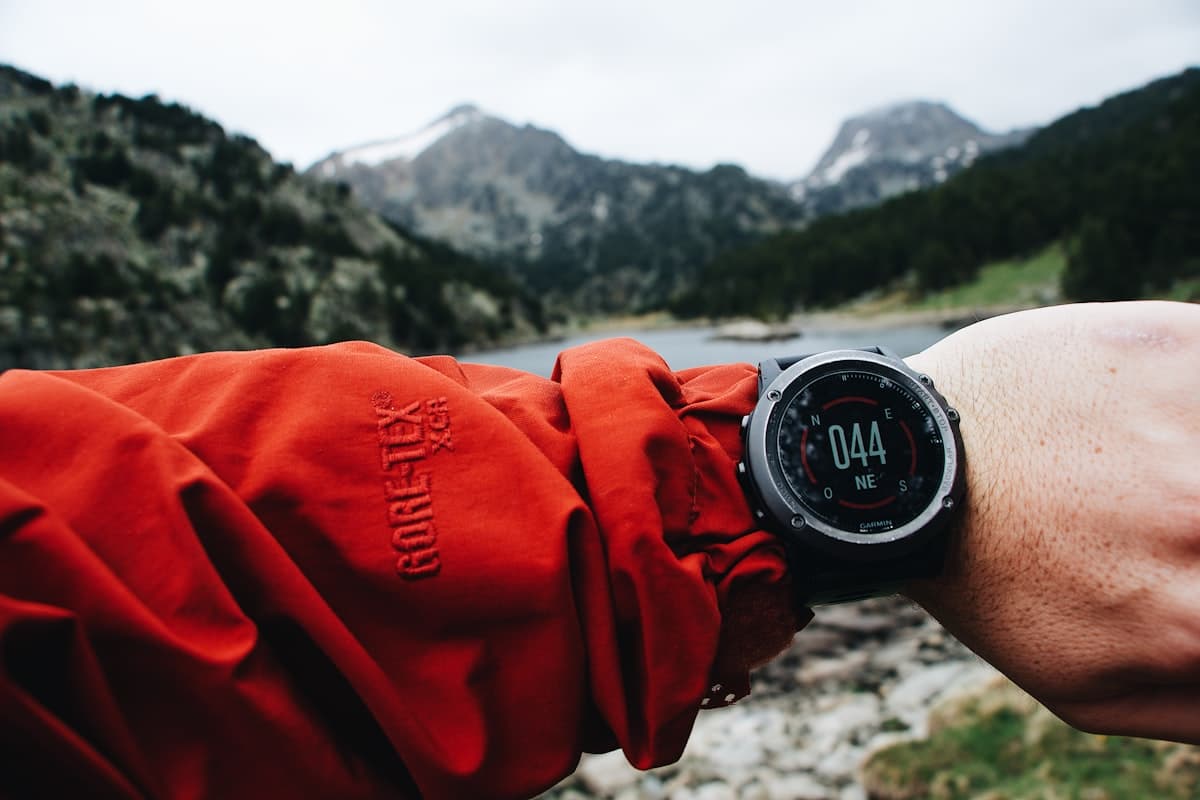
Best GPS Watches for Hiking Under €300: Which One to Choose?
The best GPS hiking watches under 300 euros compared: real battery life, track accuracy, mapping and navigation put to the test.