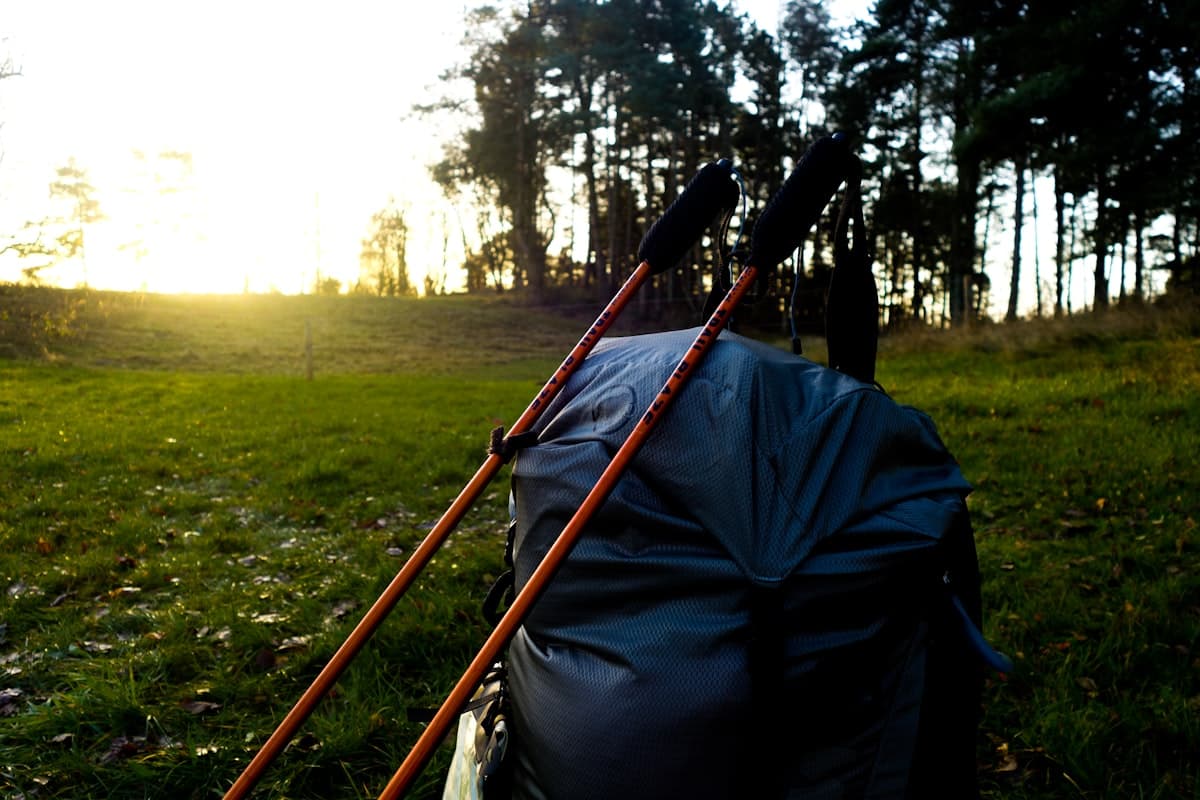
Hiking Poles Compared: How to Choose the Right Pair
Hiking poles were long seen as an accessory reserved for older walkers or long-distance trekkers. Those days are gone. Today, even weekend hikers are adopting them — and rightly so. Chosen well, poles protect your knees on the descent, improve balance on rough terrain, reduce overall fatigue and allow you to cover greater distances with less pain. Chosen poorly, they weigh heavy in your hands, slip on rock and end up forgotten at the bottom of your pack.
This guide compares the main types of poles available on the market — materials, adjustment systems, baskets, grips — to help you make the right choice based on your terrain, hiking style and budget.
Why Use Hiking Poles?
Before comparing models, let's recall why poles are worth the investment:
- Knee protection: on the way down, each step on steep terrain applies a force equivalent to 3–5 times body weight on the knee joint. Poles distribute part of that impact through the arms and shoulders.
- Balance and safety: on technical paths, scree, stream crossings or snow patches, two extra points of contact dramatically increase stability.
- Reduced fatigue: on multi-day hikes, poles engage the arm and torso muscles, preventing the legs from doing all the work alone.
- Uphill assistance: on steep terrain, pushing on the poles relieves the quadriceps and improves propulsion.
- Multi-purpose tool: pitching a tarp, testing marshy ground, hanging wet clothes, pushing back branches — poles often prove useful far beyond their primary function.
Materials: Aluminium vs Carbon
This is the first criterion that determines both the price and the characteristics of a pole.
Aluminium: Robust and Affordable
Aluminium (often labelled "duralumin" or "7075 alloy") is the most common material in mid-range poles. Its advantages:
- Resistance: if a pole takes a knock or gets jammed in a rock, aluminium bends rather than shatters — a decisive advantage in the mountains.
- Price: quality aluminium models start around €40–60 a pair and deliver excellent value.
- Durability: a well-maintained aluminium pole easily lasts ten years.
Its main drawback: weight. An aluminium pole weighs between 230 and 300 g each, meaning 460–600 g per pair.
Aluminium telescopic hiking poles are the ideal choice for regular hikers who prioritise robustness over lightness, and for those trekking on varied terrain with a risk of impacts.
Carbon: Light but Fragile
Carbon fibre is the material of premium and ultralight poles. Its advantages:
- Lightness: between 100 and 180 g per pole depending on the model — a pair weighing as little as 200–360 g. Over a long hike, you feel the difference.
- Vibration damping: carbon fibre naturally absorbs vibrations from the ground — more comfortable on rocky terrain.
- Rigidity: carbon poles do not flex, which improves the efficiency of your push.
Its drawback: carbon fibre snaps under a violent impact or when jammed. The break can be clean and irreparable, sometimes mid-route. For this reason, carbon poles are not recommended on very technical terrain or when hiking solo in remote areas.
Adjustment Systems: Telescopic vs Folding
Telescopic Poles
The most classic system: two or three sections slide into each other and lock via a clamping mechanism. Two technologies coexist:
- Twist lock: rotating the inner section creates friction that holds the adjustment in place. Simple and light, but it can loosen through vibration or in wet conditions. Check it regularly.
- Lever lock (flip lock): an external lever clamps the sections together. The adjustment is faster, more reliable and easy to check even with gloves on. This is the system adopted by most modern poles.
Telescopic lever-lock poles are the all-round choice: they suit all heights (fine adjustment between 100 and 135 cm), adapt easily en route according to gradient, and pack neatly in or on your rucksack.
Folding Poles (Z-Pole)
Inspired by cross-country ski poles and popularised by trail runners, folding poles collapse into three segments held together by an internal cord. They are set to a fixed length (or with a very limited adjustment range) and cannot be finely tuned mid-hike.
Their advantages:
- Compactness: folded, they measure 35–40 cm and fit inside a rucksack or even a jacket pocket.
- Speed of deployment: the pole is ready to use in seconds.
- Lightness: paired with carbon, folding poles are the lightest on the market (90–130 g/pole).
Their drawbacks: limited length adjustment, internal cord susceptible to wear, and a high price. They are ideal for trail running, fast hiking and outings where poles are only needed on the descents.
Grips: Cork, Foam or Plastic?
The grip is the part of the pole in constant contact with your hand. Its ergonomics and material have a direct impact on comfort.
- Cork: the premium material. Cork moulds itself to the shape of the hand, does not absorb sweat (so it stays dry), regulates temperature (cool in summer, insulating in winter) and is highly durable. It's the choice of hikers who walk in hot conditions.
- EVA foam: light, soft and insulating, EVA foam is particularly appreciated in cold weather. It absorbs more moisture than cork but remains comfortable over long outings.
- Plastic / rubber: found on entry-level models. Acceptable for occasional use, but uncomfortable on long hikes (blisters, sweaty palms, slipping).
Most modern poles also feature an extended secondary grip along the upper shaft, allowing you to grip lower without adjusting the length when climbing a short steep section — a very practical feature in alpine terrain.
Baskets: Dry Ground vs Snow
The basket (or "plate") at the base of the pole prevents it from sinking too deep into soft ground.
- Small trekking baskets (6–8 cm diameter): versatile, suited to dry paths, scree and summer hiking. Most poles ship with this type.
- Large snow baskets (10–14 cm diameter): essential on soft or fresh snow, where small baskets sink completely. They are removable and interchangeable on most models.
- Rubber tips: for use in towns, on hard surfaces or in mountain huts (protecting floors), it's standard practice to cap the carbide tip. Most poles come with these caps included.
What Weight Should You Target?
A quick reference guide:
| Type of hike | Recommended weight (per pole) |
|---|---|
| Family / discovery hiking | 250–350 g |
| Regular hiking | 200–280 g |
| Long-distance / multi-day | 150–230 g |
| Trail running / ultralight | 90–160 g |
Leading Brands
Black Diamond
A world reference in hiking and alpine poles. Black Diamond offers comprehensive aluminium and carbon ranges, with the FlickLock Pro lever system renowned for its reliability. The Trail Pro (aluminium, mid-price) and Distance Carbon (ultralight, trail) are among their best-sellers.
Black Diamond Trail Pro poles are an excellent entry point for hikers seeking reliability and performance.
Leki
The German brand is synonymous with rigorous quality. Their SpeedLock (lever) and Trigger Shark (grip-integrated strap) systems are highly appreciated. Leki excels in premium cork-grip poles and offers a wide range for families, seniors and high-performance athletes.
Leki Makalu poles are particularly valued for long-distance hiking.
Komperdell
An Austrian brand less well-known outside of central Europe but offering excellent value for money. Their mid-range aluminium poles (€40–70) match more expensive models in performance.
Decathlon / Forclaz
For getting started without overspending, Decathlon's Forclaz range offers decent aluminium poles from around €25 a pair. The finish is basic, but for testing poles on a few annual outings, they do the job.
Our Picks by Profile
The Beginner or Occasional Hiker
Budget: €30–60 — Go for aluminium telescopic poles with a lever lock, foam or plastic grip. Look for models with interchangeable baskets included. The Forclaz range or entry-level Black Diamond and Leki models are ideal.
The Regular Hiker in Provence / South of France
Budget: €60–120 — Provençal trails alternate between dry, technical limestone, moderate elevation gain and sharp descents. An aluminium pole with a cork grip, robust lever system and good ergonomics will be perfect for the paths of the Verdon, Calanques or Alpilles. Target the Black Diamond Trail mid-range or Leki Makalu Lite.
Aluminium cork-grip lever-lock poles are the optimal choice for this profile.
The Multi-Day and Long-Distance Hiker
Budget: €120–200 — For GR long-distance trails, Alpine crossings or extended itineraries, weight matters. Consider a folding carbon model or a carbon telescopic. The Black Diamond Distance Z Carbon or Leki Micro Trail Pro offer an excellent lightness-compactness compromise.
Ultralight folding carbon poles are particularly well-suited to bivouacs and multi-day hikes.
The Trail Runner and Ultra-Runner
Budget: €150–250 — Trail poles are tools for propulsion as much as support. Look for the folding/carbon combination with a compact grip and adjustable strap. The Salomon Trailblazer, Black Diamond Distance Z and Leki Micro Trail Pro are the benchmark models.
Care and Longevity
A well-maintained pole lasts far longer. A few simple rules:
- After each outing: wipe the shaft and sections, open the levers slightly to prevent corrosion.
- After contact with salt water or mud: rinse with fresh water, air-dry.
- Lubrication: apply a little silicone grease to the inner sections occasionally (avoid oil-based grease that attracts dust).
- Tips: carbide tips wear down. Check them regularly and replace them when blunt (they are threaded and replaceable on most models).
- Baskets: replace them if cracked or if the fixing system is worn.
Key Takeaways
Choosing hiking poles comes down to four main criteria:
- Material: aluminium if robustness is the priority, carbon if weight is.
- Adjustment system: telescopic for versatility and fine adjustment, folding for compactness.
- Grip: cork for long summer outings, foam for cold conditions.
- Budget: no need to invest in premium carbon poles if you hike ten days a year. A solid aluminium pair at €60–80 will serve you faithfully for years.
If you're just starting out, the trails of Provence — pleasant, varied and accessible — are the perfect testing ground to find your style with poles. Explore the hikes in the region and let the terrain guide your choice.
As an Amazon Associate, we earn from qualifying purchases. Links marked with an external icon are affiliate links.
Related reading
Gore-Tex vs eVent: Best Waterproof Jackets 2026
Gore-Tex, eVent, Pertex Shield, 2L or 3L: how to pick a waterproof hiking jacket for your terrain and budget in 2026.
Sleeping Pad Comparison 2026: How to Choose for Backpacking and Bivouacking
Choosing a sleeping pad for backpacking: R-value explained, inflatable vs foam vs self-inflating, weight and real comfort. Six pads compared by season.
Best 30-40L Daypacks for Hiking: 5 Models Compared
Which 30 to 40-litre daypack should you choose for hiking? Carrying comfort, ventilation, access, and weight: 5 models compared to find your ideal companion.