Bivouacking in France: Rules, Regulations and Best Practices
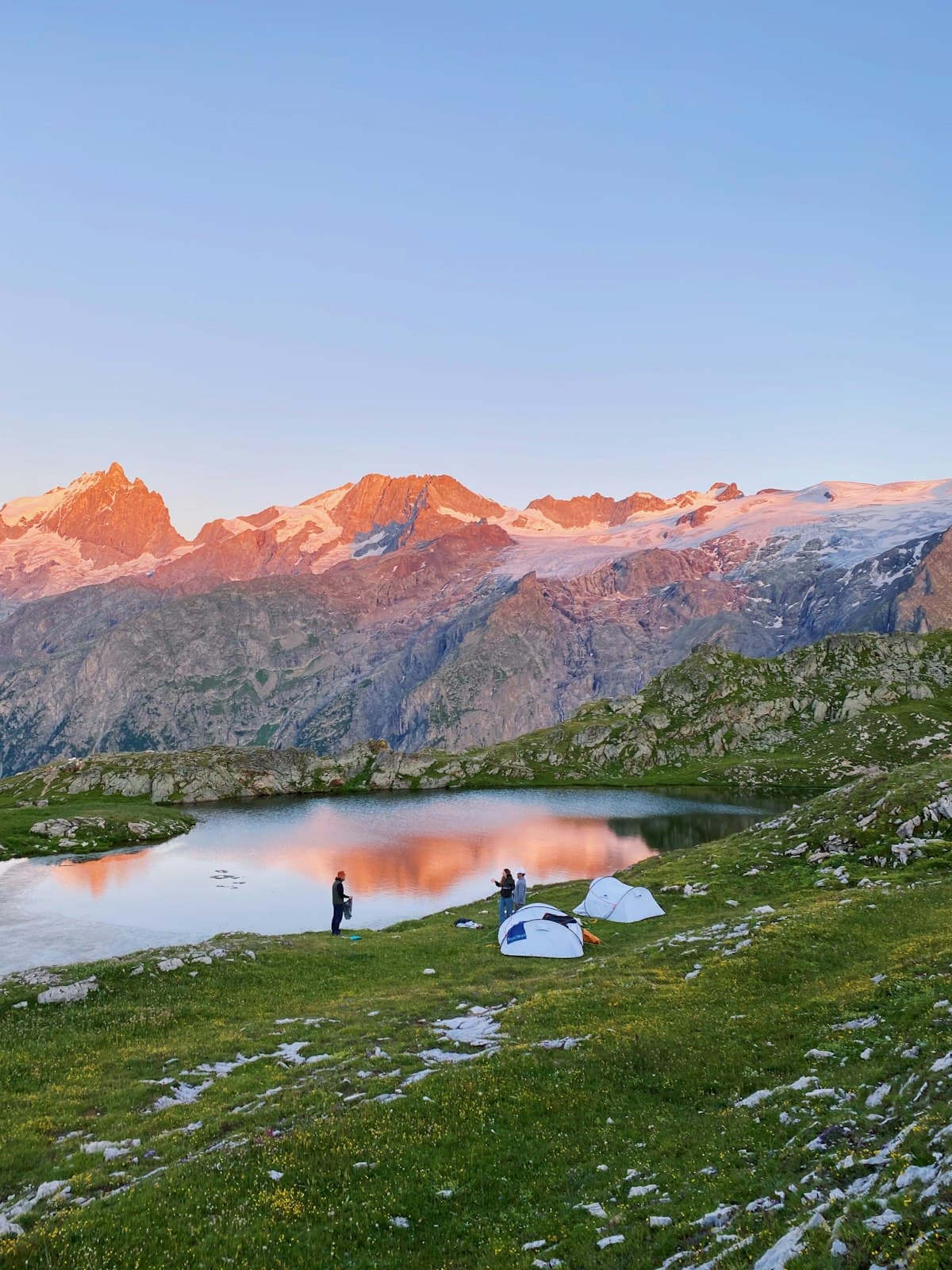
Night falls over the ridgeline. The sky fills with stars, the silence broken only by wind in the grass and the murmur of a stream far below. You pitch your tent, prepare your meal on the camp stove, and slip into your sleeping bag with the rare feeling of being exactly where you should be. That is bivouacking.
But before you can live this experience, you need to know where and how to bivouac in France without breaking the law — or damaging the very natural environments you came to admire. This complete guide explains the regulations in force and the best practices for responsible bivouacking.
What is Bivouacking?
Bivouacking refers to a temporary overnight stay outdoors, usually for a single night. Under French law, it differs from wild camping: a bivouac means setting up from sunset to sunrise, without making any lasting change to the environment (no digging, no fires, no permanent installation).
This distinction is fundamental. A bivouacker sets up for the night and leaves without a trace. Wild camping, by contrast, implies a longer installation — often with a vehicle — and is far more strictly regulated.
Bivouac vs Wild Camping: What's the Legal Difference?
In France, wild camping is in principle prohibited on land not specifically designated for camping, unless the landowner consents. Bivouacking, however, benefits from widespread tolerance, provided certain basic rules are observed:
- Set up only at night (between sunset and sunrise)
- Never stay more than one night in the same spot
- Leave no trace: no waste, no fire ring, no damaged vegetation
- Respect private property: setting up on private land without permission remains an offence
This tolerance for bivouacking is a deeply rooted tradition in French mountain culture, but it does not exist everywhere with the same permissiveness — particularly within protected natural areas.
Bivouac Regulations by Zone
Outside Protected Areas
Across most of France — state forests, mountain terrain, agricultural land — a one-night bivouac is generally tolerated, provided you do not damage the environment. This tolerance is not, however, a statutory right: a landowner can ask you to leave, and you must comply.
Some municipalities impose additional local restrictions, especially in summer because of wildfire risk. Always check with local tourist offices or town halls before bivouacking in unfamiliar territory.
In National Parks
Each national park has its own regulations, and bivouacking is more tightly controlled than elsewhere:
Parc National des Écrins Bivouacking is permitted in the core zone, but only more than one hour's walk from the park boundaries, roads and car parks, and only between 7 pm and 9 am. Fires are prohibited. This is one of the more permissive regimes among the Alpine national parks.
Parc National du Mercantour The same rule as the Écrins: bivouacking is permitted more than one hour's walk from boundaries and access points, between 7 pm and 9 am. Open fires are strictly forbidden. The park is particularly sensitive to nocturnal human presence because of its wildlife (wolves, lynx, bearded vultures).
Parc National de la Vanoise Bivouacking is again permitted in the core zone under the same conditions — more than one hour's walk from boundaries and road access, between 7 pm and 9 am. The Vanoise was France's first national park (1963) and remains a sanctuary for Alpine ibex.
Parc National des Pyrénées Same timetable and distance rules apply. Areas around high-altitude lakes are particularly sensitive; certain sectors may be subject to additional seasonal orders.
Parc National des Calanques This is the most restrictive of all: bivouacking and wild camping are strictly forbidden throughout the park, at any hour. The ban reflects both the extreme wildfire risk (red-zone classification for much of the summer) and the exceptional fragility of Mediterranean ecosystems.
Parc National de Port-Cros Bivouacking is prohibited on all of the park's islands.
In Regional Natural Parks (PNR)
Regional natural parks have a different legal status from national parks. There is no single national regulation: each PNR sets its own rules. In the majority of them, a one-night bivouac is tolerated along marked trails, but sensitive areas — lakes, wetlands, cliff faces used by raptors — may be subject to local restrictions.
Always check the park's website or visitor centre before your trip.
Near Rivers and in Forests
Bivouacking in state-owned forests is generally tolerated, unless a prefectural order says otherwise (common in summer in high-risk fire zones). Along watercourses, rules vary by municipality and département. In Natura 2000 areas, extra care is required.
Responsible Bivouacking: Best Practices
Regulations are one thing; best practices are equally important. Bivouacking with respect for the natural environment is the condition upon which this freedom depends — and how we ensure it endures.
Choosing Your Spot
- Avoid wetlands: peat bogs, lake shores, stream banks. These environments are extraordinarily fragile and can take decades to recover.
- Favour hard or mineral surfaces: flat rocks, stabilised scree, already well-trodden ground. The impact is lower.
- Keep your distance from water sources: at least 50 to 200 metres from a lake or watercourse to prevent contamination.
- Avoid exposed ridges in unstable weather — safety always comes first.
Leave No Trace
Leave No Trace (LNT) is an outdoor ethic that originated in North America and has been adopted worldwide. Its key principles for bivouacking:
- Plan and prepare your trip to minimise the unexpected
- Travel and camp on durable surfaces — never trample vegetation
- Dispose of waste properly — including organic waste
- Leave what you find: flowers, stones, wood, historical artefacts
- Minimise campfire impact — use a camp stove instead; avoid open fires
- Respect wildlife: observe without feeding or disturbing
- Be considerate of other visitors
Waste Management
This point deserves special attention. Everything you bring into the wild must leave with you, without exception. Carry a sealed rubbish bag for your waste. For natural needs, move at least 50 metres from any water source and bury waste 15 cm deep in soft soil.
Toilet paper, contrary to popular belief, decomposes very slowly at altitude where temperatures remain low. Carry it out in a sealed bag.
Water in the Wild
Mountain streams are generally of excellent quality, but never entirely free of risk (contamination from grazing herds upstream, bacteria). Invest in a water filter or purification tablets. This means you can travel light without heavy water reserves, while staying safe.
Essential Bivouac Gear
Bivouacking requires specific equipment: light but high-performing. The challenge is staying warm and dry while keeping your pack as light as possible.
The Tent or Tarp
For a night in the mountains, a lightweight tent weighing under 2 kg is ideal. Models in silnylon or Dyneema offer an excellent weight-to-durability ratio. For tighter budgets, a tarp suffices in good weather, but provides little protection against wind and rain.
Key criteria:
- Wind resistance (reinforced seams, multiple guy points)
- HH (hydrostatic head) rating: at least 3,000 mm
- Enough inner space plus a porch for shoes and bags
The Sleeping Bag
This is your most critical piece of gear. A down sleeping bag offers the best warmth-to-weight ratio, but requires protection from moisture. In the Alpine zone, aim for a comfort temperature of 0 to 5 °C for summer, and -5 to -10 °C for shoulder seasons.
Note: overnight temperatures in a bivouac are often colder than expected, especially above 2,000 m. Build in a safety margin.
The Sleeping Pad
An insulating inflatable sleeping pad protects you from cold rising through the ground (thermal conduction) and dramatically improves sleeping comfort. Check the R-value (thermal resistance): R ≥ 2 for summer, R ≥ 4 for cold conditions.
Cooking and Water
A compact gas stove and a small titanium pot are all you need to prepare freeze-dried meals or hot soup. Pair it with a water filter to fill up safely from streams and springs.
Lighting
A rechargeable headlamp is essential for pitching your tent at dusk, moving around camp, and brewing coffee before dawn. Choose a model with at least 200 lumens and a six-hour battery life.
The Weight Rule
For a one-night bivouac, aim for a pack of 8 to 12 kg (including water and food). Beyond that, the approach hike becomes exhausting. Every gram counts: favour ultralight gear and efficient food options (freeze-dried meals, energy bars).
Our Favourite Bivouac Hikes in France
OpenRando lists hundreds of trails passing through areas ideal for bivouacking. Here are a few particularly well-suited ones:
Parc National des Écrins
The Col de Fressinières in the Parc National des Écrins offers total immersion in high-mountain wilderness. The climb to the glacial lakes is long but magnificent, with perfect mineral bivouac spots above 2,000 metres.
Find the route: Col de Fressinières par les lacs – Parc National des Écrins — 13 km, 953 m elevation gain.
The hike to the Lacs de Pétarel from La Chapelle-en-Valgaudémar is another Écrins gem — less crowded, with beautiful pitches above 2,000 m.
Find the route: Boucle Le pont des Oules – Lacs de Pétarel — 12.8 km, 863 m elevation gain.
Southern Alps and Mercantour
The summits on the Franco-Italian border offer exceptional bivouac terrain, with star-filled skies free of light pollution. The traverse from Serremarchetto to Punta Aquila combines wild ridges and breathtaking panoramas.
See the route: Traversée de crête de Serremarchetto à Punta Aquila — 10.9 km, 882 m elevation gain.
Corsica
Corsica is one of France's great bivouacking destinations, with its wild mountains and high-altitude lakes. Lac de Nino, in the Regional Natural Park, is a legendary spot for a night under the stars in a setting of rare beauty.
Explore the trail: Lac de Nino – loop in the Parc naturel régional de Corse — 10.8 km, 650 m elevation gain.
What to Absolutely Avoid
To summarise the non-negotiables for a responsible bivouaceur:
- Campfires in fire-risk zones or national parks
- Leaving waste of any kind in nature, even apparently biodegradable items
- Repeated bivouacking in the same spot (vegetation cannot recover)
- Disturbing wildlife: nesting birds, ungulates during the rut, bats
- Bivouacking in wetlands or within 50 metres of a lake or watercourse
- Bivouacking without authorisation in the Calanques or Port-Cros national parks
Conclusion: A Freedom Worth Earning
Bivouacking in France is an extraordinary privilege. Few European countries allow this degree of closeness to wild nature — this freedom to sleep under the stars in the heart of the Alps, the Mercantour or Corsica. But this freedom comes with responsibility: every bivouacker is an ambassador for the practice, and through their behaviour contributes to keeping it alive — or to losing it forever.
Respect the regulations of each protected area, adopt Leave No Trace principles, and you will experience unforgettable nights in the most beautiful wild places France has to offer.
Explore hundreds of bivouac-friendly trails on OpenRando — with elevation profiles, GPX tracks and interactive maps to plan your adventure with confidence. And to complete your setup, discover our guides on choosing hiking boots, picking the right backpack and mountain refuges in Provence-Alps.
As an Amazon Associate, we earn from qualifying purchases. Links marked with an external icon are affiliate links.
Related reading
Mountain Refuges in Provence-Alps: Where to Sleep on the Trails
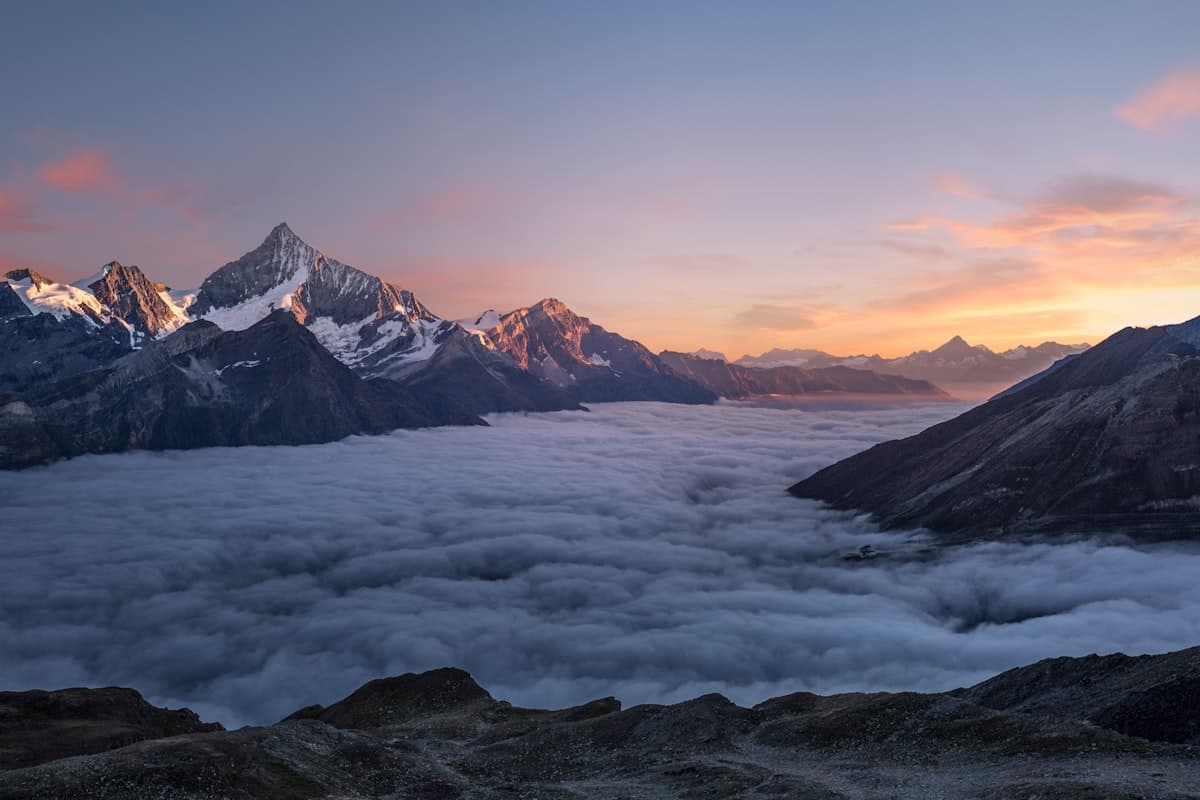
Staffed refuges, unmanned shelters, trail lodges… Discover where to sleep in the mountains of the Southern Alps and Provence for multi-day hiking adventures.
The Best Sleeping Bags for Bivouacking: Complete 2026 Guide
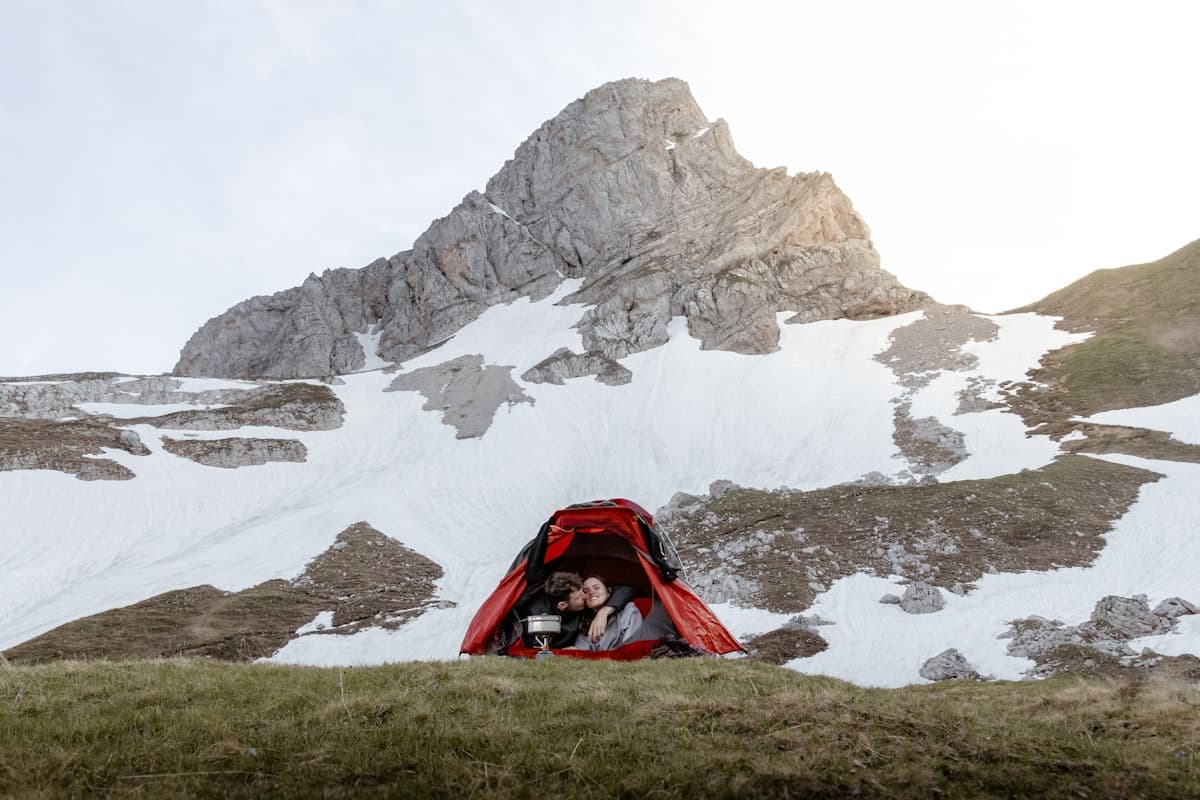
How to choose the best sleeping bag for bivouac hiking? Down vs synthetic, comfort temperature, weight — our complete selection for sleeping under the stars.
The Most Beautiful Hikes in Pyrénées-Orientales
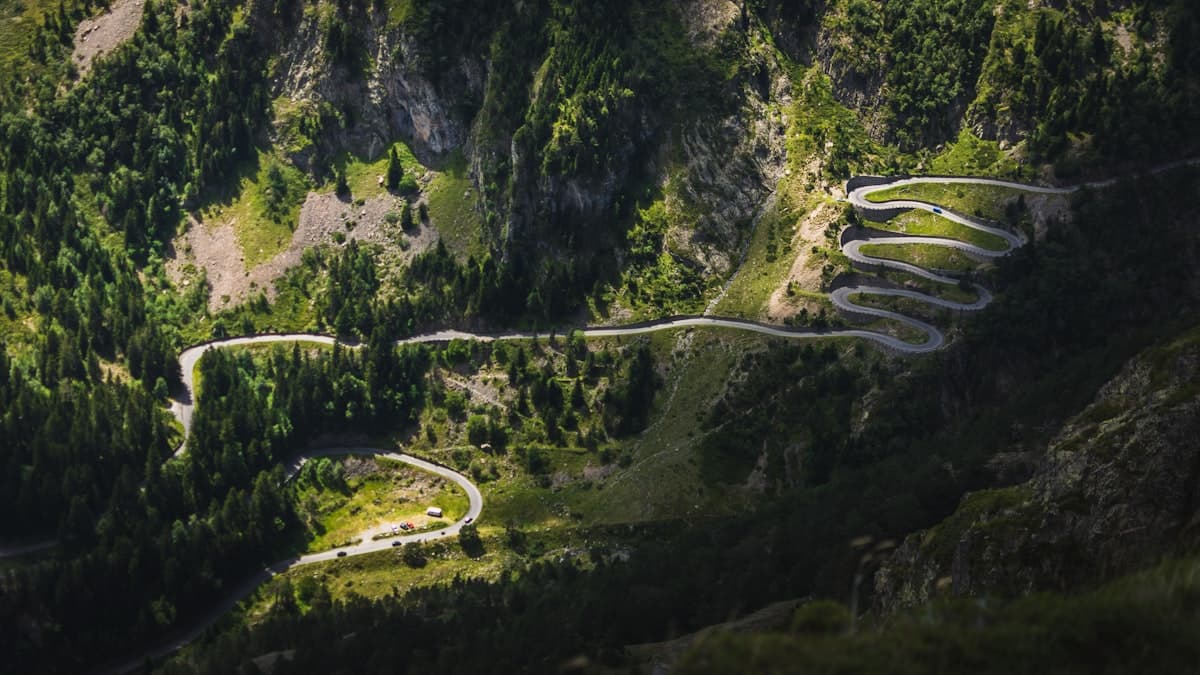
Discover the best hikes in Pyrénées-Orientales: from the mythical Canigou to the wild Albères, through the Conflent massif and the Côte Vermeille. Detailed itineraries, tips and gear advice.