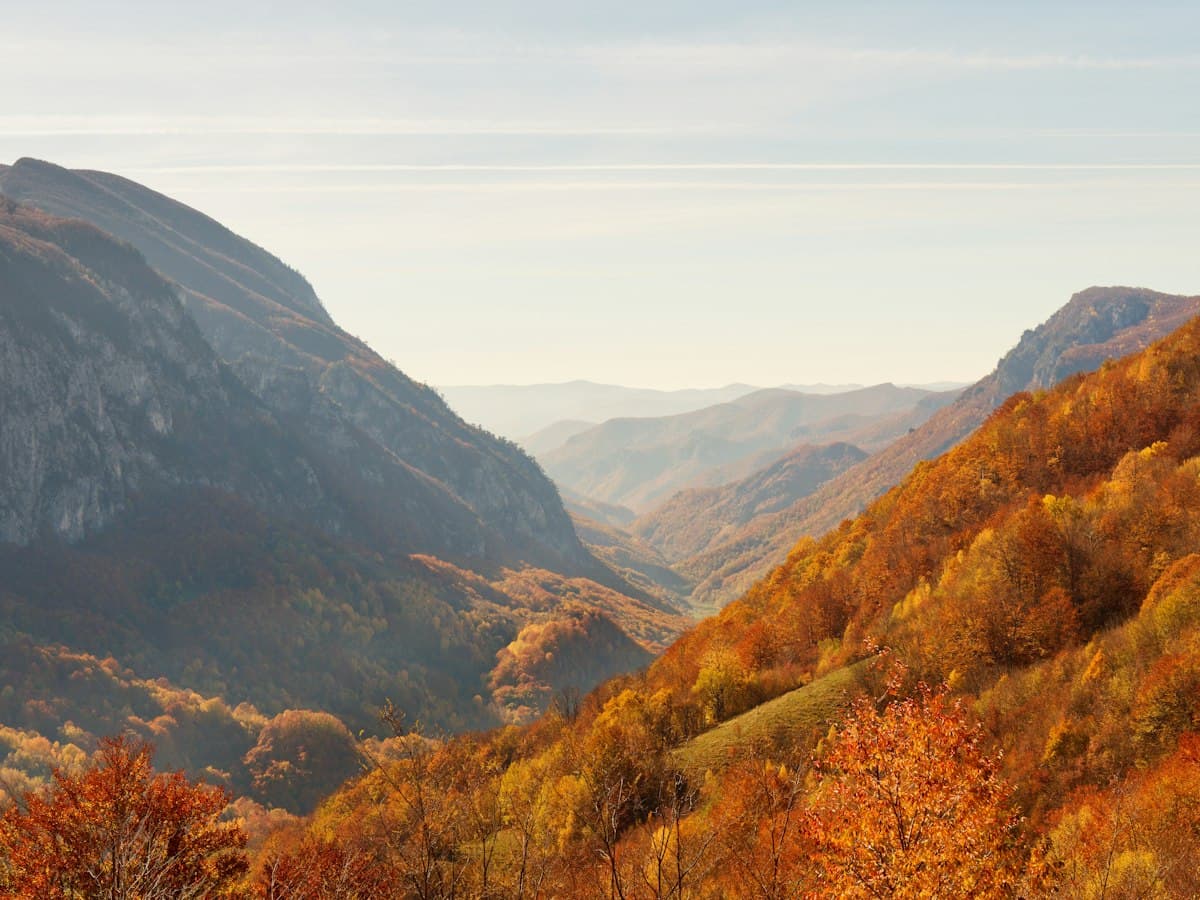
Hiking in Changing Weather: Managing Temperature Swings in Autumn
Autumn is one of the most beautiful seasons for hiking: forests burst with colour, the light turns golden, and trails empty of summer crowds. But it is also the most thermally deceptive season. A crisp 8 °C morning can slide into a warm 22 °C afternoon — with wind-blasted ridge sections and damp woodland stretches in between that can plunge perceived temperature dramatically. Head out with the wrong kit and you'll finish either soaked in sweat or shivering.
The good news: understanding two or three key principles is all it takes to hike comfortably no matter what the weather throws at you. Here is what experience — and a few instructive mistakes — has taught us.
Why Autumn Is More Treacherous Than Winter
In winter, the problem is straightforward: it's cold, stay warm. In autumn, the challenge is twofold: it can be both cold and warm on the same outing. The transitions are where things go wrong.
A hiker who sets off well equipped for 8 °C at dawn will often find themselves overheating an hour later, once the effort kicks in and the sun climbs. If they don't shed a layer at that point, they sweat heavily. Then they stop to check the map. And that's when the wind reminds them it's still 10 °C in the shade with 70 % humidity.
The real danger isn't cold itself — it's the cycle of perspiration followed by rapid cooling. A base layer saturated with moisture loses most of its insulating properties. This is the mechanics of hypothermia in the mountains in cool weather, not just in winter.
Stopping Is When You Get Cold, Not Walking
The fundamental rule every experienced hiker has internalized: you get cold when you stop, not when you walk. During effort the body generates heat in abundance. A ten-minute pause without adding a layer, in moderate wind at 12 °C, can bring on intense cold within two minutes if the base layer is damp.
Two classic mistakes:
- Waiting until you feel cold to add a layer. By then the body is already losing heat rapidly, and warming back up costs extra energy.
- Waiting until you feel too hot to remove a layer. If perspiration is allowed to build up too long, even a quality merino wool base layer reaches its limits.
The solution lies neither in equipment alone nor in physical toughness — it lies in actively anticipating thermal transitions.
Anticipate, Don't React: Remove a Layer Before You Get Hot
The principle of thermal management in autumn can be expressed in one sentence: remove a layer before you start to sweat, not after.
In practice, this means:
- As soon as you feel heat building in your back or your breathing becomes laboured, open your jacket or remove a mid-layer.
- When approaching a ridge or an exposed section, put that layer back on before you arrive, not once you're already cold.
- At lunch stops or scenic pauses lasting more than five minutes, systematically add a layer even if it doesn't feel very cold. Your body cools down while you eat.
This active behaviour outperforms the fantasy of a single "do-it-all" jacket that handles every condition. A lightweight softshell windproof jacket that you open and close regularly performs far better than a heavy waterproof worn constantly.
For a deeper look at the layering logic, our guide on choosing hiking clothing with the 3-layer system explains how to combine base layer, mid-layer and shell according to effort intensity and weather.
Keep the Right Gear Accessible
Managing temperature swings depends as much on gear accessibility as on gear quality. If your fleece is buried at the bottom of your pack under the lunch box and first-aid kit, you won't put it on in the cold of a windswept ridge.
Here is what should stay in the top pocket or the very top of your pack:
Essentials:
- A lightweight compressible fleece — not a heavy winter fleece, but a thin mid-layer that slides on in 30 seconds and compresses to fist size.
- A windproof shell or lightweight waterproof for exposed sections.
- A light hat and thin gloves for ridges, even if the valley was warm at the trailhead.
Comfort extras:
- A neck gaiter or buff — doubles as a light hat, neck guard or ear covering in wind.
- A spare pair of socks if the outing runs longer than six hours on wet terrain.
The practical rule: if accessing your thermal layer takes more than 30 seconds, you won't do it in the urgent moment of a sudden cold snap. Organise your pack accordingly.
Extremities: Hands, Head, Neck
The body keeps its core temperature as the top priority. When heat starts to run short, it reduces blood flow to the extremities: hands become cold and clumsy, feet go numb, ears ache. In autumn, this happens faster than you'd expect, especially when wind is added to the equation.
Hands: even lightweight hiking gloves make an enormous difference once the temperature dips below 12–13 °C with wind. A pair of lightweight windproof gloves tucked in the top pocket offers one of the best weight-to-comfort ratios in your entire kit.
Head and neck: between 30 and 50 % of body heat escapes through the head, depending on how cold it is and how well the rest of the body is insulated. A thin merino wool beanie compressed in a pocket weighs nothing and can transform an uncomfortable rest break into a pleasant one.
Ears and neck: a neck gaiter is often more versatile than a hat for autumn hiking. It protects the neck and ears without overheating the head during the effort phase, and can be pulled up over the chin or pushed down as needed.
Ridge Sections Deserve Special Attention
Ridges need to be treated differently from valley trails. Even in clear weather, they concentrate several unfavourable factors:
- Continuous wind, which multiplies the cooling effect dramatically (the wind-chill effect: at 12 °C with 40 km/h of wind, the sensation is closer to 5 °C).
- No tree cover, which on a wooded slope would significantly reduce wind exposure.
- Rocky or dry-grass terrain, which can become slippery in wet conditions if your hiking shoes with grippy soles are not up to the task.
The ridge strategy: before reaching the crest, put all your layers back on. Don't wait until you're already on the exposed line to rummage through your pack. Once on the ridge, if you take a break, find a natural shelter — a rock hollow, a depression — rather than stopping in full wind.
On the high Provençal trails — Ventoux, the Alpilles, the Grand Luberon — ridge sections can see gusts of 60 to 100 km/h in autumn even when the valley forecast looks fine. Always check local mountain weather, not just the general regional forecast, before committing to an exposed route.
Adapting Thermal Management to Outing Length
Thermal management does not work the same way for a two-hour walk and a seven- or eight-hour mountain day.
Short outing (under 3 hours): temperature variations are limited. One mid-layer suited to the departure temperature is usually enough, plus a shell in the pack. The thermal risk is low.
Long outing (over 5 hours): conditions can change several times. The "accessible extremity gear" rule becomes critical. Pack one extra layer even if the morning is mild — autumn clouds move in quickly and daylight dims noticeably in late afternoon.
Outings above 1,000 m: expect roughly 6 °C less per 1,000 m of altitude gain compared to the valley. A day starting at 18 °C at the trailhead may spend most of its time at 12 °C on the summit. Combined with wind, extended effort and recovery phases make thermal management more demanding. Always pack one more thermal layer than you think you need.
Key Takeaways
Autumn doesn't demand heavier gear than other seasons — it demands more reactive gear. The core principles:
- Remove a layer before you get too hot; add one before you get cold.
- Keep thermal gear accessible, not buried in the pack.
- Protect extremities (hands, head, neck) with lightweight, packable pieces.
- Anticipate windswept ridges and regime changes (stops, cols, damp woodland).
- Never underestimate the cooling effect of accumulated perspiration.
With these habits, hiking in variable weather becomes a comfortable experience — and even an exceptional one. The October light in Provence, oak forests turning ochre over the Luberon, cool mornings that give way to golden afternoons: autumn is the season experienced hikers look forward to all year.
Discover autumn hikes with GPX tracks on OpenRando and find your next trail adventure.
As an Amazon Associate, we earn from qualifying purchases. Links marked with an external icon are affiliate links.
Related reading
Fleece vs Down Jacket for Hiking: The Real Comparison
Fleece or down jacket for autumn hiking? Warmth, breathability, packability: what actually sets them apart and how to choose.
How to Choose Hiking Clothes: The 3-Layer System Explained
Base layer, mid layer, outer shell: master the 3-layer system to hike comfortably in all seasons and weather conditions. Complete guide to choosing the right materials for your hiking style.
Hiking During Hunting Season: How to Stay Safe in Autumn
How to hike safely during hunting season in France: know the hunting dates by region, how to spot an active drive hunt, how to stay visible, and what to do if you encounter a battue.