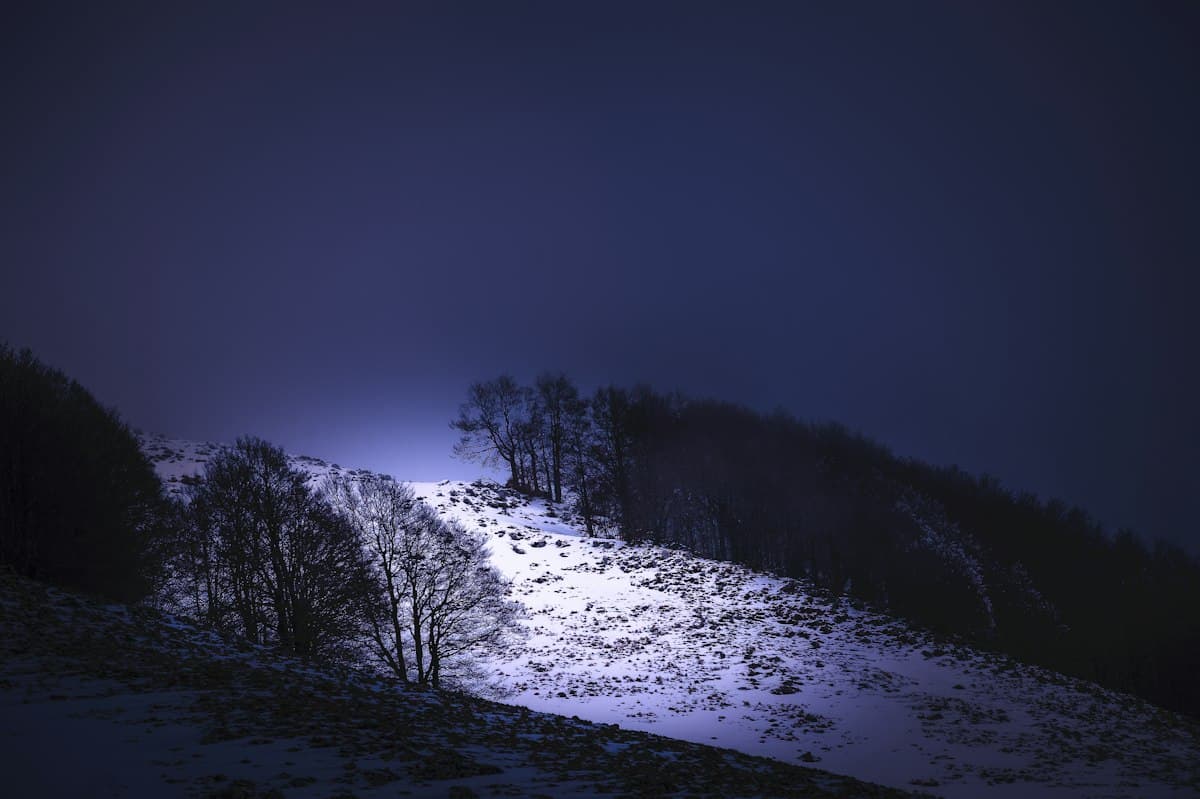
Hiking at Night in Winter: Headlamps and Safety
Night in winter is not simply night in summer with an extra jacket. Two phenomena fundamentally change the experience — and the risks. On one hand, cold attacks batteries with remarkable efficiency: a headlamp rated for 100 hours in summer may die within 30 minutes at −10 °C. On the other, snow reflects light at a level that surprises, blinds, and can disorient.
Neither effect is intuitive. Yet these are precisely the two factors that separate a controlled night outing from a situation that spirals out of control. This guide gives you the keys to anticipate and manage both.
1. Cold and Real Battery Life
Most headlamp manufacturers list battery life measured at +20 °C under laboratory conditions. At −10 °C on a snow-covered trail, forget those numbers: real-world performance is often two to three times worse.
Why Cold Drains Batteries So Fast
The chemical reactions that produce electricity in a battery slow down with temperature. Below freezing, internal resistance increases, output voltage drops, and the headlamp's electronic circuit — which monitors voltage — cuts power before the battery is chemically depleted. Result: a headlamp that flickers or dies when the battery is only half empty.
This phenomenon is especially pronounced with standard alkaline batteries (AA or AAA). Lithium batteries are significantly more cold-resistant — their operating range commonly extends to −40 °C — but they cost more. For a serious winter outing, choosing lithium batteries is simply the right call.
Practical Autonomy
A conservative rule for winter terrain: cut the manufacturer-listed autonomy in half. If your headlamp claims 50 hours on standard mode, plan for 25 effective hours in extreme cold. On the trail, you might get 23 hours, or 20 — but never 50.
Always carry a spare set of batteries, and keep them against your body in an inner pocket of your jacket. A cold battery is worth far less than a warm one: pulled from the bottom of your pack at −5 °C, it's already half asleep.
The Petzl Actik Core is a solid option for winter outings: it accepts standard AA batteries in addition to its rechargeable pack, letting you switch to backup cells if the battery dies.
Always carry a lightweight emergency headlamp at the bottom of your pack. The Petzl e+LITE weighs 27 grams, fits in a vest pocket, and can save you if your main headlamp fails. It's one of the most underrated pieces of safety gear, and one of the least bulky.
2. Snow Reflects: Lower the Power
At night on snowy terrain, your headlamp behaves as if you're lighting a mirror. Fresh snow reflects between 80 and 95% of visible light — an albedo comparable to white paint. Result: even at moderate power, light scatters in all directions, floods your field of vision, and destroys your peripheral sight.
The Glare Effect
Running at full power on snow means blinding yourself. The light bounces directly back into your eyes, saturating your photoreceptors and reducing your ability to perceive relief and obstacles. You see "whiteness" everywhere, without depth or texture. That's exactly the opposite of what you need to walk safely.
The basic rule: on snowy terrain, run at 30–40% of maximum power. That intensity is more than enough to follow a marked trail and avoids reflected glare. Your battery life also improves — a double benefit.
Choosing the Right Beam
Modern headlamps typically offer two beam types: a spot (focused beam, long range) and a flood (wide beam, close lighting). On snow, flood mode is almost always preferable: it spreads light over a larger surface at lower unit intensity, reducing the mirror effect.
Red light mode, available on many headlamps, is particularly useful in a group at night: it preserves everyone's night vision, reduces light pollution, and doesn't trigger the same reflected glare on snow as white light.
3. Keep the Battery Warm, Against Your Body
This point deserves its own section given how consistently it's underestimated. In below-freezing temperatures, the optimal behavior is simple: your spare battery has no business sitting in your pack.
Stored in an outer pocket at −5 °C, a lithium-ion battery loses between 20 and 40% of its available capacity. Warmed back up, it recovers some performance — but not all, and certainly not immediately. On the trail, you don't have time to wait for a cold battery to come back up to temperature.
The Practical Method
- Inner pocket of your down jacket or fleece: the ideal spot for your spare battery and replacement cells. Body heat keeps them above freezing even in extreme cold.
- If your headlamp has a remote battery pack (a cable running to a box worn in a pocket or under a collar), use it: it's designed precisely for cold conditions.
- Avoid leaving your headlamp itself in your pack during breaks: if it's cold at restart, you lose autonomy from the first minutes.
This simple habit can double the effective battery life of your lighting over a multi-hour outing.
4. Navigation When Everything Is White
Snow transforms the landscape radically. Familiar landmarks — visible trail, contrasting vegetation, dark rocks against soil — disappear. On a snowy night, the world reduces to a gradient of white and gray that your headlamp makes even more uniform.
Preparing Navigation Before the Outing
The golden rule for any winter hike: download the GPX track to a dedicated GPS device or mobile app before departure, in offline mode. On snowy terrain at night, don't rely on your natural sense of direction or trail markers (they may be buried under snow).
The OpenRando app lets you download GPS tracks for your hikes before departure and follow them without a connection — useful in areas without network coverage, common at altitude or in rural zones.
Using Available Landmarks
Even under snow, some landmarks remain readable:
- Trees: trunks and branches define corridors and boundaries. A forest trail generally stays identifiable even under 30 cm of fresh snow.
- Topography: ridges, valleys, and plateaus remain legible. Combined with a GPS track, they confirm your position.
- Paint markings on trees: trail blazes are often visible even in winter. Your headlamp will make them stand out by contrast.
Avoid leaving the trail to "shortcut": on snowy terrain at night, you don't know what's hidden under the snow — a hole, a frozen stream, a slippery slope.
5. Group Management: Spacing and Visibility
Night hiking in a group raises specific spacing and communication challenges you won't encounter during the day.
Optimal Spacing
The natural temptation is to bunch together — it feels safer. It's also the best way to interfere with each other. Each group member lights up the back of the person in front, disrupting their vision; at the same time, they destroy their own night vision by staring into someone else's headlamp.
Optimal spacing on snowy night terrain: 3 to 5 meters between each hiker. Close enough to maintain constant visual and auditory contact, far enough to avoid mutual glare.
Group Visibility and Signaling
If you cross other hikers or walk on a shared path (forest track, road), group members at the rear need to be visible from behind. A band or jacket with reflective strips solves this cleanly. On a clear night with snow, reflection often suffices — but as soon as snow is falling or visibility drops, reflective bands become essential.
Keep a simple, pre-agreed communication system: one light flash = stop, two flashes = ok, three flashes = emergency. No phone calls — gloves make touchscreens awkward.
Group Pace
At night, pace naturally slows — this is normal and healthy. Budget approximately 20 to 30% more time than your usual daytime cruising speed. On snowy terrain, add another 20% for slips, navigation checks, and battery change breaks.
6. The Unplanned Night Return
The majority of unplanned nighttime situations don't start with a deliberate decision to hike at night. They start with a daytime outing that ran long — weather slowing the group, a participant less fast than expected, an unexpected detour. Night falls, and you're not back at the refuge or the trailhead yet.
Anticipating from the Start
The rule professionals in the mountains follow: always depart with at least one headlamp per person, even for a planned daytime hike. The unexpected — a delay, a minor injury, an imposed detour — can turn a daytime outing into a night return.
Winter months drastically shorten daylight windows. In December in France, the sun sets before 5 pm. A 10 am departure with a 4 pm return leaves little margin for surprises. Leave with full lighting gear whenever you plan a long outing, even if the timing calculations look comfortable.
If Night Catches You
If you find yourself in an unplanned night return:
- Stop as soon as you have light to take stock. Check your GPS track, your position, your estimated time to return. Don't keep walking in uncertainty.
- Switch on all headlamps in the group, and lower the power on all of them. Five headlamps at 30% are better than one at 100% and four off in reserve.
- Signal your situation if you have signal. A text message to your safety contact with your GPS position is enough.
- Slow your pace. The hour gained isn't worth a fall on snowy terrain.
The OpenRando trail network lets you check marked routes and verify available return options before departure — a simple habit that makes all the difference in an emergency.
Checklist: Winter Night Outing
Before heading out for a night hike in winter, check these points:
- Main headlamp: charged or with fresh batteries, tested the day before
- Emergency headlamp (mandatory): in the pack, within easy reach
- Spare batteries: in a warm inner pocket, not at the bottom of the pack
- GPX track downloaded offline: on a mobile app or dedicated GPS
- Safety contact informed: someone knows your route and expected return time
- Reflective garment for rear members of the group
- Time margin: budget 30% more than your usual daytime pace
Night hiking in winter is a unique experience — the silence, moonlight on snow, the feeling of solitude in a familiar landscape transformed. With the right gear and the right reflexes, it becomes an accessible and safe practice.
Also check our guide on avalanche safety for hikers and our snowshoe comparison guide to complete your preparation for winter outings.
As an Amazon Associate, we earn from qualifying purchases. Links marked with an external icon are affiliate links.
Related reading
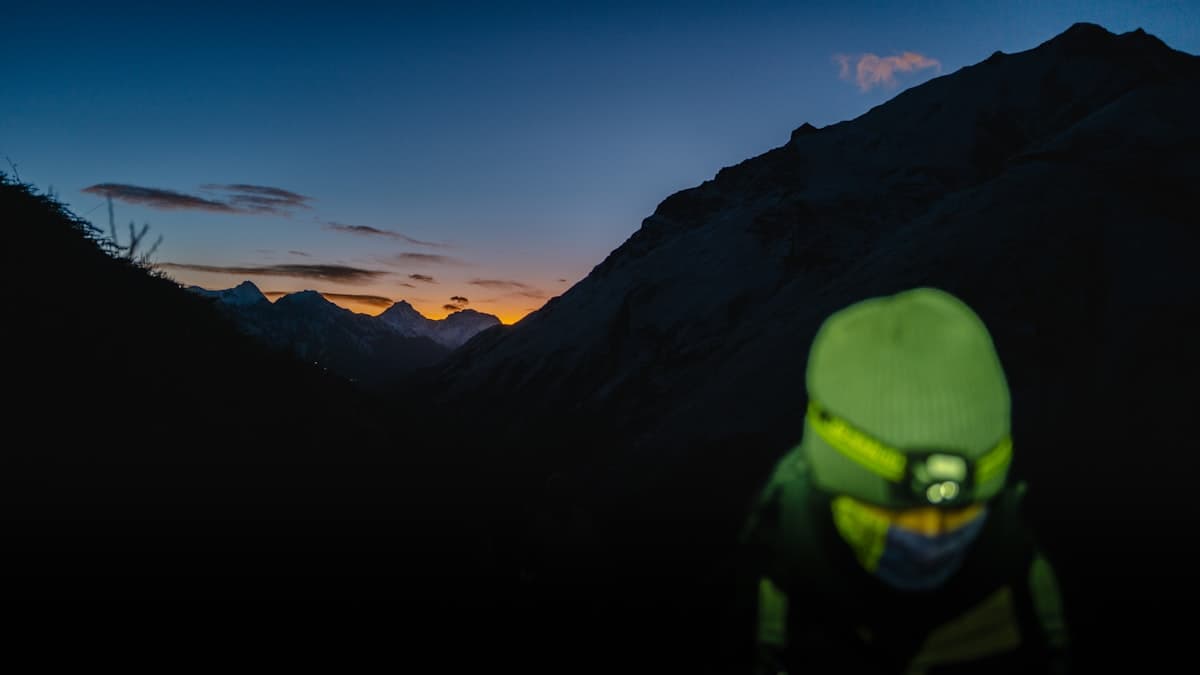
Best Hiking and Bivouac Headlamps: a Complete Buying Guide
Which headlamp should you choose for hiking and bivouacking? Real lumens, battery life, waterproofing and red mode: five models compared.
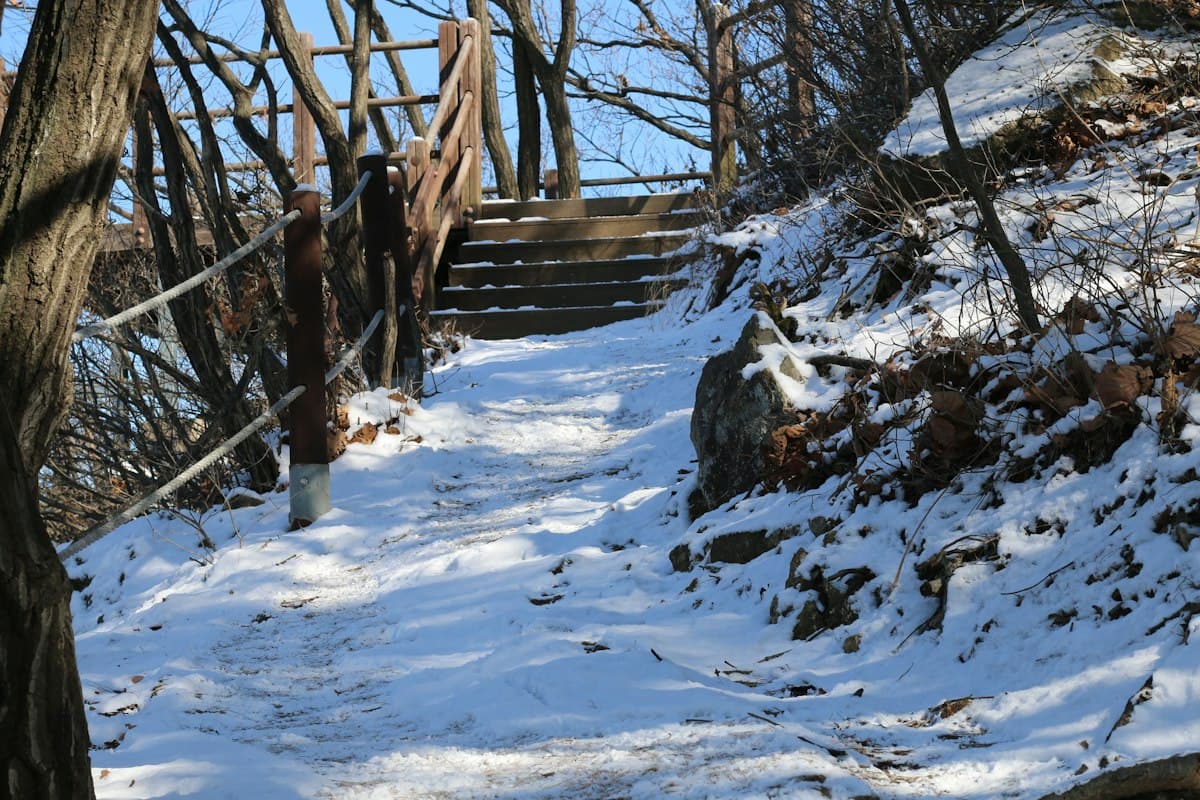
Walking on frozen and icy ground: techniques and foot placement
Walking on frozen ground, ice patches and hardened snowfields: foot placement, pole use and when to put on lightweight crampons.
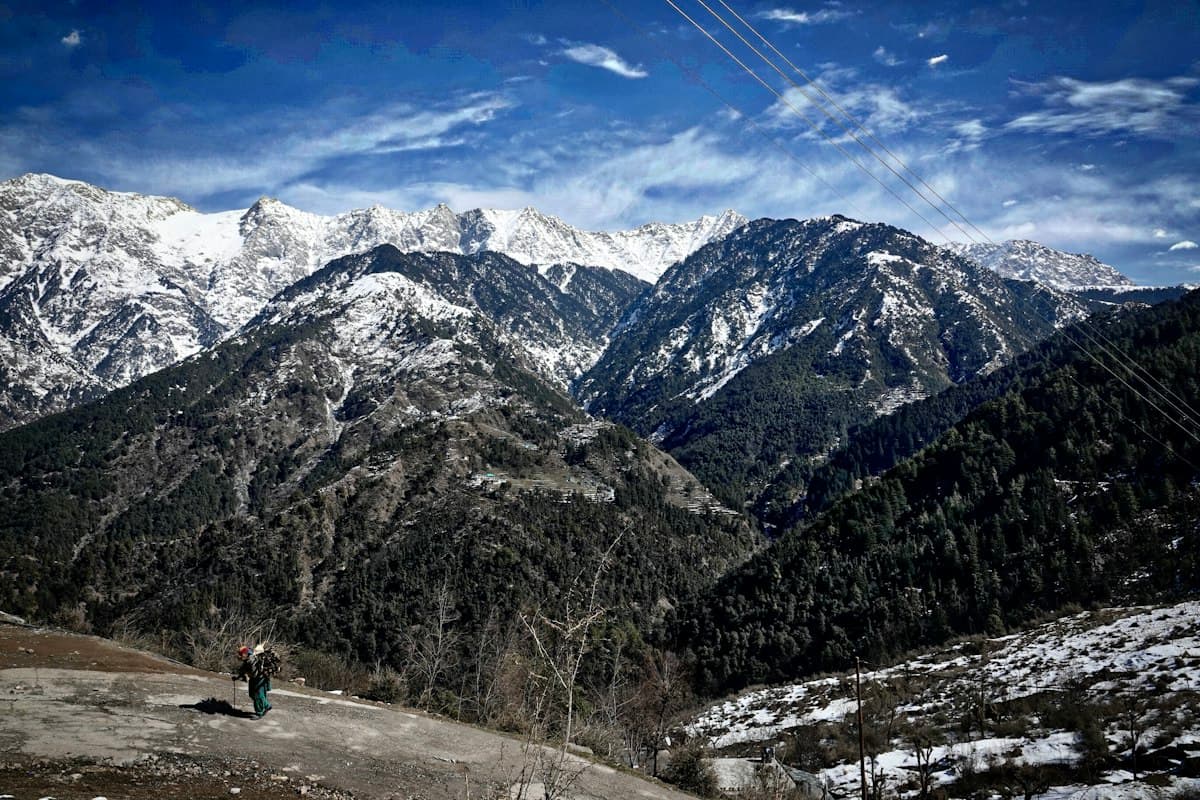
Hiking in November: What Really Changes
Hiking in November: first snow at altitude, refuge closures, short days and waterlogged trails. What changes and how to adapt.