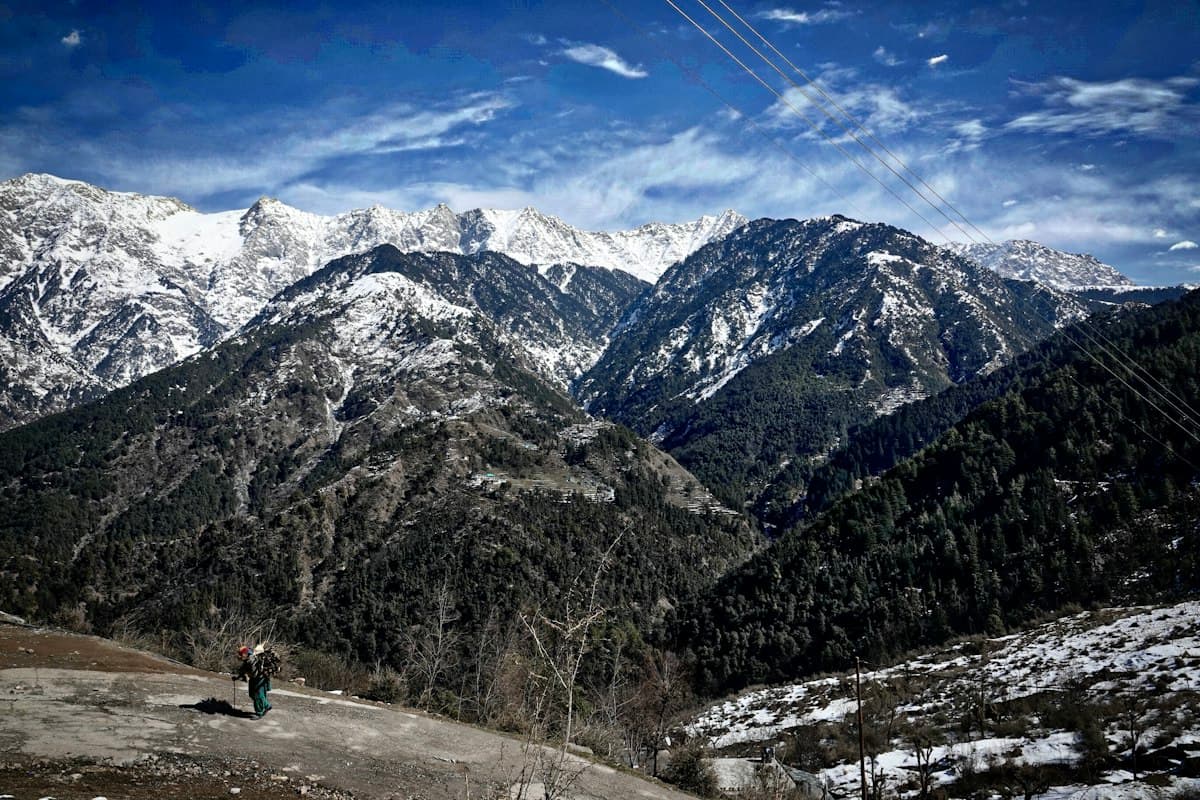
Hiking in November: What Really Changes
November is the most under-prepared transition month. Too late for high-altitude hikes, too early for snowshoeing, stuck between two seasons. The hiker who ignores this shift ends up on a waterlogged trail in the dark at 4 PM, without crampons in front of a sheet of black ice. This guide describes precisely what changes in November — and how to adjust your approach.
The Rain-Snow Line: November's Key Concept
In November, the rain-snow line drops quickly. From the beginning of the month, it's frequently found between 1,200 and 1,800 m depending on the range and weather events. This number changes everything about planning.
Above this line, rain becomes snow. A trail that's perfectly passable at 1,000 m can be snow-covered at 1,500 m. Fresh snow is not the problem: it's the overnight re-freeze that turns packed snow into black ice in the early morning hours.
Before every outing in November, check Météo-France and verify the forecast rain-snow line for your range. If your route exceeds this line, bring lightweight crampons (lightweight crampons) or microspikes. This is not optional.
Refuges and Lifts: What Closes
November is the month of closures. The vast majority of staffed refuges close between mid-October and early November. Summer lifts no longer run, eliminating the shortcuts you might have relied on.
What this means in practice:
- No resupply on major ranges. Plan your food and water autonomy for the entire route.
- No easy evacuation by gondola in case of an incident. Loop routes with autonomous return are the right choice.
- Unstaffed refuges (bivouacs) are sometimes accessible, but often without running water or heating. Check with local federations before counting on them.
Year-round staffed refuges are rare but exist: Mercantour, Belledonne, certain sectors of the Pyrenees. Always verify before planning a route that depends on them.
Waterlogged Terrain and Degraded Trails
November rain + fallen leaves + overnight frost produce a particularly treacherous combination. Forest trails become slippery, eroded sections deepen, stream crossings swell.
Three rules for this type of terrain:
- Waterproof ankle boots are mandatory above 600 m. Below that, waterproof low shoes suffice for short outings. High-top Gore-Tex boots make the difference over a full day.
- Trekking poles: in November, they're no longer optional on technical terrain. They compensate for reduced grip and reduce knee stress on slippery descents. Lightweight carbon poles adjust quickly to changing gradients.
- Lower your ambitions: a trail rated "moderate" in July becomes "difficult" in November on wet terrain. The elevation gain doesn't change, but the energy cost is significantly higher.
The First Ice Patches
Overnight frost in November, even light (−2 to −5 °C), is enough to form localized ice patches. They form preferentially:
- On shaded areas (north-facing slopes)
- Under trees where water drains and then freezes
- On wooden footbridges and bridges
- At the top of wet rocky gullies
Ice patches on the trail are hard to see in the morning: low-angle morning light makes them nearly invisible. The warning sign: if the night was cold and the trail has been in the shade, assume it's icy.
You don't need 12-point crampons for this. Microspikes or lightweight traction chains — a few hundred grams — are enough and slip on in 30 seconds. Packing them systematically from November to March is the habit worth building.
Descending in Altitude: The Right Ranges for November
The best strategy in November isn't abandoning hiking: it's adapting to the right altitudes and ranges.
Between 200 and 800 m: the great low-season
- Massif Central (Ardèche and Cévennes side): chestnut forests in full colour until mid-November, well-drained trails, less unpredictable weather than the Atlantic coast.
- Luberon and Alpilles: dry trails, exceptional autumn light, no snow below 1,200 m. The Luberon hikes remain excellent throughout November. Browse Luberon hikes on OpenRando.
- Gorges du Verdon: accessible at canyon level, spectacular with golden limestone cliffs.
Between 800 and 1,200 m: variable conditions
Vosges, Jura, Pyrenean foothills: these ranges remain viable throughout November but require weather awareness. 2-to-4-hour outings are safer than major traversals.
Above 1,500 m: under conditions
Possible, but with appropriate gear and detailed knowledge of local conditions. No solo long-distance routes without weather checking and winter equipment.
What Goes Into the Pack From November Onwards
The base list doesn't change. What changes is what becomes mandatory when it was previously optional.
New mandatory additions:
- Lightweight crampons or microspikes (even for a low-elevation outing — you never know)
- Waterproof overpants or softshell trousers (lightweight waterproof trousers)
- Warm hat and gloves (body temperature drops fast at rest)
- Fully charged headlamp — November days offer less than 10 hours of daylight
What gets reinforced:
- Mid-layer: prefer a packable lightweight down jacket over a fleece alone
- Food reserve: cold increases energy expenditure by 10 to 20%
- First aid kit: check your emergency blankets
What comes out:
- Lightweight trail running shoes. In November, thin soles become a liability on muddy, frozen terrain.
One often-forgotten point: dusk
In November, the sun sets before 5:30 PM across all of France. On a 5-hour itinerary starting at 2 PM, you finish in the dark. Leave early in the morning or shorten afternoon outings. Having a headlamp in the pack isn't enough if you've never thought about when you might need it.
November marks the start of a different hiking season — more technical, more demanding — not the end of hiking. With the right gear and well-chosen routes, it's one of the most beautiful months: empty forests, raking light, clear trails. You just can't approach it with August reflexes.
To continue preparing for autumn and winter outings: read our guide on hiking after the clocks change and start planning now for hiking on frozen and icy ground.
As an Amazon Associate, we earn from qualifying purchases. Links marked with an external icon are affiliate links.
Related reading
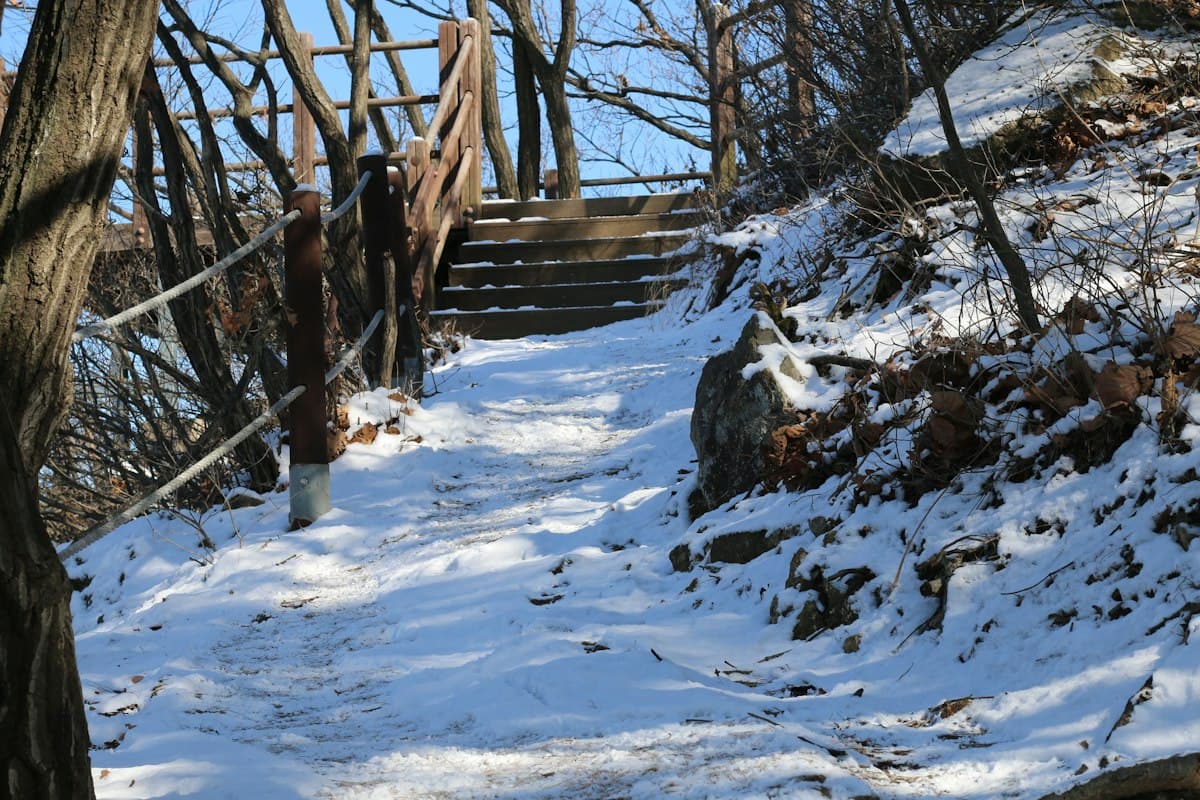
Walking on frozen and icy ground: techniques and foot placement
Walking on frozen ground, ice patches and hardened snowfields: foot placement, pole use and when to put on lightweight crampons.
Daylight Saving Time: How to Hike Safely with Shorter Days
The switch to winter time brutally shortens afternoons: adapt your departure times, calculate your safety margin, and anticipate nightfall to keep hiking safely through autumn and winter.
Hiking During Hunting Season: How to Stay Safe in Autumn
How to hike safely during hunting season in France: know the hunting dates by region, how to spot an active drive hunt, how to stay visible, and what to do if you encounter a battue.