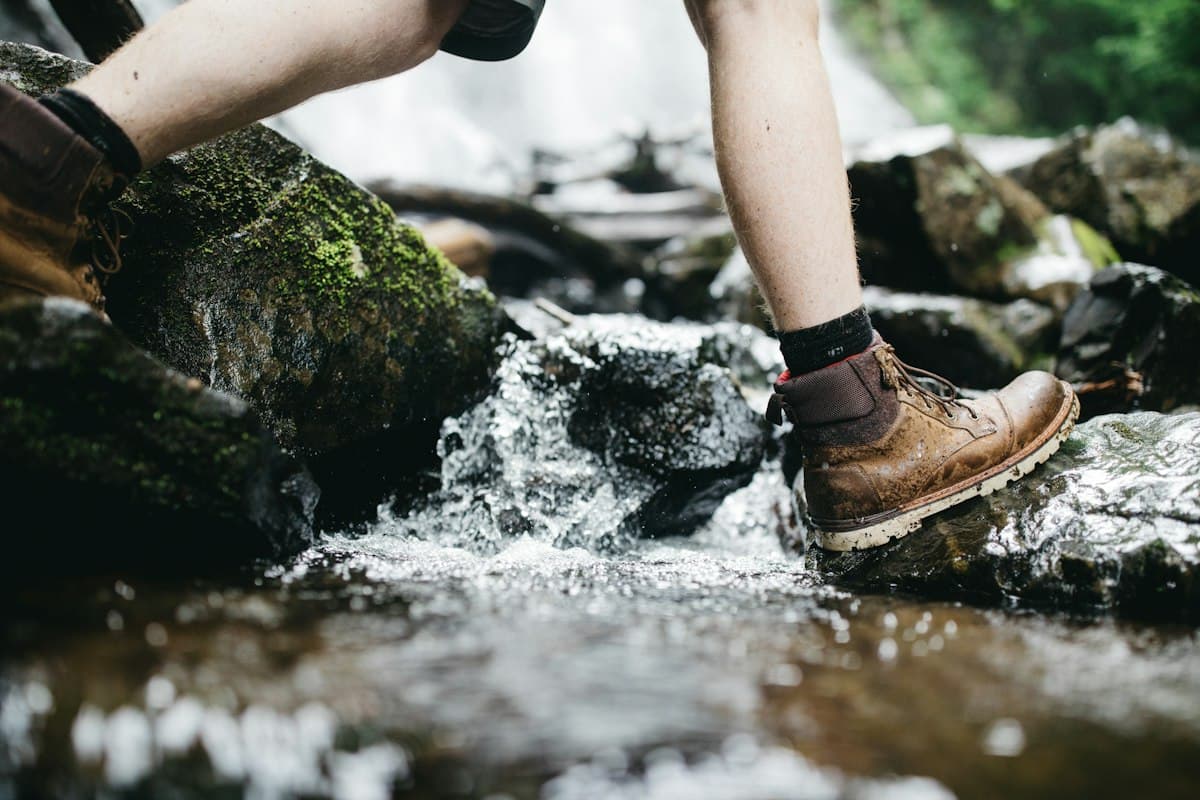
How to Dry and Care for Wet Hiking Gear
Coming home soaked after a day of hiking in the rain is part of the deal. Knowing what to do next — without ruining your gear — is rarer. Radiators, tumble dryers, direct sunlight: the apparently obvious solutions are often the most destructive. This guide explains exactly what heat does to each type of technical material, and how to dry and maintain your gear properly.
What Heat Actually Destroys
Most gear-care mistakes stem from one simple but wrong idea: hotter = dries faster = better. In reality, heat is the enemy of almost every technical hiking material.
Thermoplastic adhesives in hiking boots
The outsole of a hiking boot is glued, not stitched. The adhesives used — polyurethane or neoprene — are formulated to hold at normal use temperatures, not to withstand a radiator running at 70 °C. Above 40–50 °C, these glues start to soften and lose adhesion. The result: premature sole delamination, often on an uphill stretch or wet terrain, at the worst possible moment.
Waterproof membranes
Membranes such as Gore-Tex, eVent, or their house equivalents are films of expanded polytetrafluoroethylene (ePTFE), extremely thin. Excessive heat — a radiator, a tumble dryer without a gentle programme, direct sunlight on dark fabric — can deform or clog the micropores that give the membrane its breathability. A jacket damaged this way stays waterproof for a few more outings, then starts to wet through from the inside for no apparent reason.
Down insulation
Down loses its loft — its ability to trap air — when it stays compressed and wet for too long. Heat itself isn't the problem here; persistent moisture is. Conversely, excessively high dry heat (a tumble dryer set too hot) can scorch the baffles and permanently reduce insulating capacity.
Hiking Boots: the Method That Actually Works
Start by removing the insoles. Always. They store a disproportionate amount of water relative to their volume. If you use quick-dry insoles, they'll take roughly half as long to dry as standard foam versions.
The newspaper method
Stuff the boots with crumpled newspaper. Change it every hour during the first two or three hours: the paper saturates quickly and loses its absorbency. Keep the boots in a dry, room-temperature spot — between 15 and 20 °C — not beside a heat source. No newspaper? Clean cotton rags work just as well. Paper towel twists also do the job.
Specialised boot dryers
If you hike frequently in wet conditions, electric boot dryers with gentle airflow are a reasonable investment. They draw moisture out by airflow and capillary action without heat, and can handle two pairs simultaneously.
Direct sun: use with caution
In summer, leaving boots to dry in the sun might be tempting. The external upper can handle some UV exposure, but never lay them flat with the outsole facing up: Vibram rubber and similar compounds age rapidly under direct UV and lose their flexibility over time.
Drying time to remember: 12 to 24 hours at room temperature for a standard mid-cut boot. A high-cut boot can take up to 48 hours. Never leave with still-damp boots — blisters form twice as fast.
For a full care routine — cleaning, leather conditioning and re-waterproofing — see our complete guide on hiking boot maintenance.
Waterproof Jacket: Drying and Re-activating DWR
Drying
Hang the jacket on a wide hanger — not a narrow clip — in a well-ventilated spot. Open all zips to accelerate drying on the inside of the fabric. Avoid the tumble dryer unless the label explicitly allows it: some jackets tolerate a gentle, low-heat cycle; many don't.
Reactivating the DWR finish
Durable Water Repellency (DWR) wears down with use and washing. When water no longer beads and instead clings to the fabric, it's time to reactivate it — before the jacket starts to wet through despite its intact membrane.
The heat method: after drying, tumble the jacket for 20 minutes at 40 °C (if the label permits), or iron it gently on a low setting through an intermediate cloth. Moderate heat reactivates the DWR molecules without harming the membrane.
If DWR doesn't recover with heat alone, a reproofing spray applied to clean, dry fabric will restore several outings of protection. Always apply on a clean jacket — never straight after a muddy outing.
Down Gear: the One Case Where the Tumble Dryer Is Recommended
Unlike technical shells, down items — sleeping bags and puffy jackets — actually benefit from the tumble dryer, provided you follow two rules.
Rule 1: very gentle programme
Maximum 40 °C, delicate cycle. Higher temperatures risk scorching the baffles (the stitched compartments that keep the down in place), which causes the fill to migrate and creates permanent cold spots.
Rule 2: tennis balls
Throw 3 or 4 clean tennis balls into the drum with the down item. With each revolution, they break up damp clumps and aerate the feathers. Without them, down dries in compact lumps and never fully recovers its loft.
Allow 3–4 dryer cycles for a standard-size sleeping bag. At each stop, check by hand that the down has redistributed evenly. If damp, dense patches remain, run another cycle.
No tumble dryer? Lay the bag horizontally (never suspended by one end) across two supports, turning it every hour. Duration: 12 to 24 hours depending on fill weight. Never pack it back into the compression sack until it is completely dry.
Backpack: Less Critical, But Still Matters
The backpack is often the forgotten item in gear care. Yet persistent moisture encourages mould growth and progressively degrades the straps.
Drying steps
- Empty the pack completely, including every pocket and the hydration compartment.
- Open all closures and turn the pack inside-out if possible.
- Hang it upside down on a hook or chair back in a ventilated space.
- Clean the straps with a damp cloth and mild soap if dirty — salt crystals left by sweat progressively stiffen straps and accelerate wear.
For load-bearing straps (chest strap, hip belt), a little textile and leather conditioner after drying helps maintain their flexibility. For a full care breakdown, see our guide on backpack maintenance.
Hydration bladder
The bladder is the one component that won't air-dry on its own. Rinse it with clean water after each outing, then let it dry flat or vertically, fully open, before storing. Trick: roll a paper towel around a straw and slide it inside to absorb the last drops of moisture.
Storage Between Outings
How you store gear determines its condition for the next trip — and ultimately its lifespan.
Boots
Never store in a plastic bag or a closed car boot. Keep them in a dry, ventilated place, out of direct light. If you won't use them for several weeks, insert cedar boot trees to hold their shape and absorb odours.
Shells and technical garments
Store unfolded or on a wide hanger — never compressed in a stuff sack. Long-term compression weakens membranes and heat-sealed seams. A hanger in a well-ventilated wardrobe works perfectly.
Down sleeping bags and jackets
Store your sleeping bag and down jacket in a large storage sack (often included with the product, or available separately) — never in the compression sack. Down compressed over the long term permanently loses a portion of its loft, and this loss is irreversible.
Essential gear care products
- Nikwax Tech Wash — technical laundry detergent for Gore-Tex, down and fleece
- Grangers Performance Wash + Repel Down — 2-in-1 specialist down care
- Nikwax TX.Direct Spray-On — DWR reproofing spray, no dryer required
- Cedar boot trees — shape retention and odour control
Key Rules at a Glance
| Gear | Do | Don't |
|---|---|---|
| Boots | Newspaper stuffing, room temperature | Radiator, direct sun on outsole |
| Jacket | Wide hanger, good ventilation | Hot tumble dryer, direct sunlight |
| Down | Tumble dryer 40 °C + tennis balls | Store compressed while damp |
| Backpack | Hang upside down, clean straps | Plastic bag, closed car boot |
Properly dried and maintained gear lasts two to three times longer than gear treated carelessly. Over a lifetime of hiking, that's a meaningful saving — and significantly less waste.
To complete your protection routine, see also our guide on waterproofing hiking boots and jackets.
As an Amazon Associate, we earn from qualifying purchases. Links marked with an external icon are affiliate links.
Related reading
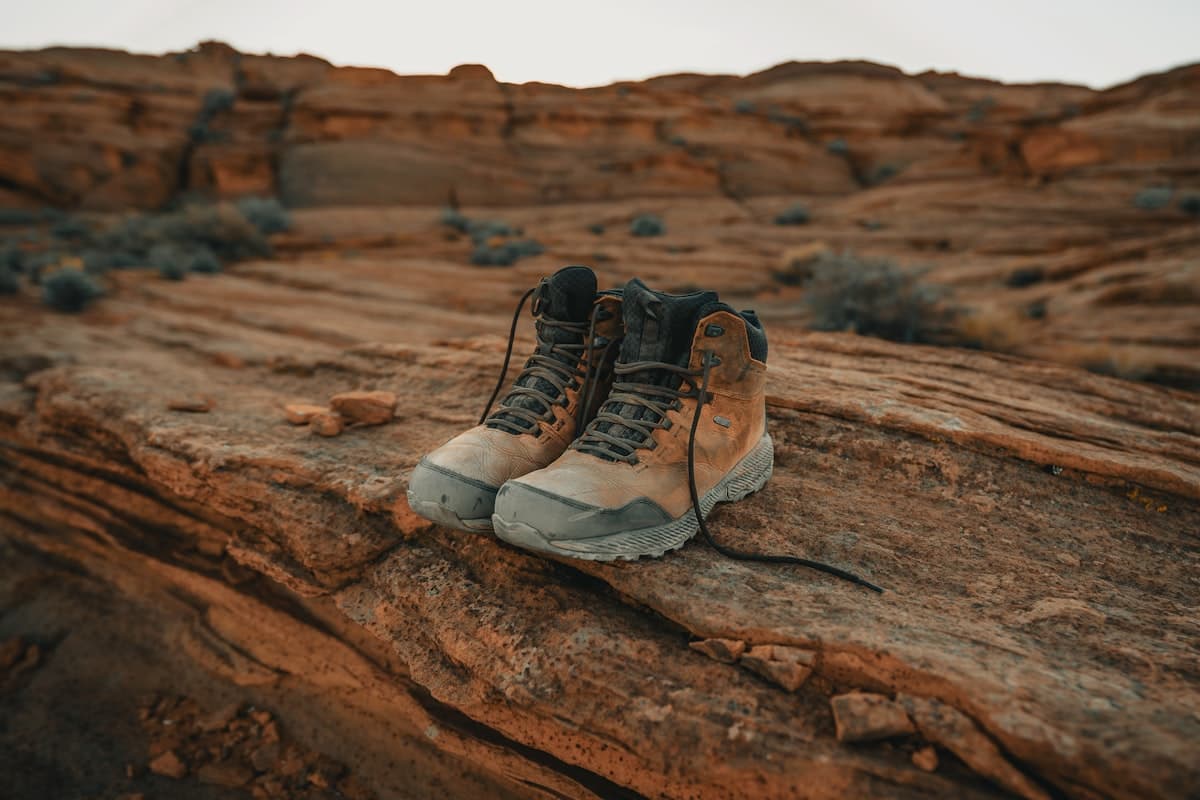
How to Care for Your Hiking Boots: The Complete Guide
Cleaning, drying, waterproofing, leather conditioning: everything you need to know to maintain your hiking boots and make them last for years.
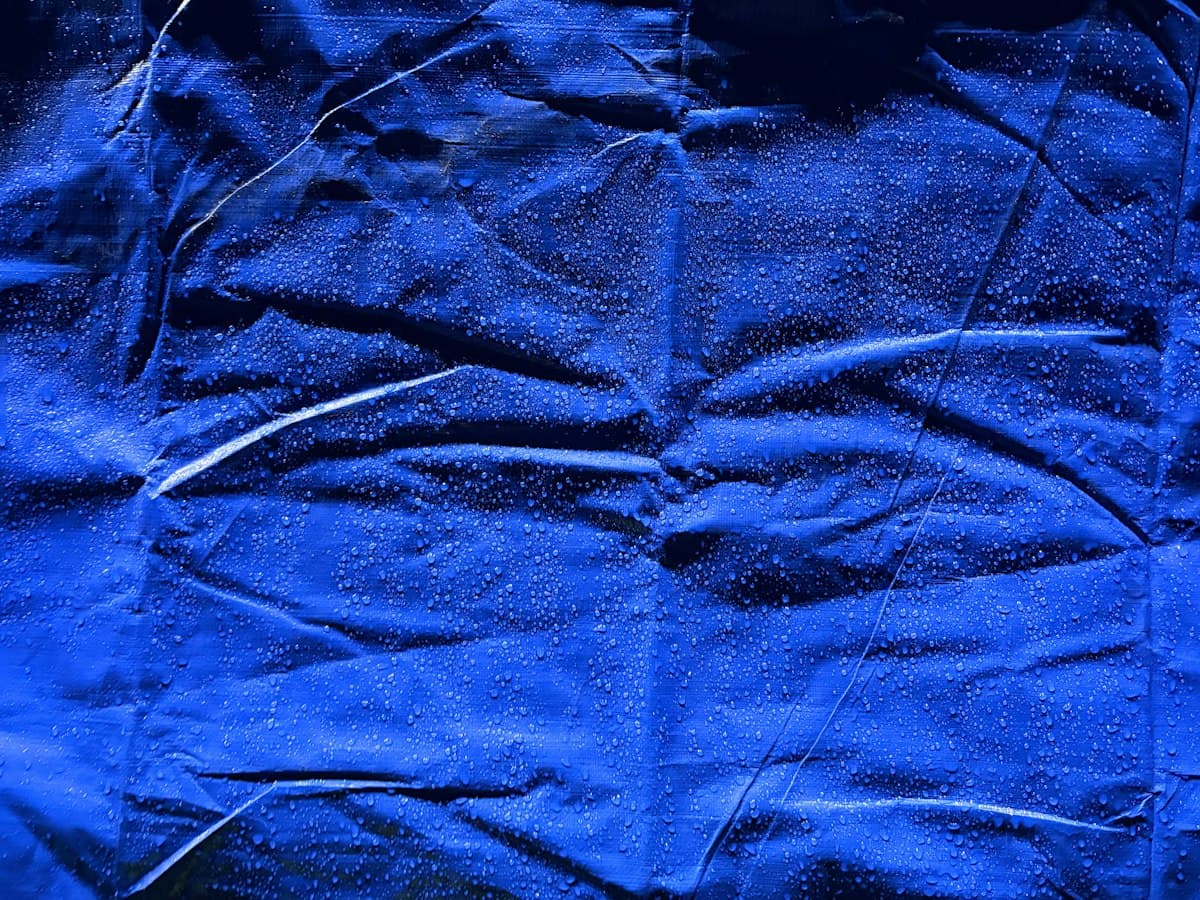
How to Waterproof Your Hiking Boots and Jacket: A Complete Guide
Restore DWR treatment on your hiking jacket and waterproof your boots: products, methods and how often to do it so you stay dry on the trail.
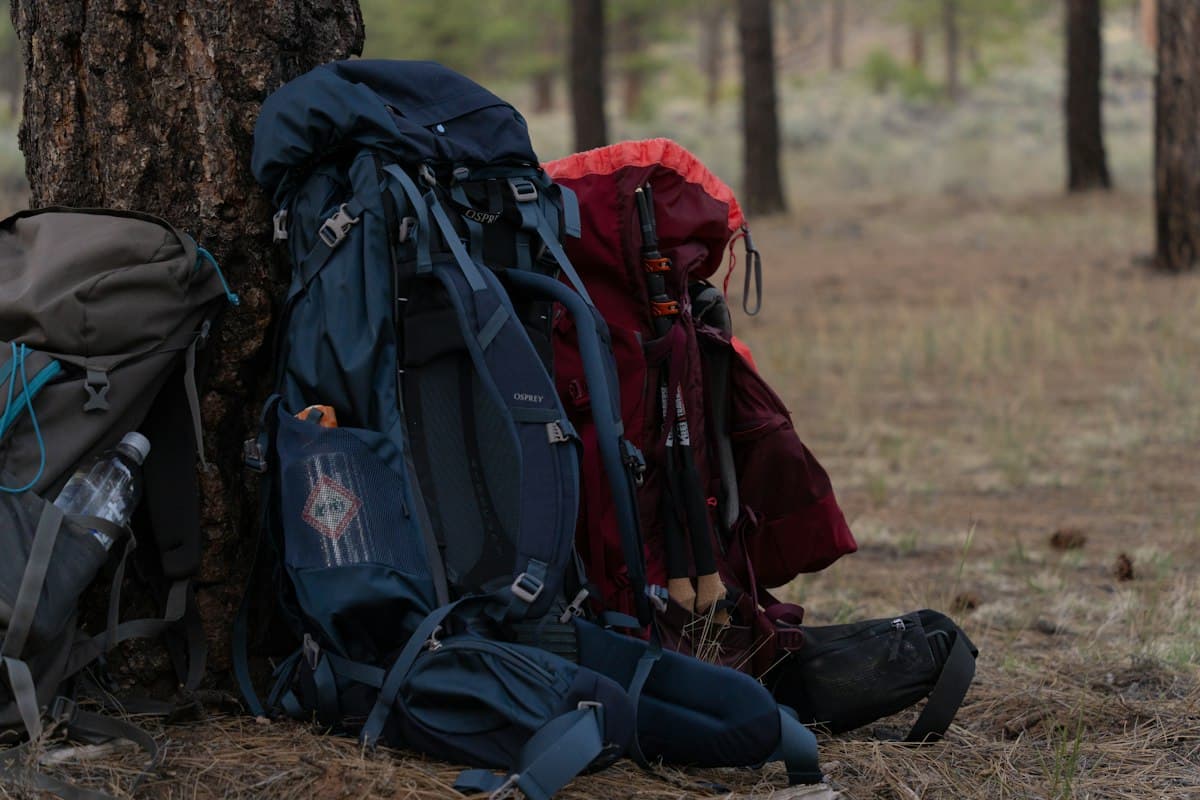
How to Care for Your Hiking Backpack: Cleaning, Repairs and Storage
Clean, repair and extend the life of your hiking backpack: washing, zippers, DWR treatment and field repairs — the complete maintenance guide.