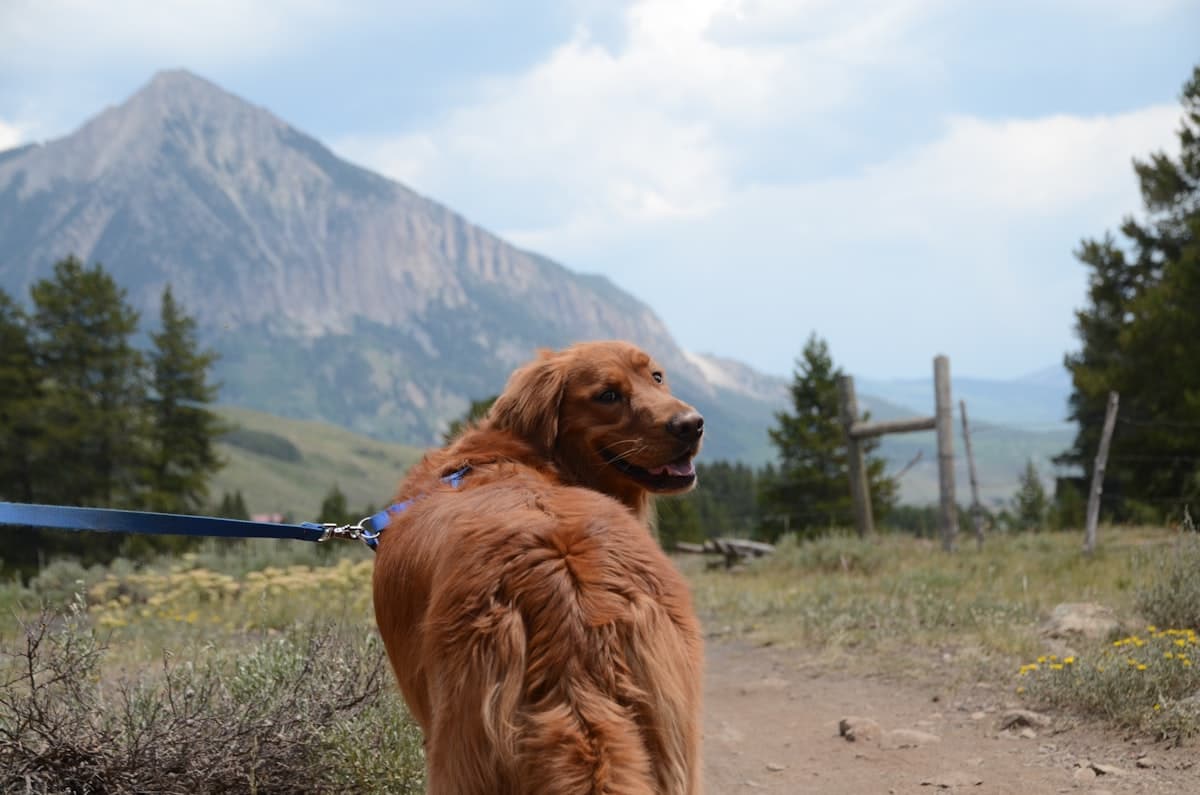
Hiking with an Aging Dog: Adapting Outings to Protect Their Joints
Your golden retriever has been at your side on the trails for ten years. The dog who used to bound over the rocks of the Luberon just a few seasons ago now slows down halfway, lies down more often, and gets up more stiffly in the morning. Watching a hiking dog grow old is one of the most emotionally charged subjects in the world of trail hiking with animals — and one of the least discussed.
The good news: an aging dog can still hike. The bad news: if you keep taking them out the same way as before, you risk hurting them without realizing it. Adaptation is the key. This guide gives you concrete markers to keep sharing the trails with your aging companion, safely and enjoyably.
Recognizing the First Signs of Aging
Dogs don't complain. It's up to you to learn how to read the signals.
Common Physical Signs
- Morning stiffness: your dog gets up with difficulty, hesitates before climbing stairs, or limps slightly for the first few minutes after waking up.
- Slowing down on outings: they no longer pull on the leash, stop without apparent reason, or sit down uninvited.
- Joint swelling: the elbows, hips, or knees may feel slightly swollen to the touch.
- Weight gain: a less active dog can gain weight without any change in diet, which increases the load on their joints.
- Behavioral changes: less enthusiasm when you prepare the packs, reluctance to jump into the car trunk.
When to See the Vet
If you notice several of these signals, a consultation is essential before continuing hikes. The vet can confirm or rule out hip dysplasia, osteoarthritis, spinal problems, or cardiac conditions. A complete blood panel is recommended from age 7 for large breeds, and 9-10 years for small and medium breeds.
An X-ray of the hips and elbows provides a precise measurement of joint wear. This examination will determine what distances are still manageable.
Reduce, Don't Stop: Finding the Right Dose
The classic mistake is to stop all physical activity at the first signs of aging. This is counterproductive: sedentary behavior leads to weight gain, muscle atrophy, and worsening joint pain.
The Principle of Adapted Load
An arthritic dog needs regular movement, but in moderation. The goal is no longer performance — it's regular movement over controlled distances.
Here's a simple reference based on age and condition:
| Stage | Max distance per outing | Recommended frequency |
|---|---|---|
| Early aging | 6–10 km | 2–3 times per week |
| Confirmed mild arthritis | 3–6 km | Daily, short outings |
| Moderate arthritis | 1–3 km | Daily, very short |
These are averages — your vet will adjust them based on breed, weight, and your dog's clinical condition.
Break It Up Rather Than Stretching It Out
Rather than one long weekly outing, prefer several short daily walks. Twenty minutes in the morning and twenty in the evening do less joint damage than an hour and a half all at once. Regular movement lubricates the joints and maintains the muscle mass that supports them.
Terrain Matters More Than Distance
For an aging dog, the quality of the ground is often more important than the mileage. A flat, regular trail of 8 km may be better tolerated than a rocky 4 km path with significant elevation gain.
Terrains to Favor
- Dirt or sand paths: natural cushioning, without repeated shocks to the joints.
- Riverbanks or beaches: shallow water is ideal for arthritic dogs, as buoyancy reduces the weight on their joints.
- Forest on soft ground: leaf litter or pine needle beds provide excellent cushioning.
Terrains to Avoid
- Pavement and asphalt: hard, hot in summer, with no shock absorption.
- Rocks and scree: unstable footing puts intense strain on tendons and ligaments.
- Steep descents: downhill sections are particularly damaging to hips and knees.
- Slippery terrain: wet grass or compacted snow — the risk of falls and injury is high for a dog with reduced reflexes.
Finding Adapted Trails on OpenRando
On OpenRando, you can filter hikes by difficulty level and elevation gain. For an aging dog, look for trails rated Easy, with less than 200 m of elevation change and no technical sections. Riverside paths and low garrigue trails in Provence are often excellent. See our dog-friendly hikes in PACA guide for routes specifically suitable for animals.
Managing Heat and Cold in Older Dogs
Thermoregulation deteriorates with age. An 11-year-old dog no longer manages extreme temperatures the way they did at 4.
Heat: The Number One Risk in Provence
In summer, hikes with an aging dog must be done before 9 a.m. or after 6 p.m. Even at 22°C, prolonged effort can cause heat stroke in a senior dog.
Warning signs to watch for:
- Excessive, uncontrollable panting
- Thick, sticky saliva
- Pale or bluish gums
- Unsteady gait or collapse
In case of heat stroke, cool your dog immediately with cool water (not ice-cold) on the belly and inner thighs, and see a vet urgently.
Always bring more water than you think you'll need: a 30 kg senior dog can drink up to 1.5 liters over a 2-hour outing in hot weather. A collapsible bottle with an integrated bowl is essential.
Cold: Arthritic Joints Suffer More
Below 10°C, arthritis is more painful. Several precautions apply:
- Waterproof dog coat: protects the lower back and hips from cold and damp. A well-fitted waterproof coat for senior dogs reduces post-outing stiffness.
- Warm-up before setting off: 5 minutes of very slow walking before picking up the pace.
- Drying after the outing: a wet dog left in the cold makes joint pain worse.
Support Harnesses and Assistance Gear
The right equipment can turn a difficult outing into a comfortable walk for an aging dog.
The Support Harness
Unlike a regular hiking harness, a support harness integrates a dorsal handle that allows you to help your dog clear an obstacle, climb stairs, or get up after a rest. It's an essential accessory once arthritis has been diagnosed.
Look for a harness with:
- Padded chest straps (prevents friction)
- A sturdy handle on the back
- Traction distributed across the thorax (not the neck)
A good support harness for aging dogs costs between €40 and €90, but it can extend your hiking partnership by several years.
Dog Booties and Paw Protectors
On rocky terrain or hot asphalt, an older dog's paw pads wear out faster. Non-slip dog booties provide cushioning and protection, and also offer better grip on slippery terrain.
The Rest Mat
On a bivouac or lunch break, lay your dog on a lightweight insulating mat. Thermal insulation from the ground is crucial for an arthritic older dog: prolonged contact with cold or wet ground makes pain worse.
Knowing When to Stop Long Outings
There's no universal rule, but here are the signals that it's time to step back from big hikes:
Post-Outing Signals to Watch
After each hike, observe your dog for 24 hours:
- Persistent limping more than 2 hours after returning → reduce distance immediately.
- Refusal to get up the next morning → the outing was too long.
- Loss of appetite combined with marked lethargy → consult the vet.
- Nocturnal whimpering → joint pain, need for medical management.
Transitioning to Urban Walks
When hikes are no longer appropriate, city or park walks remain beneficial. The important thing is maintaining regular daily movement, even brief. Flat paths, without obstacles, at a free pace — that's enough to maintain muscle mass and quality of life.
Veterinary Physiotherapy and Hydrotherapy
More and more veterinary practices are offering canine physiotherapy and hydrotherapy sessions (underwater treadmill). These techniques allow physical activity to continue without load on the joints. A seriously worth-considering alternative when trails become too demanding.
A Matter of Listening
Hiking with an aging dog means learning to read things differently. It's no longer them following your pace — it's you following theirs. The bond that comes from that is only stronger.
For the most suitable itineraries for a senior dog in Provence, see our guide to dog-friendly hikes in PACA and our complete guide to hiking with your dog. And for choosing the right walking harness, our gear recommendations are there to help.
The mountains have no age limit — for you or for them.
As an Amazon Associate, we earn from qualifying purchases. Links marked with an external icon are affiliate links.
Related reading
Hiking with your dog: the complete guide
Everything you need to know about hiking with your dog: gear, regulations, heat safety and 8 dog-friendly trails in Provence. The complete guide for successful hikes with your faithful companion.
Hiking with your dog in Provence: 8 dog-friendly trails in PACA
Where to hike with your dog in Provence-Alpes-Cote d'Azur? Discover 8 dog-friendly trails with GPX tracks, practical tips and local regulations.
How to Properly Fit Your Hiking Backpack: The Adjustment That Changes Everything
How to adjust your hiking backpack in the right order: hip belt, shoulder straps, load lifters, and sternum strap. The complete method in six steps.