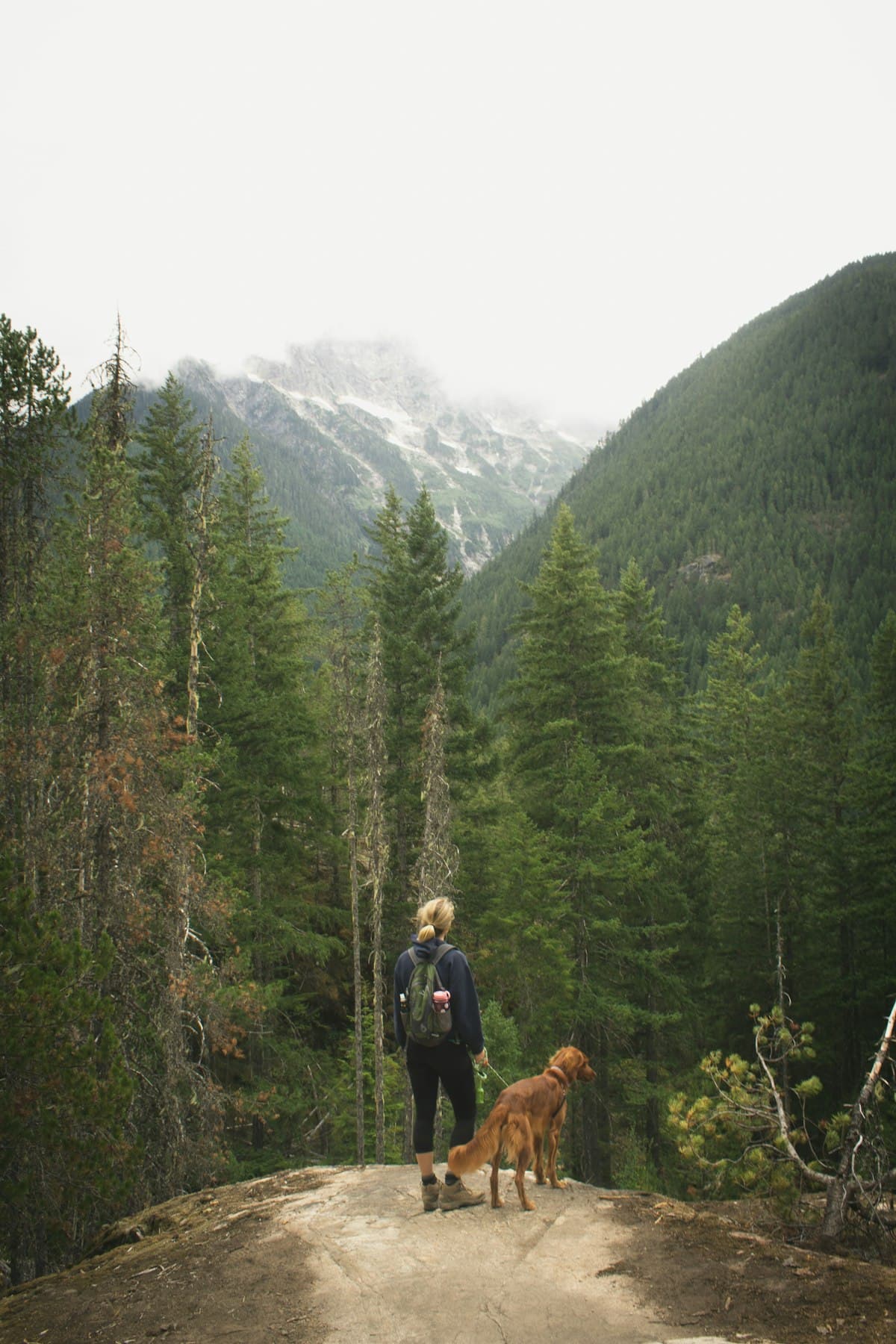
Hiking with your dog: the complete guide
Hiking with your dog is one of the most rewarding adventures you can share. Your four-legged companion explores the same trail as you, but with ten times more intensity — every scent tells a story, every bush is an invitation to investigate. And for you, walking alongside him means seeing nature through completely different eyes.
But taking your dog hiking isn't something you do on a whim. Regulations, physical fitness, equipment, heat management — all are points you need to master to make the outing enjoyable for both of you. This complete guide gives you all the keys for hiking safely with your faithful companion.
Is your dog ready for hiking?
Before hitting the trails, one crucial question: is your dog physically and medically fit to hike?
The veterinary check
A vet appointment before your first major hike is essential. It will help assess:
- Joint health: large or older dogs may suffer from hip dysplasia or arthritis. Prolonged effort can worsen these conditions.
- Weight: an overweight dog isn't built for long hikes. Weight loss should come before ambitious routes.
- Vaccinations and parasite prevention: ticks, harvest mites, leptospirosis — up-to-date protection is mandatory before hiking in nature.
- Paw pads: on rocky or very hot terrain, worn pads are painful. Your vet can advise on strengthening or protection options.
Breeds suited to hiking
Not all breeds are built for trail running or long hikes. Short-nosed breeds (bulldogs, pugs, shih tzus) struggle more with heat and exertion. Conversely, shepherds, border collies, labradors, setters and huskies make excellent hiking companions. Greyhounds and light breeds adapt well to moderate distances but cope less well with difficult terrain.
Building fitness
A sedentary dog doesn't jump straight to a 15 km hike. Start with progressively longer daily walks over several weeks, then gradually increase distance and elevation gain. Muscle builds the same way in dogs as in humans — slowly and consistently.
Essential equipment for your dog
Investing in the right gear protects your dog and makes the whole experience more enjoyable for everyone.
The hiking harness
A hiking harness is much preferable to a standard collar. It distributes pulling force across the chest and shoulders without putting pressure on the trachea. On difficult terrain or steep climbs, it also lets you grab your dog by the dorsal handle to help him over an obstacle.
The hands-free leash
On the trail, a hands-free leash worn at the waist changes everything. You keep both hands free for poles, technical climbs or photography. Choose one with a bungee absorber to soften sudden jerks.
Hydration
An adult dog in moderate exercise needs approximately 60 ml of water per kilogram of body weight per hour in hot conditions. For a 20 kg dog, that's more than a litre per hour of intense walking. Bring a collapsible travel bowl or shared water bottle to offer water regularly — don't count on natural water sources, which may be contaminated.
Paw protection
On rocky, stony or very hot terrain, paw pads can deteriorate quickly. Protective dog boots are available for breeds that will tolerate them. Otherwise, a protective wax applied before you set off forms an effective barrier on dry, hot ground.
The first aid kit
Make sure your kit includes a section for your dog: tick remover, antiseptic, compression bandages, sterile gauze pads, emergency blanket. A lightweight but complete kit can make all the difference in case of a cut paw or insect bite.
Regulations: where are dogs allowed?
This is the question that often causes frustration, but it's essential to know before planning a hike.
National parks
In French national parks (Mercantour, Écrins, Cévennes, Calanques...), dogs are strictly prohibited in the core zones, even on a lead. This regulation exists to protect wildlife — deer, ibex, eagles — which are extremely vulnerable to the presence of dogs, even non-aggressive ones.
Regional nature parks
Regional nature parks (Luberon, Alpilles, Camargue, Verdon...) apply less strict regulations. Dogs are generally tolerated on marked trails provided they are kept on a lead. Always check with the park information centre before your outing.
Unprotected natural areas
On standard hiking trails outside protected areas, dogs are permitted. However, lead rules apply in many municipalities, especially during the summer season (June–September), to avoid disturbing breeding wildlife and incidents with other hikers.
Good behaviour on the trail
Even in areas where your dog can roam freely, a few rules apply:
- Lead required when crossing other hikers, especially children
- Lead essential when passing domestic animals (flocks, horses)
- Always pick up after your dog, even in the middle of nowhere
- Solid recall before letting your dog off-lead
Hiking in strong heat: essential precautions
Heat is the number one danger for a dog on a hike, far more than distance or elevation gain. Heatstroke can kill in under an hour.
Warning signs
Watch your dog carefully while walking. Early signs of overheating include:
- Excessive, rapid panting
- A tongue that is abnormally wide and dark red
- Staggering gait or refusal to move forward
- Heavy drooling with thick saliva
- Whimpering
At the first sign of concern, stop immediately, move him to shade, wet his paws, belly and neck with cool (not ice cold) water, and let him drink. If he doesn't recover within 10 minutes, evacuate to a vet as an emergency.
Precautions to take
- Timing: set off before 9am or after 6pm from June to September. The hours between 10am and 5pm should be avoided entirely.
- Hot ground: asphalt can exceed 60°C in direct sun. Test with your palm — if you can't hold it there for 5 seconds, neither can your dog.
- Shade: favour forest trails, valley floors, areas with regular shade cover.
- Water: offer water every 20–30 minutes in hot conditions, not just when your dog asks for it.
What to bring
In addition to your usual hiking kit, prepare for your dog:
- Water: allow 1.5 to 2 litres for a full day in warm weather for an average-sized dog
- Food: kibble or wet food, to be given after exercise (not before, to avoid bloat)
- Tick remover and antiseptic
- Collapsible bowl or shared water bottle
- Canine first aid kit
- Spare leash (broken leashes happen in the mountains)
- Paw wax or protective boots
8 dog-friendly hikes in Provence
The following routes have been selected for their accessible trails, scenic interest and practicality for dogs. All are located outside the national park core zones where dogs are prohibited. Always check local regulations to confirm access rules before you go.
1. Roussillon village loop from Lacoste
Distance: 5.7 km | Elevation: +81 m | Duration: 1h45
A loop through ochre villages, lavender fields and Luberon woodland. Varied terrain, shaded in places, with water available in Roussillon. Ideal for an active medium-sized dog.
2. View over Marseille loop from Allauch
Distance: 6.9 km | Elevation: +234 m | Duration: 2h30
The Allauch hills offer a spectacular view over the city of Marseille. The trail crosses Provençal garrigue — watch out for thorns and thistles that can catch in fur. Best avoided in extreme heat, as the garrigue offers little shade.
3. Over the rooftops of Esparron-de-Verdon
Distance: 4.5 km | Elevation: +51 m | Duration: 1h30
A short, accessible loop around Esparron château, with views over Lac de Sainte-Croix. Minimal elevation gain and wide paths — perfect for a first outing or for less athletic dogs. The nearby lake offers a refreshing swim at the end of the hike.
4. Le Portail de Chèvres loop from Bonnieux
Distance: 10.0 km | Elevation: +230 m | Duration: 3h
For fit, well-trained dogs, this Luberon loop from Bonnieux delivers beautiful scenery through cedar forest and valley viewpoints. Carry plenty of water — few natural water sources along this route.
5. Barbentane circular
Distance: 6.5 km | Elevation: +52 m | Duration: 2h
Around Barbentane, through shaded pine forest and garrigue, this quiet circuit follows the Montagnette woodland. Very little elevation, regular trail surface — suitable for beginner dogs or early morning outings on hot days.
6. Sivergues village and the Aiguebrun stream from Buoux
Distance: 6.7 km | Elevation: +164 m | Duration: 2h15
This Luberon loop descends to the Aiguebrun, a stream that flows through most of the year. A treat for water-loving dogs. The trail passes through cool, shaded woodland — one of the best options on hot days.
7. Lac de Peiron loop from Saint-Rémy-de-Provence
Distance: 8.7 km | Elevation: +133 m | Duration: 2h45
The Alpilles from Saint-Rémy offer this beautiful circuit to the Lac de Peiron, a small lake set among pine trees. Well-marked trail, shaded in places. Your dog can take a dip in the lake — guaranteed moment of pure joy.
8. Fort de Niolon loop from Le Douard
Distance: 9.2 km | Elevation: +80 m | Duration: 2h45
Between sea and garrigue, this coastal loop near Marseille lets your dog discover the Mediterranean shoreline. Access to coves for a swim. Be careful near cliff edges on some sections — keep your dog on lead near drop-offs.
What hikers with dogs all say
Hiking with your dog means learning to walk differently. Sometimes more slowly, but with heightened attention to the environment — because your companion demands it. He stops over a scent you would never have noticed, plunges his nose into damp grass, looks up at a bird you would have missed entirely.
Hiking with a dog is also more sociable. Encounters happen more easily, smiles come more spontaneously, conversations start naturally. A dog on a trail is an invitation to connection.
To find more dog-friendly routes in your area, explore the OpenRando map and filter by your preferred distance and elevation gain. Stick to marked trails, check local regulations and always carry enough water.
Happy hiking — to both of you.
As an Amazon Associate, we earn from qualifying purchases. Links marked with an external icon are affiliate links.
Related reading
Hiking with an Aging Dog: Adapting Outings to Protect Their Joints
How to keep hiking with an aging dog: signs of arthritis, adapted distances, recovery, and gear to protect their joints.
Hiking with your dog in Provence: 8 dog-friendly trails in PACA
Where to hike with your dog in Provence-Alpes-Cote d'Azur? Discover 8 dog-friendly trails with GPX tracks, practical tips and local regulations.
How to prepare your first hike in Provence: a practical guide
Everything you need to know for your first hike in Provence: choosing the right trail, gear for the Mediterranean climate, best seasons, and 8 easy trails to get started.