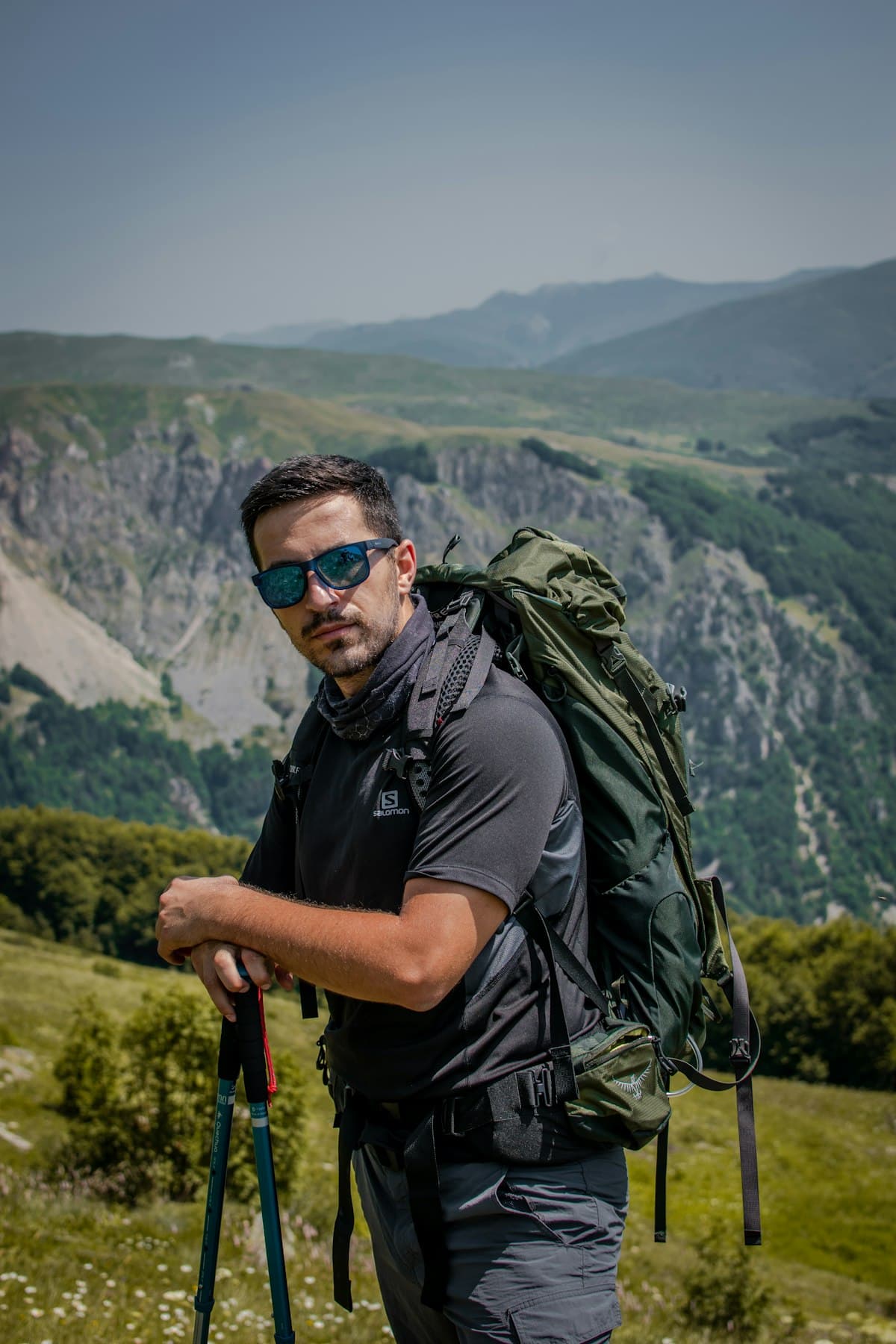
Hiking Sunglasses: How to Choose the Right Lens
We tend to think about boots, the backpack or the jacket, but one essential piece of equipment is often overlooked: sunglasses. While hiking, your eyes are exposed to far more intense ultraviolet radiation than in town — and the consequences of poor protection, from simple eye strain to snow blindness, should not be taken lightly.
Not all sunglasses are equal. A fashion pair bought at the beach will not properly protect your eyes on a high-altitude trail. This comparison reviews the criteria that really matter — lens category, polarization, photochromic technology, materials — to help you choose the right pair for your practice.
Why Proper Sunglasses Are Essential for Hiking
At altitude, UV radiation increases by roughly 10% every 1,000 metres. At 2,500 m, your eyes therefore receive nearly 25% more UV than at sea level. Add the reflection off pale rock, water or snow — which can bounce back up to 80% of UV rays — and exposure becomes considerable.
Insufficient protection leads to:
- Eye strain and headaches on long sunny outings
- Glare that is dangerous on technical or exposed sections
- Snow blindness (a "sunburn" of the cornea), extremely painful, on snow or glaciers
- Over the long term, an increased risk of cataracts and retinal damage
The good news: a properly chosen pair solves all these problems for a few dozen euros.
Lens Categories: The Number One Criterion
This is the starting point for any choice. The category indicates how much light the lens lets through, independently of UV protection (which must always be 100% / UV400).
- Category 0: very clear lenses (3 to 20% filtration). For overcast weather or aesthetics. Useless in full sun.
- Category 1: slight light reduction. Dense forest, grey weather.
- Category 2: medium protection. Moderate sun, shoulder-season shade.
- Category 3: strong protection (8 to 18% light transmission). The benchmark for hiking in full sun, from the coast to mid-mountains.
- Category 4: maximum protection (3 to 8% light transmission). High mountains, glaciers, snow, highly reflective open terrain. Not legal for driving.
Polarization and Photochromic Lenses: The Game Changers
Polarized Lenses
A polarized lens filters out horizontally reflected light. The result: glare on water, wet rock or shiny surfaces disappears, while contrast and comfort improve markedly.
Advantages:
- Eliminates glare on water and reflective surfaces
- Better contrast, crisper colours
- Superior visual comfort on exposed trails
Disadvantages:
- Can make screens (GPS, smartphone) harder to read
- Slightly more expensive
- Not ideal for spotting black ice (which appears less clearly)
For whom? Hikers near the sea, lakes and rivers, reflective Provence trails.
Photochromic Lenses
A photochromic lens darkens automatically depending on light intensity. The same pair shifts from category 2 (undergrowth) to category 4 (full alpine sun).
Advantages:
- A single pair for all conditions
- Ideal for outings alternating forest and exposed areas
- Gradual, automatic adaptation
Disadvantages:
- Higher price (often €60 and up)
- Transition takes a few dozen seconds
- Darkens less well behind a windscreen (UV filtered by car glass)
For whom? Versatile hikers, walkers who frequently move from shade to sun, long treks with variable conditions.
Mirror Lenses
A mirror coating adds a reflective layer that further reduces incoming light. It is a useful complement in very high brightness (snow, glacier), often paired with category 3 or 4.
Frames and Materials: What Makes the Difference on the Trail
Coverage
For hiking, a wraparound shape is paramount. Curved temples and good side coverage block stray light entering from the sides. In the high mountains, removable side shields turn regular glasses into true glacier glasses.
Ventilation
On steep climbs, lenses tend to fog up. Look for anti-fog treated lenses and well-ventilated frames. Rubber inserts on the nose and temples improve grip when you sweat.
Weight and Durability
A Grilamid (TR90) frame offers the best lightness/durability/flexibility compromise. For lenses, polycarbonate is virtually unbreakable and light — ideal for sport; mineral glass offers superior optics but remains heavy and fragile.
Quick Comparison Table
| Criterion | Cat. 3 all-round | Cat. 4 high mountain | Photochromic | Polarized |
|---|---|---|---|---|
| Ideal use | Full-sun hiking | Glacier, snow | Variable conditions | Water, glare |
| Price | €30–80 | €60–150 | €60–160 | €40–120 |
| Versatility | ★★★★ | ★★ | ★★★★★ | ★★★ |
| Strong-sun comfort | ★★★★ | ★★★★★ | ★★★★ | ★★★★ |
| Driving allowed | Yes | No | Depends on tint | Yes |
| Anti-glare | ★★★ | ★★★★ | ★★★ | ★★★★★ |
How to Choose Based on Your Practice
Day Hiking (plains, hills, Provence)
A wraparound category 3 pair covers the vast majority of outings. If you often walk near water (Verdon lakes, the Calanques coast), favour polarized lenses for comfort.
High Mountains, Snow and Glacier
Category 4 is mandatory. Choose true glacier glasses with side shields and, ideally, a mirror coating. It is the only way to avoid snow blindness on snowfields and snowy sections, even in midsummer.
Versatile Outings and Long Treks
Photochromic lenses (for example category 2 to 4) are the best choice: a single pair handles undergrowth, exposed ridges and altitude. A real comfort gain on multi-day treks.
Prescription Glasses Wearers
Three options: over-glasses (worn over your prescription glasses), adaptable clip-on filters, or prescription sunglasses. For regular practice, photochromic prescription lenses are the ultimate comfort — ask your optician.
Common Mistakes to Avoid
- Confusing a dark tint with UV protection: a very dark lens without a UV filter is worse than no glasses at all, because the pupil dilates and lets in more UV.
- Choosing too low a category: category 2 is not enough in full alpine sun.
- Forgetting category 4 on snowy mountains: snow blindness can occur even in hazy weather.
- Neglecting side coverage: light entering from the sides cancels out part of the protection.
- Buying without CE / UV400 marking: always demand the compliance mention.
Our Selection by Budget
Tight budget (< €40)
A wraparound category 3 polycarbonate pair with CE marking and UV400. Simple, light, effective for classic summer hiking.
Mid-range budget (€40–90)
Polarized category 3 lenses from a sports brand (Julbo, Cébé, Bollé...) or a first photochromic pair. The best comfort/price ratio for regular hikers.
Premium budget (€90+)
True photochromic category 2-4 glacier glasses with side shields and anti-fog treatment. A lasting investment for those who hike in all seasons and at altitude.
Protecting your eyes well means more comfortable outings and preserving your vision over the long term. To complete your gear and prepare your summer hikes, discover our other guides:
- Protecting Your Skin While Hiking: Sun, Wind and Cold
- Hiking in Extreme Heat: Prevention and Adaptation
- Discover Hiking Routes in Provence on OpenRando
As an Amazon Associate, we earn from qualifying purchases. Links marked with an external icon are affiliate links.
Related reading
Protecting Your Skin While Hiking: Sun, Wind and Cold
Sunburn, chapping, dryness: a hiker's skin endures sun, wind and cold far more than that of city dwellers. Here's how to protect it effectively all year round.
Hiking Socks Comparison: Merino Wool, Synthetic or Blend?
How to choose the right hiking socks: merino or synthetic, height, cushioning and seams. Comparison of six tested models to avoid blisters.
Best Portable Solar Panels for Hiking 2026
Power output, weight, durability, connectors: how to choose a portable solar panel for a day hike or a multi-day trek.