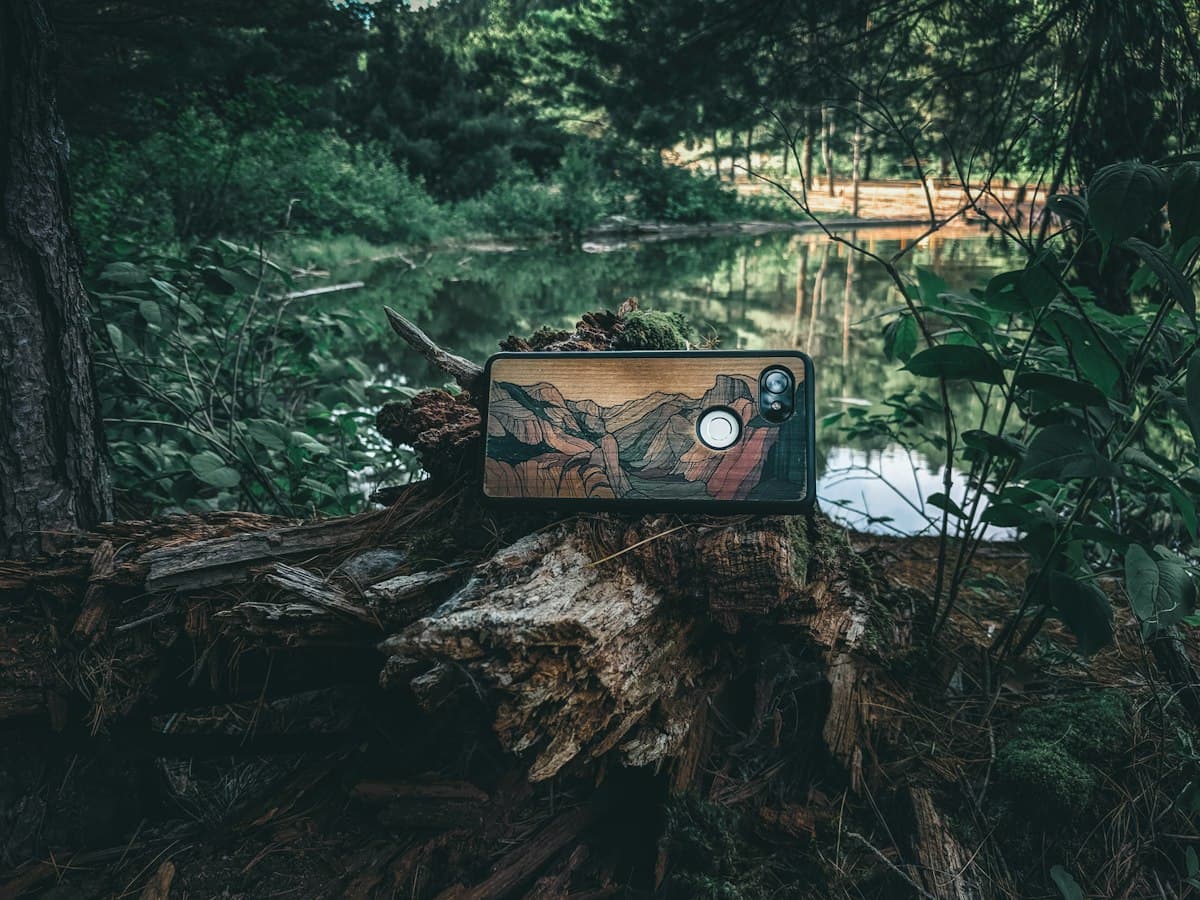
Best Power Banks for Hiking: What to Choose in 2026
The smartphone has become the go-to navigation tool for hikers: offline IGN maps, GPX tracks, weather updates, emergency calls. But a full day outdoors, with the screen on regularly, can drain a smartphone battery in 6 to 8 hours. On a multi-day trek, the question is no longer "should I bring a power bank?" — it's "which one, and what capacity?"
This comparison busts two myths that lead to poor decisions: the capacity printed on the label is never what you actually recover in your phone, and cold weather genuinely cuts your available energy. We put numbers on both, and compare four representative models across the key market segments.
How Many mAh for How Many Days?
Before choosing, you need to accurately estimate your real needs. A modern smartphone has a battery between 4,000 and 5,000 mAh. When hiking with the screen active (checking maps, taking photos), you'll use roughly 3,000 to 4,000 mAh per full day.
For a day trip: 10,000 mAh is more than enough — you charge your phone once and still have reserve capacity.
For a weekend (2 nights, 3 days): 10,000 mAh starts to feel tight; 20,000 mAh is comfortable.
For a week-long trek: 20,000–30,000 mAh, or a solar panel as a supplement (see dedicated section below).
These figures assume mild temperatures. In cold conditions, plan for 20–40% less capacity.
Why 20,000 mAh Doesn't Charge Your Phone 5 Times
This is the classic disappointment. You buy a 20,000 mAh power bank, expecting to charge your phone 4–5 times, and in practice you get 3, sometimes 2.5.
Two phenomena explain this.
Conversion efficiency: the power bank operates internally at 3.7 V. It must convert this to 5 V (or higher for fast charging) to power your phone. This conversion is about 80–90% efficient. A 20,000 mAh battery (at 3.7 V) therefore delivers roughly 15,000–18,000 mAh at 5 V. That's the figure that matters, not the one on the label.
Your phone's own charging efficiency: your smartphone's charging circuits also aren't perfect, adding another 5–15% loss.
Combined, a 20,000 mAh power bank provides the equivalent of about 3 to 4 full charges of a smartphone with a 4,500 mAh battery. Not 5.
Practical implication: if you're planning a 4-day trek and expect to use one full charge per day, choose 20,000 mAh rather than 15,000 — the safety margin is real.
Cold Weather: What You Actually Lose
Lithium-ion doesn't like the cold. Below 10°C, battery chemistry slows. Below 0°C, losses become significant.
Here's what independent tests measure at low temperatures:
| Temperature | Estimated available capacity |
|---|---|
| 20°C (reference) | 100% |
| 10°C | 90–95% |
| 0°C | 70–80% |
| -10°C | 50–65% |
| -20°C | 30–45% |
These figures vary by cell quality and brand, but the order of magnitude is consistent across independent tests.
What this means in practice: a mountain weekend in November, with temperatures near 0°C at night and 5°C during the day, will reduce your power bank's output by 20–30%. Slip it inside your jacket's inner pocket — body heat maintains performance at a reasonable level.
Never leave your power bank in your pack overnight in an unheated tent. In the morning it will be nearly useless until it warms back up.
Weight and Capacity-to-Weight Ratio
Weight is a real constraint on hiking trips, especially over multiple days. Here are the ratios for the four models compared:
| Model | Capacity | Weight | Ratio (mAh/g) |
|---|---|---|---|
| Intenso F10000 | 10,000 mAh | 196 g | 51 mAh/g |
| Belkin BoostCharge 20K | 20,000 mAh | 400 g | 50 mAh/g |
| UGREEN 100W 20K | 20,000 mAh | 456 g | 44 mAh/g |
| Swissten 20K Cables | 20,000 mAh | 440 g | 45 mAh/g |
The Intenso and Belkin have the best ratio. The UGREEN is heavier because it includes 100W fast-charging circuitry (useful if you're charging a laptop).
For day hikes, the Intenso F10000 at 196 g offers the best weight-to-capacity trade-off: you barely feel it in your pack.
For multi-day treks, the Belkin BoostCharge delivers the best energy density in the 20,000 mAh class.
Fast Charging: Useful or Gimmick?
Fast charging (18W, 45W, 100W…) is useful in a specific context: you have limited time to recharge (a meal at a mountain hut, an hour at a guesthouse) and want to recover maximum energy quickly.
For charging your phone from the power bank: fast charging is only useful if your phone supports it — and if the power bank uses a compatible protocol (USB Power Delivery, Qualcomm Quick Charge, etc.). Check compatibility before buying.
For recharging the power bank itself: fast charging is very welcome. A 20,000 mAh bank without fast charging takes 6–10 hours on a standard socket. With USB-PD 45W (as on the UGREEN), that drops to 2.5–3 hours. An overnight stop at a guesthouse is more than enough.
For laptops: only the UGREEN 100W can charge a laptop (MacBook, Ultrabook) at full speed thanks to its 100W USB-C output. The other models are limited to 18–20W on USB-C — insufficient for power-hungry computers.
If you're going on a multi-day trip with a laptop (digital nomads on trek, photographers), the UGREEN justifies its 56g weight premium over the Belkin.
Solar: When Is It Worth It?
Portable solar panels are attractive because the concept is appealing: unlimited charging from the sun. The reality is more nuanced.
A 20–25W monocrystalline panel in favorable conditions (direct orientation, strong sun) produces 1–1.5A on its USB output. That's enough to slowly charge a phone in direct use, but very slow for charging a power bank.
When it makes sense:
- Treks of 5+ days in high mountains or desert, with guaranteed daily sun exposure.
- Expeditions where charging at a hut or lodge is impossible.
- Hikers who leave their pack in the sun during breaks (the panel charges during a lunch stop).
When it disappoints:
- In forests or overcast conditions: output drops to 20–30% of the nominal value.
- In autumn/winter in France or the Alps: short days and low sun angle drastically reduce production.
- On day hikes: the gain doesn't justify the extra weight (300–500g for a decent panel).
For most hikers in France, a power bank alone remains the most effective solution. Solar is a supplement, not a replacement.
The Four Models in Detail
Intenso Powerbank F10000 — Best Value for Money
The Intenso F10000 is our recommendation for day hikes or light weekends. At under €15, it offers 10,000 mAh in a compact form factor (196g) with an 18W Quick Charge output. The four-level LED indicator gives a quick capacity estimate. The weak point: recharge time (6h+ on a standard socket).
Best for: occasional hikers, 1–2 day trips, ultralight backpackers.
Belkin BoostCharge 20,000 mAh — The All-Rounder
The Belkin BoostCharge 20K is the most robust and versatile model in this comparison. Solid build quality, premium cells, precise LED display. It supports two devices simultaneously (USB-A + USB-C). Its 15W USB-C output isn't the fastest, but cell quality compensates: in cold-weather tests, losses are below average.
Best for: regular hikers, 2–4 day treks, those who prioritise reliability.
UGREEN 100W 20,000 mAh — For Tech-Heavy Hikers
The UGREEN 100W is the choice for hikers carrying a laptop or USB-C rechargeable camera. Its 100W output is the only one here capable of charging a MacBook or PC at full speed. Heavier (456g) and pricier (~€50), it's only justified if you have a power-hungry device. For a simple smartphone, the Belkin is better value.
Best for: photographers, remote-working trekkers, users of power-hungry devices.
Swissten 20,000 mAh Built-In Cables — The Forget-Me-Not
The Swissten 20K integrates both a USB-C and a micro-USB cable directly into the casing. No cable to pack, no cable forgotten at home. Practical on multi-stage itineraries where pack organisation matters. Solid rather than exceptional performance, mid-range price (~€37).
Best for: hikers who always lose or forget cables, minimalist bivouackers.
The Takeaway
Two simple rules to guide your choice:
-
Calculate your real need by counting 4,000 mAh per day of active hiking, divide by 0.8 for conversion efficiency, and add 20% if you'll be hiking in cold conditions.
-
Prioritise cell quality over nominal capacity: a 15,000 mAh bank with quality cells (88% efficiency) delivers more usable energy than a 20,000 mAh bank with budget cells (70% efficiency).
For day trips or weekends, the Intenso F10000 is unbeatable at its price. For multi-day treks, the Belkin BoostCharge 20K remains our top pick. And if you're carrying a laptop, the UGREEN 100W is the only sensible choice.
To plan your next outing and find routes that match your level, explore the hikes available on OpenRando — filtered by zone, difficulty, and elevation gain.
As an Amazon Associate, we earn from qualifying purchases. Links marked with an external icon are affiliate links.
Related reading
Best GPS Watches for Hiking Under €300: Which One to Choose?
The best GPS hiking watches under 300 euros compared: real battery life, track accuracy, mapping and navigation put to the test.
Best Hiking Smartwatch 2026: GPS Watch Guide
Garmin, Suunto, Coros, Apple Watch: which hiking smartwatch is worth it in 2026? Compared by battery, GPS accuracy, weight and price.

Best Hiking Apps in 2026: Complete Comparison
Komoot, AllTrails, Wikiloc, IGN Geoportail, OsmAnd: which hiking app is best in 2026? Compared on maps, offline use, price and profile.