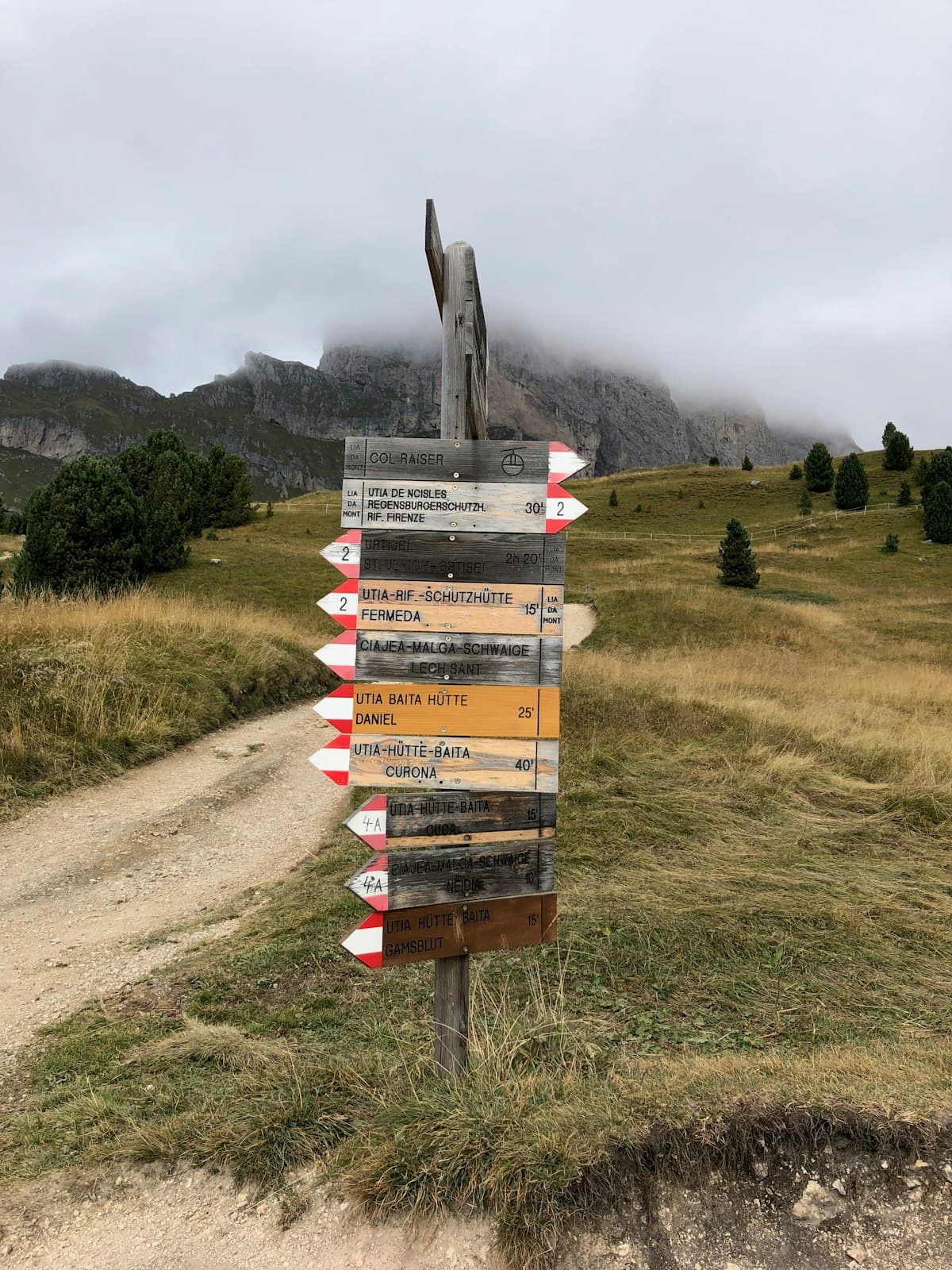
How to Navigate While Hiking Without GPS
Your smartphone battery dies, the GPS signal becomes unreliable, or you simply choose to hike without a screen to reconnect with nature. In all these situations, knowing how to navigate without GPS isn't just a useful skill — it's a matter of safety. And contrary to what you might think, finding your way on a hiking trail is not some arcane art: it simply requires mastering a few tools and techniques that hikers used long before the digital age.
This guide covers everything you need to know to navigate trails with confidence, whether you have a map and compass in hand or rely entirely on reading the landscape around you.
Why Knowing How to Navigate Without GPS Is Essential
Before heading out on any hike, there's a reality worth accepting: technology can let you down. Your phone battery drains faster in cold weather. GPS loses accuracy in narrow gorges or under dense forest cover. And in some mountain areas — the Haute-Provence Alps, the Mercantour, the Vercors plateaus — there is virtually no mobile signal.
Traditional navigation also gives you a much deeper understanding of the terrain you're crossing. When you read a map, you anticipate climbs, spot ridgelines, identify water sources. You're no longer just following a trail — you're reading it.
Finally, in an emergency — sudden fog, nightfall, an injured group member — knowing exactly where you are on a map can make all the difference when guiding rescue teams.
Mastering the Topographic Map
In France, the IGN 1:25,000 map (Blue Series) is the gold standard for hiking. At this scale, 1 cm on the map represents 250 metres on the ground. Every marked trail, path, water source and mountain refuge is shown with remarkable accuracy.
Understanding contour lines. These are the lines that run across the map, each one representing a constant altitude. The closer together they are, the steeper the slope. Tightly packed contour lines indicate a nearly vertical face; widely spaced ones signal gentle terrain. By reading the shape of the contours, you can mentally reconstruct the relief: a col, a valley, a flat plateau.
Identifying the contour interval. On IGN 1:25,000 maps, each contour line is spaced 10 metres apart (sometimes 5 m in mountain terrain). Thicker index contours — printed in bold every 50 metres — make for faster reading of the overall relief.
Using spot heights. These numbers scattered across the map indicate precise altitudes in metres. A spot height at a junction or summit lets you confirm your position when you know your elevation from an altimeter.
Picking up an IGN Top 25 map for your area before every outing is a basic reflex. In Provence, sheets covering the Luberon, Alpilles, Calanques or Verdon are available at bookshops or on geoportail.gouv.fr. You can also read our article on how to use a GPX file to combine digital and paper mapping.
Using a Compass
The compass is the inseparable companion of the map. Together, they make a formidable duo for navigating any terrain.
Taking a bearing. Place the compass on your map and align its edge with the line between your position and your destination. Rotate the azimuth dial until the meridional lines inside the compass housing align with the map's north-south lines. The angle shown is your bearing. In the field, hold the compass flat in front of you, rotate your body until the red needle points to N on the dial, and walk in the direction indicated by the direction-of-travel arrow.
Magnetic declination. In France, magnetic declination is small (between 0° and 3° depending on the region) and generally negligible for leisure hiking. For precision navigation, adjust your bearing according to the declination shown on your map.
Choosing your compass. A good hiking compass should have a transparent baseplate (for laying on the map), a fluid needle, and ideally an integrated magnifier. Silva and Suunto models are market references. Avoid cheap compasses whose needle is slow to settle.
Understanding Trail Markers
France has an exceptionally well-marked trail network. Understanding the colour code of marks painted on rocks, posts and trees is the simplest way to avoid getting lost. We've written a full article on French trail marking; here are the essentials:
- White/red: GR trails (Grande Randonnée), long-distance routes
- Yellow/red: GRP trails (Grande Randonnée de Pays)
- Yellow: local and PR trails (Promenade et Randonnée)
- X-shaped cross: wrong direction, turn back
- Arrow: indicates the direction of a turn
If you haven't seen a marker for a while, it's often a sign that you've left the marked trail. Backtrack to the last visible marker rather than pressing on blindly.
On OpenRando, all our hike listings indicate the expected type of marking and key waypoints not to miss.
Reading the Terrain: Natural Landmarks
When map and compass aren't enough — or when fog engulfs the landscape — natural landmarks become invaluable.
The sun. In France, the sun rises in the east, reaches its high point in the south at solar noon (around 1:30 pm in summer), and sets in the west. By pushing a twig vertically into the ground and observing the shadow, you can determine the north-south direction with acceptable accuracy.
The stars. On a clear night, the North Star (Polaris) indicates north with remarkable precision. Locate the Big Dipper (Ursa Major), extend the line formed by its two outer stars (the "Pointers") about five times their distance: you'll be pointing to Polaris.
Vegetation. In Provence, north-facing slopes (ubacs) retain denser, more moisture-loving vegetation for longer. South-facing slopes (adrets) are drier and sunnier. Moss tends to grow preferentially on the north side of tree trunks and rocks where moisture lingers — though this indicator is less reliable on limestone terrain.
Valleys and ridges. Water always flows downhill. Following a watercourse upstream takes you toward higher ground; following it downstream leads you toward villages and roads. Ridgelines are generally obvious features easily identified on a map.
Practical Field Techniques
Triangulation. If you can identify two or three landmarks — a summit, a radio mast, a chapel — both on the ground and on your map, you can determine your position by intersection. Take a compass bearing to each landmark, draw the lines on the map: their intersection is your location.
Estimating distance. On standard terrain, an average hiker covers about 4 km/h on flat ground and climbs 300 m of elevation per hour. By tracking your walking time and estimated speed, you can calculate the distance covered since your last known point.
The mental breadcrumb trail. As you walk, consciously note the key waypoints you pass: the fork with the wooden sign to the left, the dry fountain, the ridge with the stone pines. These mental markers let you retrace your steps if needed.
Using an altimeter. A watch with altimeter and barometer is an extremely valuable tool. By cross-referencing your altitude with the contour lines on your map, you significantly reduce the area of uncertainty about your position. The barometer also warns you of imminent weather changes — crucial in the mountains.
What to Do If You Get Lost
Even experienced hikers can become disoriented. Here's what to do:
Stop. The instinctive reaction is to keep moving and hope things sort themselves out. This is the worst thing you can do. Stop as soon as you have any doubt.
Assess your situation. Consult your map and try to reconstruct your route from the last certain point. Did you cross a stream? Crest a ridge? Pass under a power line? Every detail counts.
Return to your last known point. If you can't locate yourself, retracing your steps to where you were last certain of your position is usually the safest option.
Find high ground. If terrain allows, gaining a ridge or elevated point gives you a panoramic view that makes it much easier to identify landmarks.
Call for help if necessary. In an emergency, 112 works even with a single bar of signal. Stay put — rescue teams will find you much more easily if you don't move.
Preparing for Every Outing
The best navigation starts before you lace up your boots. Before every hike, prepare your outing properly: study the map, identify key waypoints, memorise the main directions to follow. This mental preparation lets you maintain a mental picture of the terrain even when you're not looking at your map.
Always bring a waterproof map case — a soaked map becomes unreadable within minutes of rain. A transparent sleeve or a map printed on synthetic paper will solve the problem.
On OpenRando, you'll find hundreds of hikes in Provence and the South-East of France with trail descriptions, elevation profiles and downloadable GPX files. These tracks can be loaded into your navigation app as a reference, while you practice reading the terrain with a paper map.
Practising Navigation: A Sport in Its Own Right
If you want to go further, orienteering is a sport in its own right. Orienteering clubs organise training sessions and competitions where you navigate at speed with map and compass through forested or urban areas. It's an excellent way to quickly develop your map-reading skills.
Specialist books deepen all the methods covered here, with practical exercises and real-world scenarios.
Conclusion
Navigating without GPS while hiking is neither mysterious nor reserved for mountain guides. With an IGN map, a compass, an understanding of trail markers and a few natural landmarks, you can navigate in complete autonomy on virtually every trail in France.
These skills build gradually, outing by outing. Start by following a marked trail while regularly consulting your map to identify your position. Then venture onto less-travelled terrain with map and compass, setting yourself exercises in triangulation or bearings. Very quickly, you'll find yourself reading the landscape before even glancing at the map.
And if you're looking for your next outing to practice your navigation, explore the routes available on OpenRando — you'll find something to suit any level.
Happy hiking!
As an Amazon Associate, we earn from qualifying purchases. Links marked with an external icon are affiliate links.
Related reading
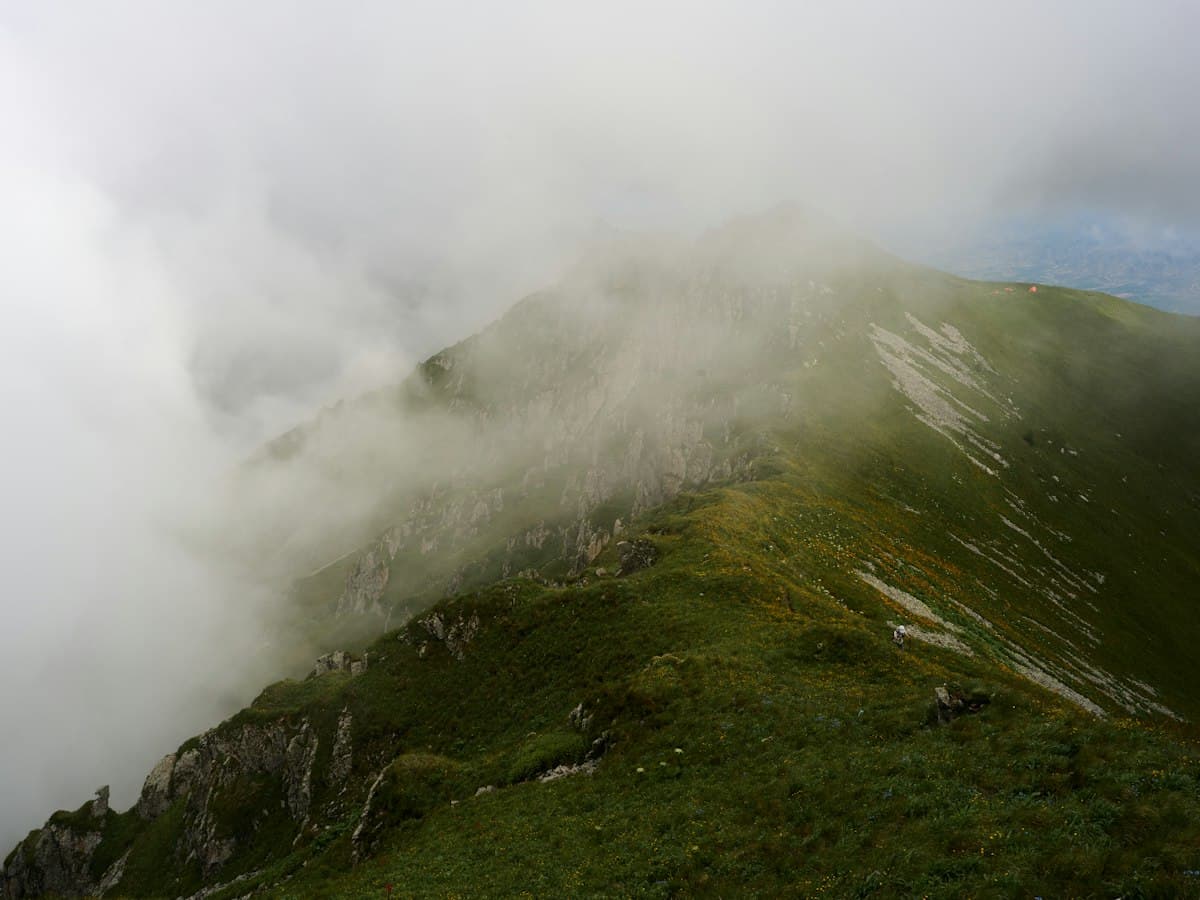
Hiking in the Fog: Safety, Navigation and Techniques to Stay on Track
Hiking in fog and mist: how to hold your bearing, assess visibility in meters, avoid disorientation and know when to turn back.
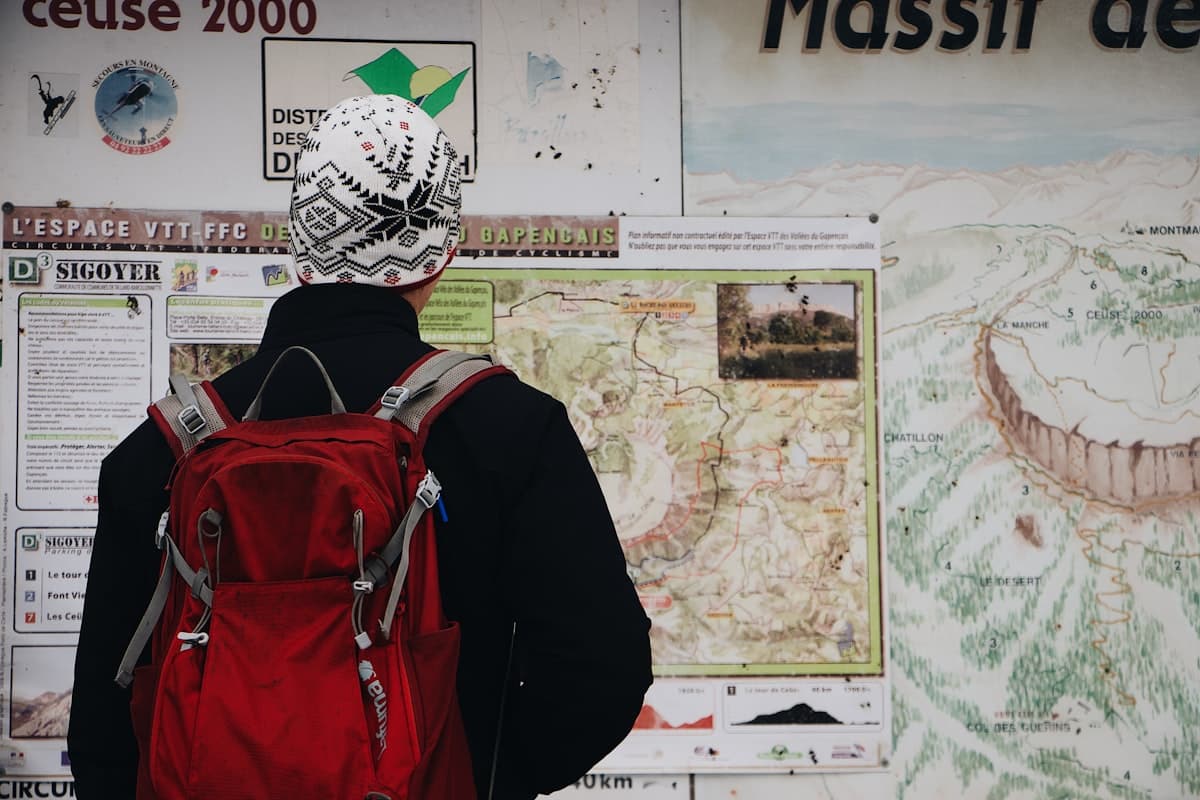
How to Read a Topographic Map for Hiking
Contour lines, scale, symbols, coordinates: the complete guide to decoding a 1:25,000 topographic map and hiking French trails with complete autonomy.
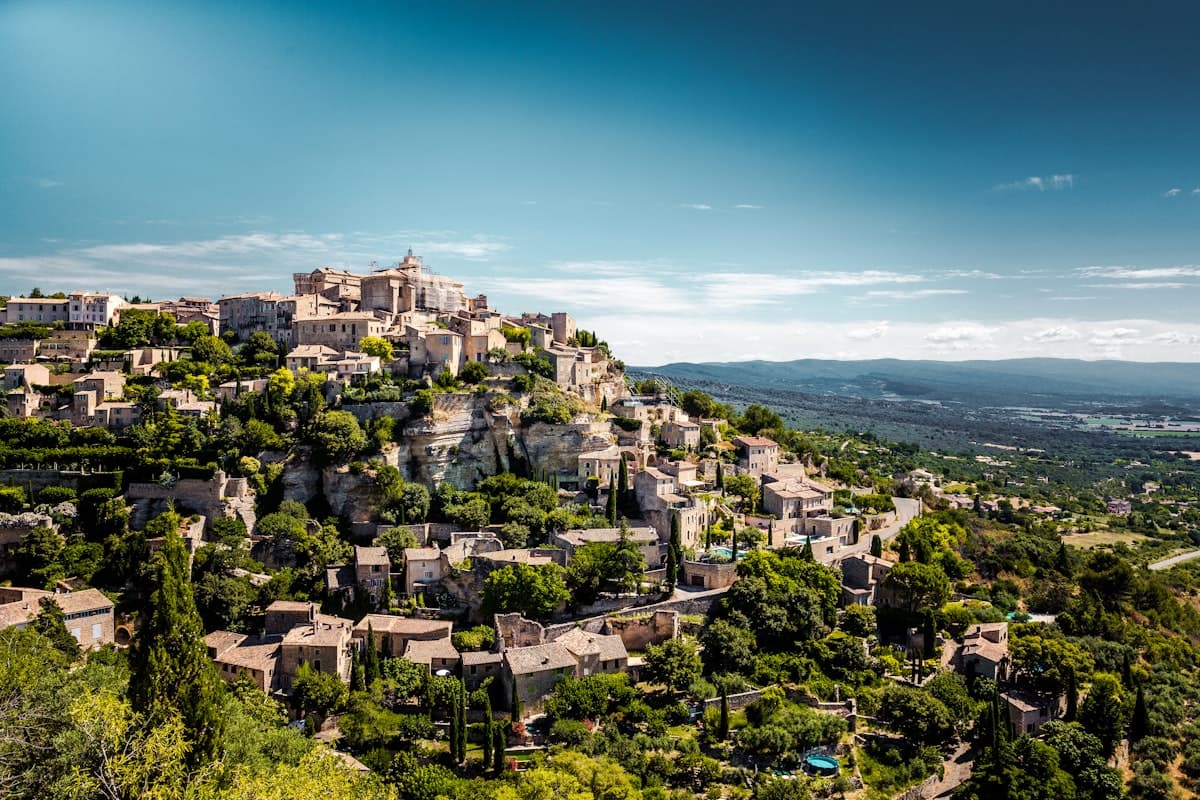
The 10 Most Beautiful Hikes in the Luberon
Discover our selection of the 10 most beautiful hikes in the Luberon: perched villages, wild gorges, cedar forests and stunning Provençal panoramas. Routes, tips and GPS tracks.