Premium Hiking Gear That's Actually Worth the Price
Last week, we covered the best hiking gear under €50. This week, the inverse exercise: where does premium gear genuinely change your experience, and where does it do absolutely nothing? Because before Black Friday and the November sales, the right question isn't "is it on sale?" but "is it worth investing in at all?"
The answer depends entirely on the category. In some, spending twice as much buys you radically better performance. In others, you're paying for a logo and a few saved grams. This guide is a map to tell them apart.
The Question to Ask Before Paying Three Times the Price
Before investing in premium gear, ask yourself two questions:
1. Do I regularly experience a limitation directly tied to this category? If your bivouac nights are cold because your sleeping pad insulates poorly, that's a real problem. If your hikes are uncomfortable because your backpack is poorly fitted, that's a real problem. If your headlamp lights the way and lasts all night, it's not.
2. Does the extra technology express itself in my actual usage? A premium GPS watch with color maps, barometer, heart rate monitoring and contactless payment has value if you use those features. If you mostly check the time and your pace, entry-level does the job.
The golden rule: the three categories where investment always pays off are shoes, backpack, and rain jacket. These directly determine your comfort, safety and health. For everything else, the analysis is more nuanced.
The Sleeping Pad: Where R-Value Justifies Everything
This is perhaps the category where premium gear is most clearly justified, and least intuitively. When you sleep badly in a bivouac, you blame the sleeping bag first. But in most cases, the problem is the ground.
R-value measures a pad's thermal resistance — the higher it is, the less body heat escapes to the ground. An R2 pad works for spring and summer. Below 5-6°C ground temperature, you need at least R4; in winter conditions, R5 or more.
The Sea to Summit Ether Light XT (from €149.95) is one of the best weight-to-insulation options on the market: R3.2 in the standard version, Flo valve inflation, 455g weight. For three-season hikers who bivouac regularly, it's a purchase that pays off over five years of comfortable nights.
For colder outings, the Nemo Tensor All Season (from €219.99) reaches R4.5 with a patented microclimate technology that reduces the cold spots typical of air pads. Heavier at 560g, but it genuinely keeps you warm.
The Backpack: Good Load Transfer Costs Money
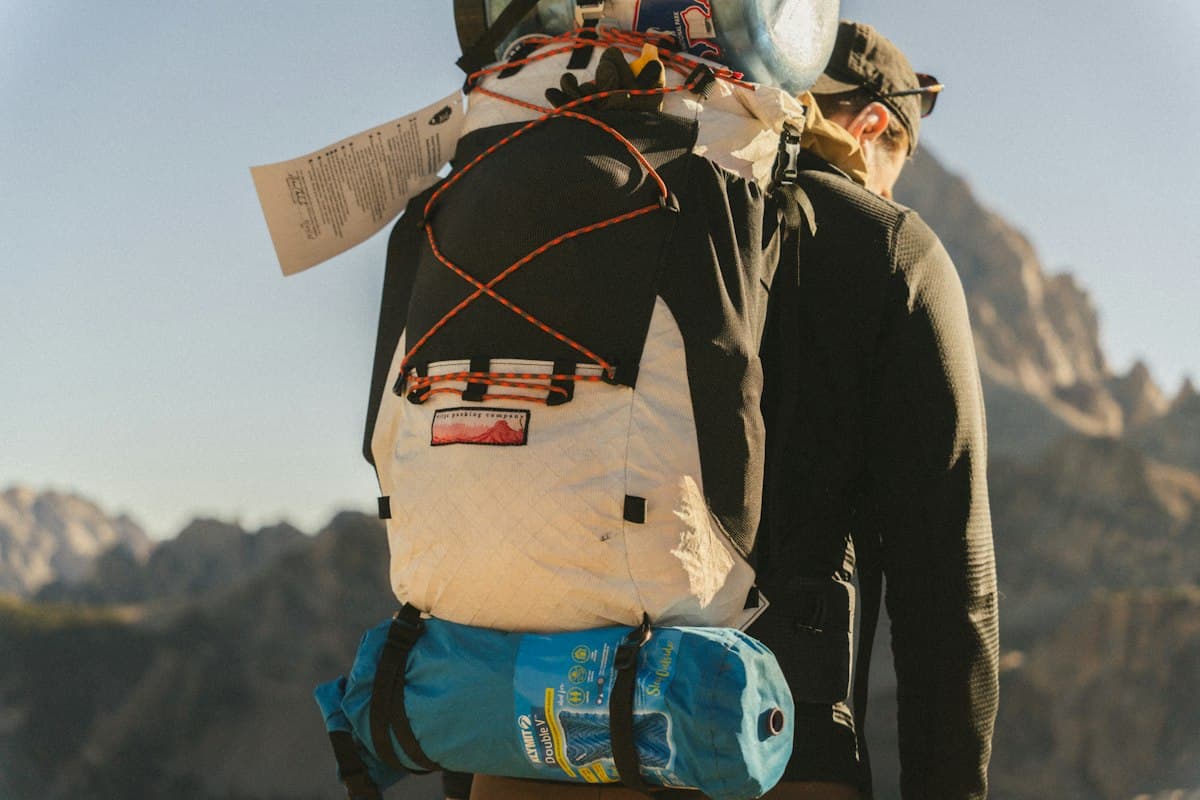
The backpack is the category where the difference between entry-level and mid/high-end is felt most directly — and earliest in the day. A poorly fitted pack with a basic suspension system distributes weight incorrectly: instead of the hips absorbing 70-80% of the load, shoulders and back compensate.
The result: back, shoulder and neck pain from hour four or five. On a day hike with 10-15 kg, the difference is tangible. On a multi-day trek, it can be the reason you stop early.
The Gregory Zulu 40 (from €189) is a reference in the 35-45L category for men: Response A3 suspension with back height adjustment, padded hip belt with pockets, ventilated back panel with airflow channel. The Zulu 40 works equally well for loaded day hikes and self-sufficient weekends.
What justifies the price: not the materials or durability (a €70 pack lasts just as long), but the suspension system. Two extra hours of comfort per hiking day, over 50 outings a year, is 100 hours of difference annually.
Optics: The Difference Is Immediately Visible
With binoculars, the premium difference is — literally — visible from first use. Premium manufacturers invest in prism quality, lens coatings and assembly precision: the result is a brighter, sharper image with less chromatic aberration and better edge-to-edge clarity.
The Vanguard VEO XF 8x42 (around €199.90) represents a well-positioned upper mid-range option: BaK-4 ED-coated prisms, wide field of view, IPX7 waterproofing. For birdwatching and wildlife observation in variable conditions, they clearly outperform entry-level binoculars at €20-40.
For hikers who want a more compact format, the Nikon Prostaff P3 10x30 (from €158) offers an excellent magnification-to-size ratio: 10x in a lightweight body (265g), waterproof. Ideal for the day hiking pack.
The real question: do you need optics in your practice? If you regularly observe birds, enjoy identifying distant ridgelines, or hike in high mountains where chamois and ibex stand 500-800m away — yes, investing in good binoculars transforms the experience.
The Integrated Stove System: Time and Gas Savings
The integrated stove (all-in-one burner + pot system like JetBoil or MSR WindBurner) is one of the innovations that has genuinely changed life for regular bivouackers. Compared to a classic gas burner + separate pot, it offers three concrete advantages:
Thermal efficiency: an integrated system concentrates heat on the pot and reduces lateral heat loss. Water boils 30-40% faster using 30-40% less gas — which matters over a week of trekking.
Wind resistance: integrated burner designs are shielded and work correctly in conditions where a classic burner struggles.
Packing simplicity: everything nests inside the pot. One object to pull out, pack away, clean.
The Jetboil Sumo (from €168) is the 1.8L version of the Jetboil system — ideal for cooking real meals or feeding two people. It features a pressure regulator that maintains performance as the cartridge empties. For multi-day routes where gas autonomy matters, it's an investment that pays back on the first week-long trek.
Who doesn't need this type of stove? Day hikers who never bivouac, or those who hike exclusively to gîtes and mountain huts. In those cases, a €20 Campingaz Bleuet handles exactly the same job.
The GPS Watch: What You're Actually Buying
This is the category that generates the most bad purchases, because people buy a feature list rather than a real use case. The Garmin Instinct 3 Amoled (from €289.32) is an excellent watch — but does it justify the investment?
Yes, if you regularly need navigation on unmarked terrain (off-trail, high mountain, trekking abroad), if you practice trail running and need training data (VO2max, recovery, load), or if you hike in areas without cell coverage where offline navigation is critical.
No (or not yet), if you follow marked trails and primarily use your phone for navigation, if your use is limited to basic timer and GPS, or if you're new to hiking and don't yet know whether you'll progress to more technical pursuits.
The practical truth: for 80% of weekend hikers, a €60-80 watch with GPS and altimeter works perfectly. The extra €200 of a premium Garmin buys superior GPS precision, better battery life in continuous GPS mode, and a comprehensive training monitoring ecosystem. If you don't use those features, the money is better invested elsewhere.
Winter is Coming: Premium Snowshoes
For hikers venturing onto snowy trails, snowshoes are the category where the gap between entry-level and premium is most significant. Budget snowshoes are heavy, poorly adjustable, and their crampons wear quickly.
The TSL Symbioz (from €238.23) are considered a reference in their category: universal auto-fit binding system compatible with any footwear (from trail shoes to ski touring boots), rigid aluminum frame, 10-tooth steel crampons. The Symbioz adapts to terrain with two heel levels and an articulated bridge. For regular use from December to March on varied terrain, this is the investment that makes sense.
The Three Categories Where Premium Gear Does Nothing
Let's be honest about where spending more delivers nothing concrete:
Trekking poles: beyond €50-60, you're paying for weight (aluminum vs carbon) and marketing design. The function of a pole — balance and knee offloading — is fulfilled just as well by a €35 model as a €150 one. Exception: carbon has genuine value on very long trails where every gram counts.
Hiking gloves: gloves at €20-30 from reliable brands do the job for temperatures down to -5°C. Gloves at €80-100 are marginally warmer and more durable, but the difference doesn't justify the price ratio for normal practice. Invest in good hiking socks instead.
Summer sunglasses: for summer hiking in Provence or the Southern Alps, a €25-40 pair with certified UV400 protection shields your eyes just as well as a €200 pair. Polarized lenses are a comfort upgrade (better readability on wet terrain), not a necessity. Exception: high mountain with glacier, where light intensity is so extreme that lens quality genuinely matters.
The takeaway is straightforward: concentrate your investments on what directly affects your physical comfort (sleeping pad, backpack, shoes) and on what delivers measurable, used performance (optics, integrated cooking system). Save money on the rest — and use it to do more outings.
Discover trails for all levels on OpenRando, and read our guide to hiking gear under €50 for the budget counterpoint.
As an Amazon Associate, we earn from qualifying purchases. Links marked with an external icon are affiliate links.
Related reading
The Best Hiking Gear Under 50 €
Twelve genuinely useful pieces of hiking equipment under 50 euros, tested and ranked by use case: lighting, hydration, safety, electronics.
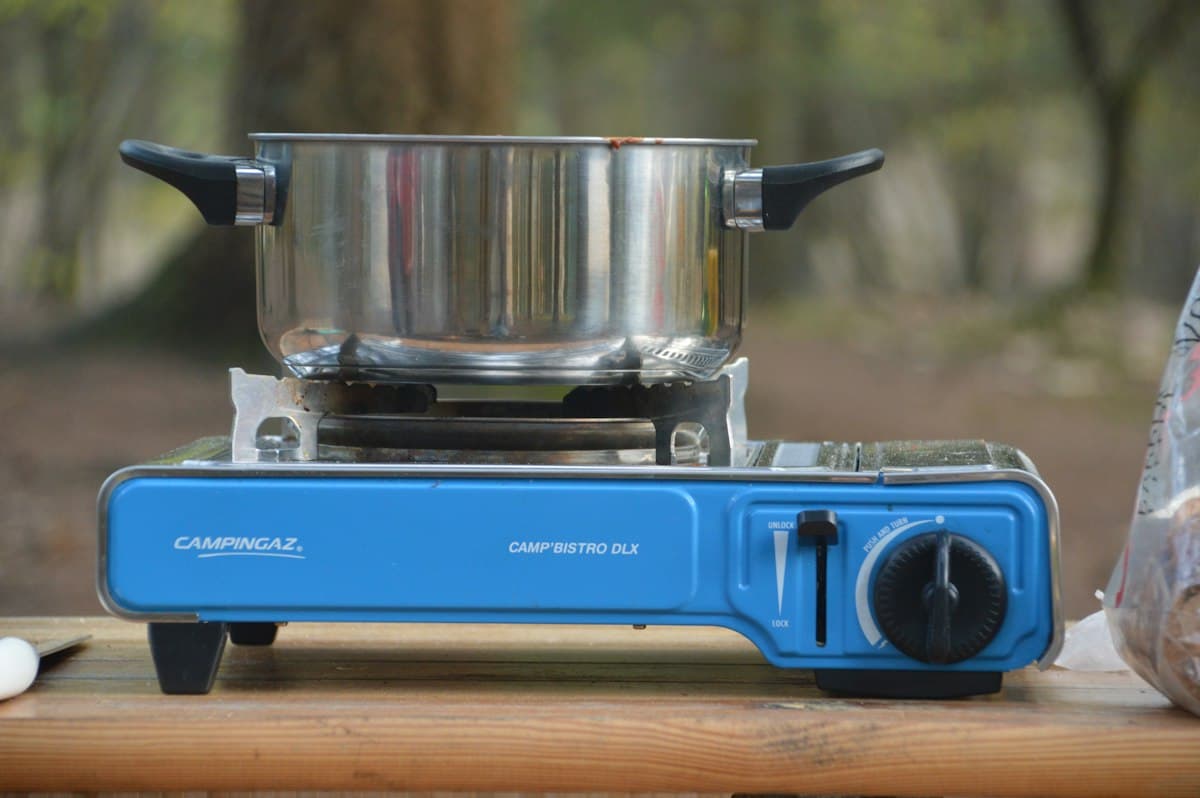
Hiking and Bikepacking Stove Comparison: Gas, Liquid Fuel, or Alcohol?
Which stove for hiking and bikepacking? Gas, liquid fuel, or alcohol, integrated system or separate burner, and how cold temperatures affect performance.
Sleeping Pad Comparison 2026: How to Choose for Backpacking and Bivouacking
Choosing a sleeping pad for backpacking: R-value explained, inflatable vs foam vs self-inflating, weight and real comfort. Six pads compared by season.