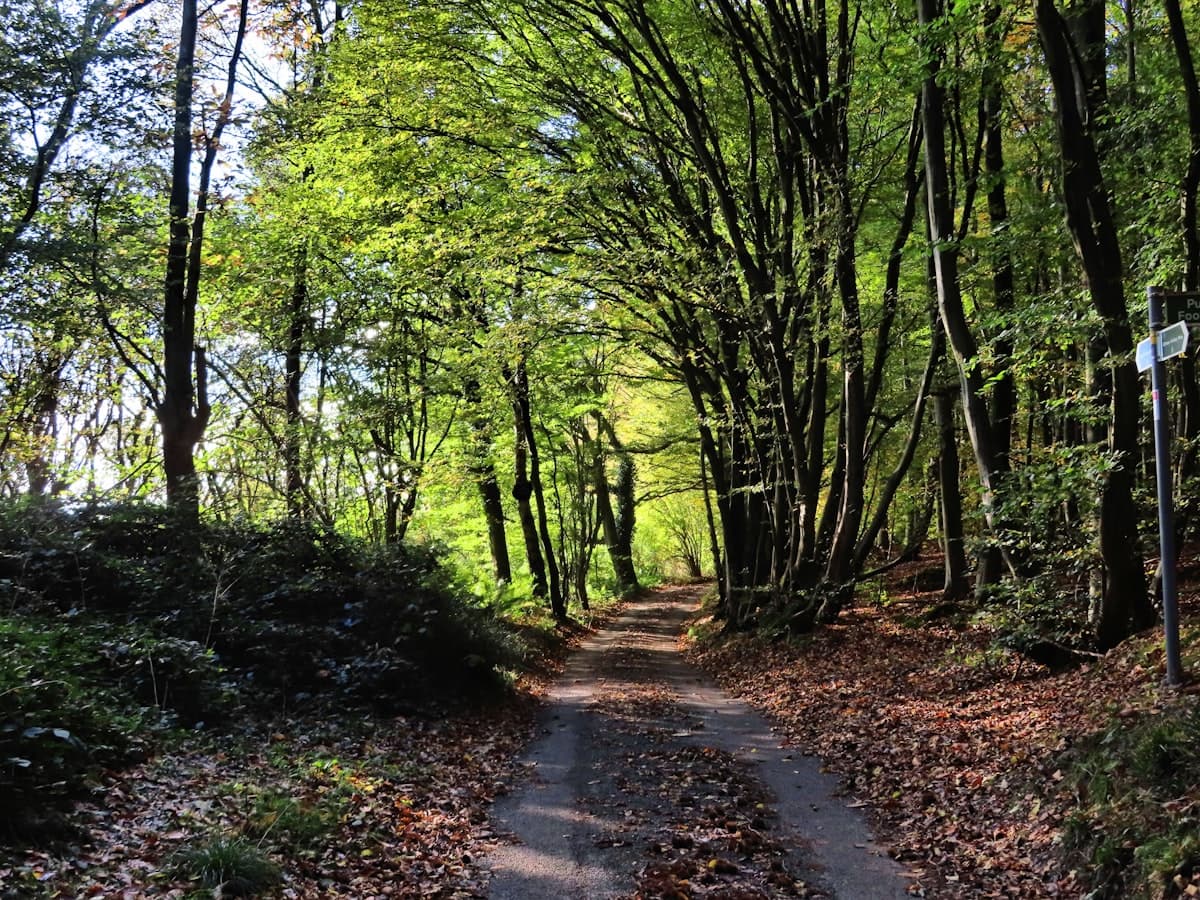
Getting back into hiking after a break: a 4-week progression plan
You laced up your hiking boots with enthusiasm after six months off — an injury, a busy winter, a new baby, an intense stretch of work — and the next morning you shuffled around with burning knees and aching calves. This is the classic comeback injury.
The good news: it is entirely preventable. The key is understanding what rest actually deteriorates in your body, and addressing it in the right order. This four-week progression plan gets you back to your previous level without a detour through physical therapy.
What rest actually takes away
Most hikers worry that their cardio will let them down when they return. That is partly true — VO2max drops roughly 10% per month of inactivity — but cardio is not where injuries happen.
The problem lies in tendons, ligaments and cartilage. These structures adapt far more slowly than muscles, and their reconditioning does not keep pace with your ambitions. A hiker who is cardiovascularly fit can go too far too fast, and that window of vulnerability is exactly where Achilles tendinitis, IT band syndrome and patellar pain appear.
Here is what deteriorates depending on how long you were off:
- Under 4 weeks: slight muscle loss, recovery in 1–2 weeks.
- 1 to 3 months: reduced cardio, strength down 15–20 %, tendons still comfortable.
- More than 3 months: noticeable decline across the board; tendons and joints must be reconditioned progressively over several weeks.
The other underestimated factor: descents. Climbing tires your legs, but descending destroys them if they are unprepared. The eccentric braking action loads the quadriceps and knees in a completely different way from flat walking. Your comeback programme must treat descent as a discipline in its own right — that is the purpose of weeks 3 and 4.
Week 1: rediscovering the hiking movement on flat ground
The goal of week one is not to tire yourself out. It is to reawaken proprioception, foot-ankle-knee coordination and the stabilising muscle chains. Put simply: your body has partly forgotten how to move efficiently on trail.
Recommended programme:
- 2 to 3 outings of 1.5 to 2 hours maximum
- Flat or near-flat terrain (less than 100 m of positive elevation)
- Light pack: water, snack, windproof — no more than 5 kg
- Conversational pace: if you cannot speak comfortably, slow down
What to pay attention to:
Focus on your gait. Trail walking engages micro-stabilisers that city walking does not activate. Land with your whole foot on uneven surfaces, look for toe push-off, keep your knee slightly bent at contact.
Soreness in your calves and hamstrings after the first two outings is normal. A localised pain in a joint is a stop signal.
Gear for this week: no poles needed. Let your arms swing freely to recover natural balance. Check that your hiking shoes are still in good shape — worn-out soles increase joint stress with every step.
Week 2: introducing positive elevation
You have relearned the movement. Week 2 starts loading the musculoskeletal system on uphills.
Recommended programme:
- 3 outings of 2 to 2.5 hours
- Progressive positive elevation: 150 m at the start of the week, 300 m by the end
- Short, gentle descents — no more than 100 m of negative elevation
- Introduce trekking poles if you have them
This is the right moment to bring out your trekking poles. On uphills, poles reduce knee load by 20–30 % and improve balance on slippery terrain. Set them so your elbow makes a 90° angle.
Suitable terrain for this week:
In Provence, the lower slopes of the Sainte-Victoire massif or the hills around Aix offer moderate elevation on well-marked trails — ideal for this phase. Look for a steady climb without technical passages, followed by a short descent on the same path. Browse Explore to find routes filtered by elevation profile.
What may happen:
Soreness in the glutes and quadriceps is expected. A burning sensation along the shin after 45 minutes of climbing can signal the start of shin splints — reduce the elevation gain and lengthen flat sections.
Week 3: learning to descend
This is the most important week of the plan — and the one most underestimated by returning hikers.
Descent is an eccentric exercise: your quadriceps contract while lengthening to brake your bodyweight on each step. Without preparation, this causes muscle micro-tears, patellar inflammation and soreness that lingers for a week after the outing.
Recommended programme:
- 3 outings of 2.5 to 3 hours
- Positive elevation: 400–500 m
- Negative elevation, increasing progressively: start at 200 m, reach 350 m by the end of the week
- Minimum 48 h recovery between outings
Descent technique:
- Lengthen your poles by 5–10 cm compared to uphill to anticipate support earlier.
- Land with your whole foot, never heel-first: heel-striking triples the shear forces on the knee.
- Keep your knees slightly bent at each footfall to absorb impact.
- Zigzag on steep slopes: cutting across reduces speed and shock.
- Look two to three steps ahead to read the terrain without locking your hips.
If your knees heat up after 30 minutes of descent, that is normal during a first week of eccentric loading. If pain persists the following day, take a full rest day. A lightweight stabilising knee brace can help with patellar tracking on long descents without disrupting your stride.
Outing recommendation for week 3:
For hikers in Provence, the Verdon Gorge or trails around Mont Ventoux offer technical descents on manageable distances. Check Explore for routes with a detailed elevation profile.
Week 4: your first real hike
You have rebuilt the movement, loaded the tendons on uphills and prepared the quadriceps for downhills. Week 4 is your first genuine full-day hike.
Recommended programme:
- 1 big outing of 4 to 6 hours mid-week
- Positive elevation: 600–800 m
- Negative elevation: 600–800 m (matching the uphill)
- 2 shorter outings of 2 hours at the start and end of the week to maintain load
Preparing the long outing:
- Start early to avoid midday heat in summer
- Carry more water than you think you need: 0.5 L per hour of walking is a minimum
- Eat a snack every 90 minutes to maintain blood sugar
- Share your GPX track with someone before you leave
On footwear: if you have not thought about your sole grip since coming back, now is the time. A high-ankle waterproof boot provides the ankle support that makes a real difference on uneven descents.
The psychological goal:
Finish the day with energy to spare. If you finish exhausted, that is not a failure — it is data. Note your recovery time: if you still feel tired 48 hours later, the intensity was slightly above your current level.
After this week, increase volume gradually by adding 10–15 % of elevation gain per week. Avoid jumps — one week at 700 m of positive gain, the next at 1 500 m, is the classic recipe for injury.
Signals that tell you to ease off
Even with the best plan, your body may send signals you should not ignore.
Stop immediately if:
- Sharp pain in a tendon or ligament (distinct from muscle soreness)
- Joint swelling after an outing
- Pain that worsens as you walk (a pain that disappears during warm-up then returns at the end of the outing is a classic tendinitis pattern)
Reduce intensity if:
- Shin pain after less than an hour of walking (sign of shin splints)
- Pain under the kneecap lasting more than 24 hours
- General fatigue that does not lift after 48 hours of rest
See a professional if:
- Any of these signs persist for more than a week despite rest
- Pain is precisely localised on a tendon (Achilles, IT band, patella)
When in doubt, a sports physiotherapist can assess you in a single session and give you a programme tailored to your specific situation. One preventive consultation is always worth more than three forced weeks of rest.
In summary
The secret to coming back without injury fits in one sentence: progress more slowly than you think necessary, and your body will surprise you positively.
The real enemy is not effort — it is the gap between what your cardiovascular system can do and what your tendons can handle. By closing that gap week by week, through flat terrain, then uphill, then downhill, you rebuild a solid base on which everything else can stand.
Five weeks from now, you will be on Provence's trails with the desire, the legs — and the knees — to prove it. Head to Explore to find your next outing, filtered by elevation and duration.
As an Amazon Associate, we earn from qualifying purchases. Links marked with an external icon are affiliate links.
Related reading

How to Prepare for Your First Mountain Hike
Gear, training, weather, and route planning: everything you need to know to successfully complete your first mountain hike safely and make the most of the experience.
Hiking safely: the mistakes you absolutely must avoid
Poor preparation, wrong gear, underestimated weather… Discover the 10 most common hiking mistakes and how to avoid them to enjoy the mountains with complete peace of mind.

Easy Hikes in the Southern Alps: 8 Accessible Routes for All Levels
Discover 8 easy hikes in the Southern Alps: mountain lakes, picturesque valleys and stunning panoramas accessible to beginners and families. Routes, practical tips and GPX tracks.