September in the Mountains: The Best Hiking Window of the Year
July and August draw the vast majority of mountain hikers. Yet most refuges wardens and seasoned guides will tell you the same thing: September is objectively the best month. More reliable weather, deserted trails, extraordinary light, and colorful flora. If you only have one window in the year for a serious mountain trip, this is the one. Here's the concrete case.
Statistically More Stable Weather
Counter-intuitively, mountain weather is often more favorable in September than in midsummer. In July and August, warm air masses generate near-daily convective thunderstorms in the afternoon, particularly in the Alps and the Pyrenees. These storms can build in a matter of hours, catch hikers off guard at altitude, and force very early starts to reach a summit before 1 pm.
In September, the end-of-summer anticyclone settles frequently over Western Europe. Clear spells last longer — often one to two consecutive weeks — and convective storms are much less frequent. Data from Météo-France weather stations show that September typically records fewer thunderstorm days than July, while daytime temperatures remain very pleasant (15–20 °C in valleys, 5–12 °C around 2,500 m).
Fresh snow begins to cover summits above 3,000 m in the Alps from mid-September onward, which signals the end of high-altitude passes — but classic hiking routes remain perfectly accessible. The first two weeks of September represent the sweet spot: no stifling July heat, no October cold or snowfall.
What you still need to plan for: a lightweight waterproof jacket remains essential — local showers do happen — and nights at altitude cool quickly. Always pack a mid-layer.
Deserted Trails and Refuges
In August, some iconic trails feel like motorways. The Tour du Mont Blanc sees thousands of hikers per day on its most popular sections. Refuges book out weeks in advance, and busy bivouac sites start looking like campsites.
As soon as the school term starts — around September 1st — footfall drops dramatically. Refuge wardens often report a 60–70% drop in occupancy rates within the space of a week. The Promontoire refuge in the Écrins, packed solid all August, regains an intimate feel in September. The GR20 in Corsica, a logistical nightmare in July, becomes manageable again.
In practice, this changes everything:
- Booking: you can often call a refuge two or three days ahead and find available beds
- Comfort: dormitories are less crowded, showers less contested
- Pace: no need to leave at 5:30 am to beat the crowds to the viewpoints
- Wildlife: chamois, ibex, and marmots are less disturbed and more visible
To explore available routes in French mountain ranges, head to OpenRando Explore and filter by region.
Golden Light and Photography
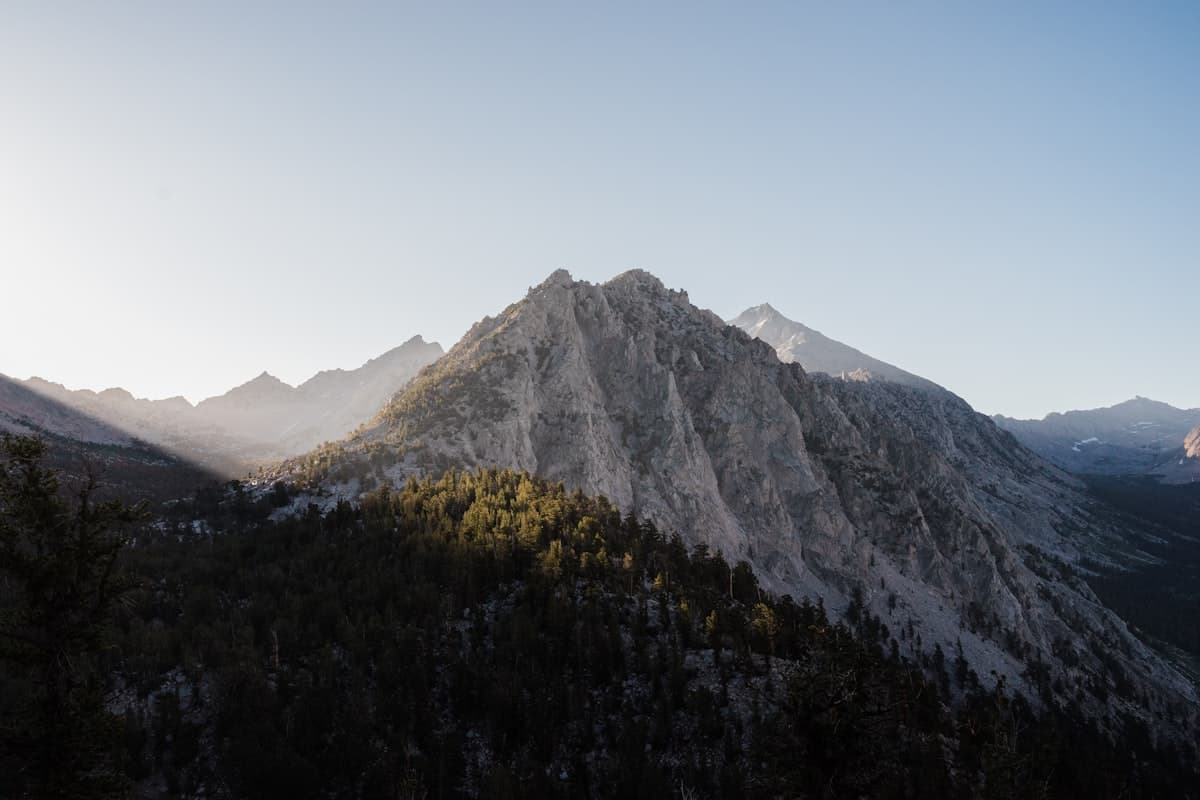
If you practice landscape photography, September is simply unbeatable. The lower sun angle produces golden light that extends over several hours — unlike the midsummer sun, which is at its zenith by 10 am and bathes valleys in flat, harsh light.
September sunrises and sunsets at altitude are of exceptional quality. Morning mist lingers in valley floors, summits emerge against a clear sky, and the raking light sculpts the terrain. For photographers, the golden hour lasts.
The first splashes of color appear on larch and beech trees from mid-September onward. In the Southern Alps and the Pyrenees, bilberry heathland turns orange-red. This spectacle begins well before the classic "autumn colors" and offers a subtle, luminous palette that summer simply doesn't have.
To capture these landscapes, a few accessories make a real difference: polarizing sunglasses to reduce glare, and if you're carrying a camera, a purpose-built hiking pack with quick camera access.
The Drawback: Rapidly Shortening Days
To be honest, September does have one real disadvantage. Days shorten quickly, and route planning must account for it.
On September 1st, sunset in the Alps falls around 8:30 pm. By September 30th, it's already dark by 7:30 pm — an hour of daylight lost in a single month. For long itineraries or stages with significant elevation gain, it's essential to:
- Start earlier in the morning (6:30–7:00 am depending on the route)
- Calculate your stage time carefully before setting off
- Always carry a rechargeable headlamp — even on a day hike, the unexpected happens
A simple rule: in September, aim to be at the refuge or bivouac by 5:30 pm at the latest to keep a comfortable safety margin before dark. Don't underestimate nighttime temperatures at altitude either: below 2,000 m they stay mild, but around 2,500 m expect 2–4 °C from mid-September onward.
Refuges: Watch Out for Closures
This is the main thing to watch for when hiking in September: many staffed refuges close between September 15th and 30th, depending on the massif and altitude. After that date, some remain open in unstaffed mode (shelter), while others close entirely.
Before planning a multi-day itinerary in September, always check:
- The opening and closing dates of every refuge on your route (CAF, FFRandonnée, national park websites)
- Whether the refuge is staffed or self-service only
- Regulated bivouac possibilities in case a refuge is closed
In national parks (Écrins, Vanoise, Mercantour), bivouacking is tolerated more than one hour's walk from roads and park entrances — check each park's specific rules before planning.
To bivouac comfortably, a quality lightweight 3-season sleeping bag suited for cold nights at altitude is non-negotiable.
Five Mountain Ranges to Prioritize in September
1. Les Écrins (Hautes-Alpes / Isère)
The Écrins National Park is probably the wildest and least crowded of the French Alpine massifs, despite its exceptional beauty. In September, trails toward high-altitude lakes (Lac de la Muzelle, Lac du Pavé) are easily accessible until mid-month in good conditions. The atmosphere is resolutely mountain and far from touristy.
2. Le Mercantour (Alpes-Maritimes)
The southernmost national park in the French Alps, the Mercantour enjoys a more favorable climate well into October. The Merveilles Valley, the Gordolasque Valley, and the Ubaye offer remarkably diverse landscapes. Wildlife — wolf, chamois, golden eagle — is particularly active at this time of year. Access from Nice or the French Riviera is straightforward.
3. Belledonne and Beaufortain (Savoie)
Less well-known than the Vanoise or Mont Blanc massif, these two Savoyard ranges offer "authentic" hiking with minimal crowds. The Belledonne massif, visible from Grenoble, holds remarkable high-altitude lakes (Lac Longet, Lac Blanc). The Beaufortain with its alpine pastures is ideal for day hikes or multi-day itineraries.
4. The Central Pyrenees (Hautes-Pyrénées)
The Gavarnie Cirque, the Ossau Valley, Lac d'Oo, or the Brèche de Roland: the central Pyrenees offer stunning scenery in a more unspoiled state than in July. Proximity to Spain (Ordesa National Park) adds an international dimension for cross-border itineraries. The Pic du Midi de Bigorre (cable car access) provides a 360° panorama over the Pyrenean peaks.
5. The Vercors (Drôme / Isère)
For a less strenuous but equally beautiful experience, the Vercors plateau is ideal in September. Beech forests begin to turn, viewpoints over the Valence plain and the Alps are crystal-clear, and the limestone plateau has a magnificent, quietly melancholy atmosphere. Perfect for families or beginners wanting to discover medium-altitude mountain hiking.
Preparing Your Trip: September Equipment
September requires slightly different gear than midsummer:
- Footwear: opt for a waterproof GTX mid-cut hiking boot — ground is still dry during the day, but morning dew and occasional showers call for waterproofing
- Poles: essential for significant elevation changes, lightweight carbon folding poles reduce fatigue on long stages
- Water: high-altitude springs can run dry in late summer — bring a filtered water bottle and identify water sources on your route in advance
Conclusion
September brings together the best of what the mountains have to offer: the weather without July's storms, the freshness without October's cold, the trails without August's crowds. It's the month for hikers who know where to look. If you only have one window in your calendar, this is it.
Find all mountain itineraries on OpenRando Explore, filter by massif and difficulty, and plan your next end-of-summer escape.
As an Amazon Associate, we earn from qualifying purchases. Links marked with an external icon are affiliate links.
Related reading
The Most Beautiful Hikes in Pyrénées-Orientales
Discover the best hikes in Pyrénées-Orientales: from the mythical Canigou to the wild Albères, through the Conflent massif and the Côte Vermeille. Detailed itineraries, tips and gear advice.
Bivouacking in France: Rules, Regulations and Best Practices
Where can you legally bivouac in France? A complete guide to national park regulations, permitted zones, Leave No Trace principles and essential gear for your first night under the stars.
Mountain Refuges in Provence-Alps: Where to Sleep on the Trails
Staffed refuges, unmanned shelters, trail lodges… Discover where to sleep in the mountains of the Southern Alps and Provence for multi-day hiking adventures.