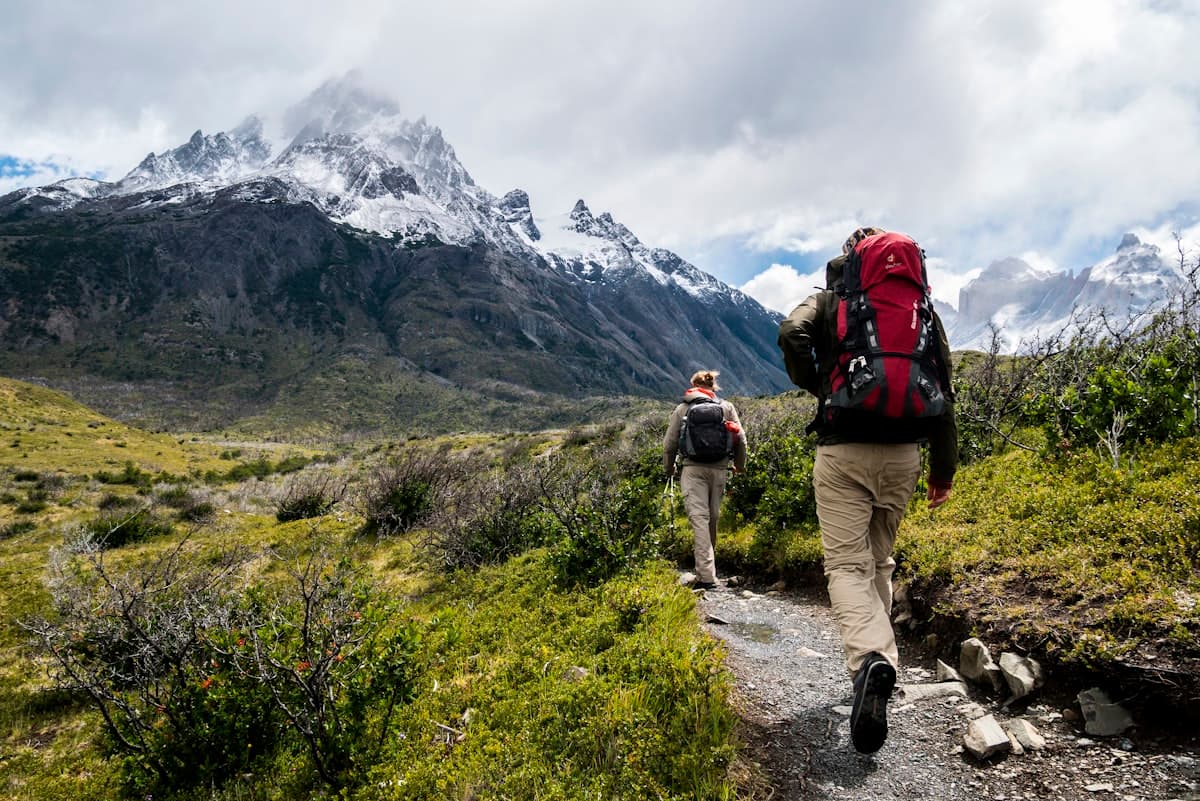
Best 30-40L Daypacks for Hiking: 5 Models Compared
You've spent an hour searching "best hiking daypack" and found yourself overwhelmed by hundreds of models with impenetrable spec sheets. Yet choosing the right hiking backpack comes down to five concrete criteria — and the 30-40 L volume covers almost every situation.
This is the best-selling, most recommended, and… most poorly chosen format. Because people often buy a pack based on colour or price, without understanding what actually matters on the trail. This guide walks you through every criterion, then compares five representative models to help you find yours.
Why 30-40 L Covers 90% of Hikes
A 30-litre hiking backpack is enough for a standard day out: water, lunch, a windshell, a first aid kit, a camera. A 40 L hiking pack lets you add an insulating layer, spare clothes, or even a lightweight tent for longer outings. The ideal balance for the vast majority of hikers sits right between the two.
Below 25 L, you sacrifice carrying comfort (no proper hip belt) and end up cramming or leaving gear behind. Above 45 L, the empty pack becomes dead weight for a day out.
The 30-40 L range also provides:
- A structured hip belt that transfers 70% of the load to your hips
- Side pockets accessible without taking the pack off
- A lid compartment or zip pocket on top for everyday small items
- The option to strap trekking poles, a sleeping pad or helmet to the outside
Whether you're exploring trails around Provence, the Gorges du Verdon or the Alpilles ridgeline, this volume will follow you without holding you back.
Carrying Comfort: The Criterion Everyone Underestimates
This is the single most important factor — and the one least covered in comparisons. A well-fitting pack is a pack you forget about. A poorly fitting one is constant suffering, even with just 8 kg inside.
Back Length: Get Fitted or Stay Regretful
Every manufacturer offers back sizes (XS/S/M/L) or a continuous adjustment system. Measure your torso length: place your hands on the iliac crests (the bony protrusions on either side of your pelvis), and measure the distance from that point to the C7 vertebra (the base of your neck).
- Under 43 cm → XS/S
- 43 to 50 cm → M
- Over 50 cm → L/XL
A pack that's too long shifts weight onto your shoulders instead of your hips. One that's too short compresses your lower back.
The Hip Belt: Essential Above 5 kg
The hip belt is not an accessory. It must rest firmly on your iliac crests — not your waist, your hip bones. Check that it's well padded, doesn't cut in, and stays in place while walking. For wider frames, some brands offer interchangeable hip belts.
Shoulder Straps: Flexibility and Stability
Straps should follow the curve of your shoulders without pressing on your collarbones. Models with an anti-rotation system (sternum strap or stabiliser straps) prevent the pack from falling forward on technical descents.
Ventilation: Tensioned Mesh or Direct Back Contact?
This is the great religious war of hiking backpacks. Two philosophies compete.
Direct Back Contact
The back panel presses against your back. Advantages: better weight transfer, more stable feel, more compact and often lighter pack. Obvious downside: your back sweats. Best for short hikes, cooler temperatures, or hikers who don't perspire much.
Tensioned Mesh (Trampoline Back)
An elastic mesh keeps the pack 3-5 cm from your back. Air circulates freely in the gap. Perspiration is dramatically reduced — a decisive advantage in summer under southern sun. The trade-off: the centre of gravity shifts slightly away from the body, creating a pulling sensation on very technical terrain.
Our take: if you mainly hike in summer in hot regions (Provence, Languedoc, Corsica, the South of France), go for tensioned mesh. In mountains or autumn, direct back contact is perfectly adequate.
Access to Contents: Top-Load or Panel-Load?
How the pack opens directly influences how you organise it and use it on the trail.
Top-Loading
The pack opens from the top through a drawstring and lid. You stack contents from bottom to top: heaviest and least-used items at the bottom (sleeping gear, clothes), lightest and most-used at the top (snacks, windshell). Less convenient if the item you need is at the bottom, but this design is more robust and generally lighter.
Panel-Loading
The back panel or base opens via a wide U-zip. You access any level of the pack directly. Very convenient for day hikes where contents rarely change — no need to unpack everything to find your sunscreen. The trade-off: the zip is a potential weak point and the back can become unstable if contents aren't well distributed.
Empty Weight: The Most Underrated Factor
Here's a simple rule: the pack's empty weight is a permanent burden, whether you fill it or not. A 1.5 kg empty pack vs. an 800 g empty pack: that's 700 g you carry all day for nothing.
Yes, a lighter pack is often less robust or less comfortable. But advances in materials (Dyneema, honeycomb mesh) now allow excellent compromises. For a day on marked trails, an empty weight of 1 to 1.3 kg is a good target. For more technical or heavily loaded outings, up to 1.5 kg is acceptable.
Our Selection: 5 Models for Day Hiking
Millet Ubic 30 L — Best Value French Pick
From €124.95 · Direct back · 30 L · ~1.1 kg
The Ubic 30 is Millet's entry-level pack, and it's no shameful compromise. Wide EVA foam shoulder straps, padded hip belt, aerated back with ventilation channels, and a practical front panel opening. The elastic mesh side pockets swallow a 1 L water bottle or folded trekking poles with ease.
Strengths: partly assembled in France, robust 210D fabric, hard-to-beat value for money.
Weaknesses: dorsal ventilation short of tensioned mesh systems — watch out in midsummer heat.
Lowe Alpine AirZone Active — Outstanding Ventilation
From €59.99 · Tensioned mesh · 30-35 L · ~1.0 kg
The British brand has built its identity around dorsal ventilation. The AirZone Active features compact tensioned mesh that doesn't overly compromise stability, at a remarkably accessible price. It's probably the best 30-litre hiking backpack if your priority is not ending the day soaked in sweat.
Strengths: highly effective dorsal ventilation, excellent price, light for a ventilated back system.
Weaknesses: basic interior organisation, thin hip belt that could be improved for long outings.
Deuter Futura 32 L — The Tensioned Mesh Reference
From €104.99 · Tensioned mesh · 32 L · ~1.35 kg
The Futura has been the benchmark European hiking backpack for years. Its Aircomfort system (3D tensioned mesh) delivers flawless dorsal ventilation, its anatomical hip belt ranks among the best in class, and its robust build handles the most demanding trails. The Deuter Futura is the standard against which others are measured.
Strengths: exemplary dorsal ventilation, high-quality anatomical hip belt, excellent access via front panel opening.
Weaknesses: heavier than some competitors, mid-range price but justified by quality.
Gregory Zulu 40 — Comfort Under Heavy Loads
From €189.00 · Tensioned mesh · 40 L · ~1.55 kg
If you're heading out for a long day with a full load — lightweight bivouac gear, camera, food for 10 hours — the Gregory Zulu 40 is probably the best hiking daypack for demanding outings. Its FusionForm system delivers exceptional hip load transfer. The suspended internal frame follows the body's movements, reducing fatigue over long distances.
Strengths: premium carrying performance under heavy loads, very versatile 40 L volume, quick access to gear.
Weaknesses: high price, somewhat heavy for light outings.
Osprey Talon 22 L — The Carrying Reference (out of range)
From €114.95 · Direct back · 22 L · ~0.78 kg
The Talon 22 L falls outside our volume range, but it's included here as the benchmark for Osprey's carrying system: its Airscape shoulder straps and flexible internal frame are the absolute standard for dynamism and body movement. If you're hesitating and your main use is sporty hiking or trail running, the Talon 33 (the 30-40 L version) uses exactly the same technology — well worth comparing.
Strengths: exceptional dynamic carrying, lightweight, premium finish.
Weaknesses: 22 L insufficient for a full day out, no dorsal ventilation.
How to Choose Based on Your Profile
| Profile | Our recommendation |
|---|---|
| Beginner, tight budget | Lowe Alpine AirZone Active |
| Summer hiking, hot weather | Deuter Futura 32 L or Lowe Alpine AirZone |
| Technical hikes, mountains | Millet Ubic 30 L or Gregory Zulu 40 |
| Long heavily loaded days | Gregory Zulu 40 |
| Best overall value | Millet Ubic 30 L |
One last tip: try your pack loaded to 5-6 kg before buying. The difference between a pack that fits and one that's perfect is always felt with your feet in the shop, never on a spec sheet.
What Fits in a 30-40 L Pack
A 40 L pack can comfortably hold:
- 2 L of water (water bottle or hydration bladder)
- Food and snacks for the day
- A windshell or waterproof jacket
- An insulating layer (fleece or lightweight down jacket)
- A first aid kit
- A camera or binoculars
- Light spare clothing
- Trekking poles strapped to the outside
For purely summer days without altitude, 30 L is plenty. Adjust based on your destination — and always factor in extra water if the trail crosses stretches without water sources.
Conclusion
A good hiking backpack isn't the most expensive or the most technical — it's the one that suits your body shape, your use, and your pace. The five models presented cover the essential spectrum, from accessible budgets to premium performance.
Before setting out, test your pack loaded in the shop, adjust the back length, tighten the hip belt properly, and take a few steps. The right pack disappears. That's exactly what we ask of it. Discover our hiking trails to plan your next outing with the ideal pack.
As an Amazon Associate, we earn from qualifying purchases. Links marked with an external icon are affiliate links.
Related reading
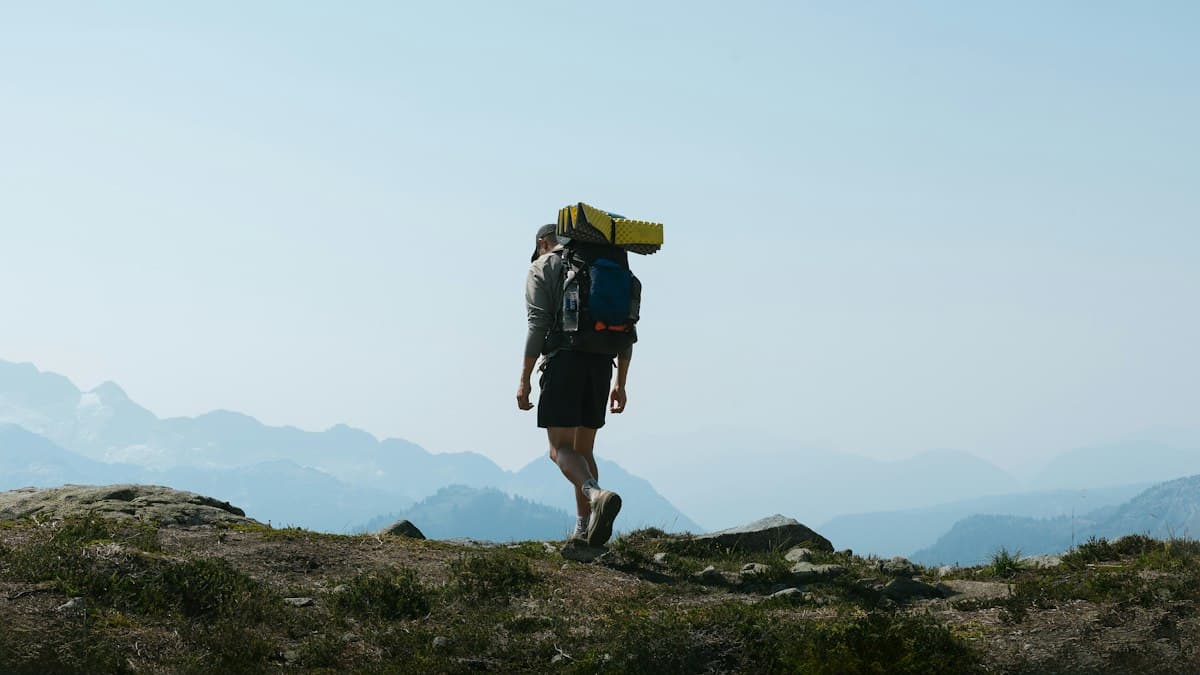
How to Properly Fit Your Hiking Backpack: The Adjustment That Changes Everything
How to adjust your hiking backpack in the right order: hip belt, shoulder straps, load lifters, and sternum strap. The complete method in six steps.
Gore-Tex vs eVent: Best Waterproof Jackets 2026
Gore-Tex, eVent, Pertex Shield, 2L or 3L: how to pick a waterproof hiking jacket for your terrain and budget in 2026.
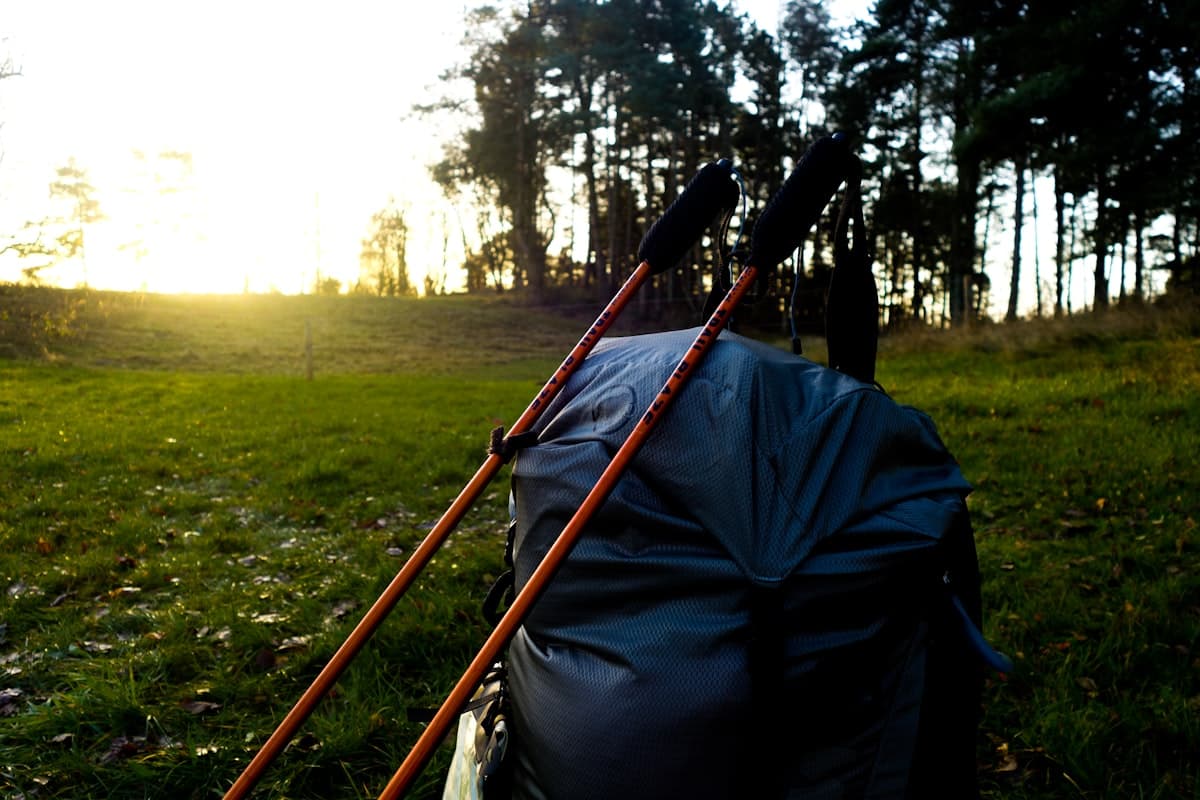
Hiking Poles Compared: How to Choose the Right Pair
Carbon or aluminium, telescopic or folding, with or without straps? This complete guide helps you choose the best hiking poles for your terrain, style and budget.