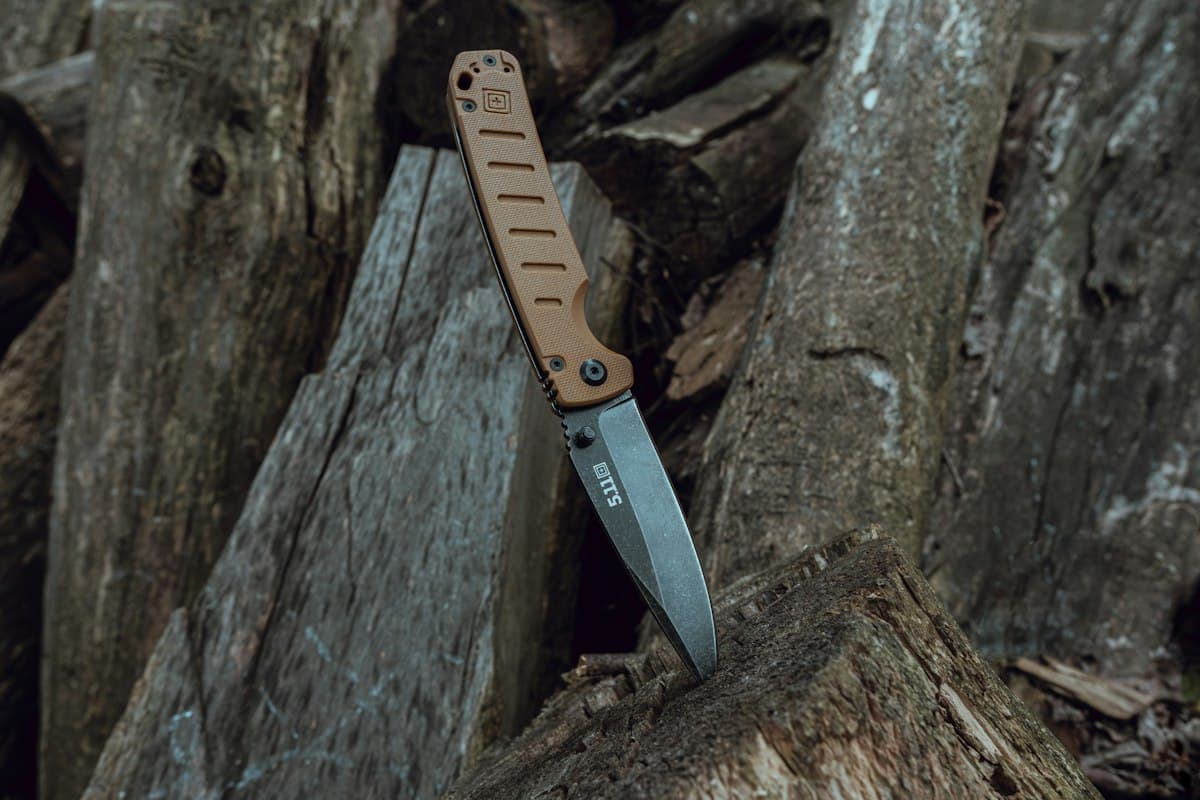
Knife or Multi-Tool for Hiking: The Complete 2026 Comparison
A knife is one of those hiking tools you pack without much thought — until you try to cut a rope with a cheap penknife, or a mountain ranger asks what you're carrying. Between the often-misunderstood legal framework, the knife vs. multi-tool dilemma, and dozens of available models, choosing can quickly become overwhelming.
This comparison gives you a clear answer: what French law actually says, which features genuinely matter on the trail, and six hand-picked models organised by use case and budget.
What French Law Says About Carrying a Knife
This is the question everyone wonders about but almost no article addresses seriously. In France, knives and cutting tools are governed by the Code de la Sécurité Intérieure (Articles L. 317-1 onwards) and classified by dangerousness.
What you can carry without restriction
Folding knives with a non-locking blade (no blade-locking mechanism, or with a locking mechanism that falls below a certain threshold) are considered everyday objects. Carrying an Opinel, a Swiss Army knife, or a multi-tool in your hiking pack raises no legal issue, provided your intention is clearly utilitarian.
The fundamental rule: context justifies the carry. A hiker with a knife in their bag — just like a chef with their knives — is in a normal situation. Problems arise when there is no valid reason to carry a sharp object (in an urban setting, in a non-professional context, with no obvious motivation).
What is regulated
Fixed blades longer than 22 cm and automatic (gravity or spring) folding knives are subject to stricter rules and require professional justification for public carry. For hiking, a fixed blade under 22 cm in a closed sheath is tolerated in natural environments.
Bottom line: on the trail, with kit sized for outdoor use (not a disguised weapon), you have nothing to fear. However, carrying an automatic knife through a city or on public transport — even in transit to a trailhead — may attract attention.
Knife or Multi-Tool: The Real Question
Before comparing models, you need to answer this fundamental question, because the two families serve different needs.
The dedicated knife
A single-purpose folding or fixed-blade knife delivers a higher-quality blade for the same budget. It cuts better, sharpens more easily, and holds an edge longer. It's the ideal tool if your main need is cutting: bivouac cooking, whittling tent stakes, food prep on the go.
Its weakness: it does only one thing. If you also need a screwdriver, pliers, or a nail file in the field, you'll need additional tools.
The multi-tool
A multi-tool packs 10 to 20 functions into a compact form. The main advantage: one object for multiple tasks. Fixing a broken buckle, cutting a lace, tightening a trekking pole clamp — all become possible with a single item.
The downside is often the blade: on budget multi-tools, the blade is usually adequate but rarely outstanding. On premium models (Leatherman), blade quality is genuinely satisfying.
Our advice: for bivouac or outdoor cooking, combine both — a lightweight Opinel for cooking, a Leatherman Skeletool for small repairs. If you want to carry a single tool, a versatile Swiss Army knife or lightweight multi-tool offers the best compromise.
Functions You'll Actually Use on the Trail
Before you're tempted by a 29-function multi-tool, here's what hikers actually use in the field:
- Blade: cutting food, cordage, tape, vegetation, or improvised stakes
- Pliers: removing thorns, gripping hot objects, making equipment repairs
- Flat and cross screwdrivers: tightening bag buckles, pole fittings, glasses frames
- Scissors: cutting strapping, gauze, threads
- Can opener / bottle opener: genuinely useful at a bivouac or refuge
- File / saw: less frequent, but the wood saw is invaluable for bivouac
What you probably won't use: the stylus, the millimetre ruler, the hex key (unless you have a bike with you).
Fixed vs. Folding Blade: The Real Advantage of Each
A fixed blade is stronger, more hygienic (no pivot mechanism), and better handles twisting forces. It's ideal for long autonomous trips, bivouacking, and heavy-duty use. Its drawback: bulk (requires a sheath) and a slightly stricter legal framework in urban settings.
A folding blade is more compact and practical for everyday carry, slipping easily into any pocket or pack strap. It suits the vast majority of day hikes or multi-day trips with hut accommodation.
For 95% of hikers doing day trips or stays in mountain refuges, a folding blade is more than sufficient.
Weight and Bulk: The Often-Forgotten Criterion
On the trail, every gram counts. A full-featured multi-tool like the Leatherman Wave Plus weighs 250 grams — equivalent to half a food ration. At the other extreme, an Opinel No. 6 weighs under 60 grams.
To calibrate your choice:
| Type | Typical weight | Bulk |
|---|---|---|
| Lightweight folding knife (Opinel No. 6–8) | 60–90 g | Very compact |
| Compact Swiss Army knife (Victorinox Hiker) | 60–80 g | Compact |
| Versatile Swiss Army knife (Victorinox Huntsman) | 100–130 g | Medium |
| Lightweight multi-tool (Leatherman Skeletool) | 142 g | Medium |
| Full multi-tool (Leatherman Wave+) | 250 g | Bulky |
| Lightweight fixed-blade knife | 100–180 g | Requires sheath |
If you're trail running or going ultralight, stick to formats under 100 grams. For long autonomous trips, the Wave+ or Huntsman trade-off is justified by the services they provide.
Six Models Compared by Use Case and Budget
Here is our 2026 selection, built around four core need profiles.
The French minimalist: Opinel No. 12 VRI
The Opinel is the absolute benchmark of French folding knives. The No. 12 is the largest standard model (12 cm blade), ideal for bivouac cooking and food preparation in nature. The VRI steel (stainless steel locking ring) resists corrosion, sharpens easily, and the safety ring prevents accidental closure.
Pros: outstanding value, quality blade, made in France
Cons: single-purpose, no sheath included
Price: from €19.95 — see deals
The complete multi-tool: Leatherman Wave Plus
The Wave Plus is the benchmark versatile multi-tool. Its 18 functions include tools accessible with the blade closed (pliers, screwdrivers), a 420HC steel main blade, and genuinely excellent spring-loaded scissors. It's the ultimate tool for hikers who bivouac, do technical mountain routes, or want to fix anything in the field.
Pros: indestructible build, excellent blade and scissors, lifetime warranty
Cons: 250 g, high price point
Price: from €122.74 — see deals
The versatile Swiss Army knife: Victorinox Huntsman
The Huntsman is the perfect middle ground between a single knife and a multi-tool. Its 15 functions include the main blade, scissors, a wood saw, bottle opener, file, and hook. It weighs under 130 grams and slips into any pocket.
Pros: the wood saw is a genuine plus for bivouac, versatile without the weight
Cons: no pliers
Price: from €56.00 — see deals
The lightweight multi-tool: Leatherman Skeletool
The Skeletool is Leatherman's answer for hikers who want the essential functions without the weight of a Wave. Just 7 functions (pliers, blade, screwdriver, integrated carabiner), 142 grams. The 420HC blade is excellent for the format.
Pros: lightweight, integrated carabiner clips to your pack, robust build
Cons: no scissors, no saw
Price: from €99.00 — see deals
The compact Swiss Army knife: Victorinox Hiker
For those who want the bare minimum at an accessible price. The Hiker includes a blade, scissors, wood saw, can opener, and a few accessories, weighing under 80 grams for around €30. Perfect for light-and-fast hikers who don't need pliers.
Pros: ultralight, affordable, wood saw included
Cons: 6 cm blade only, no pliers
Price: from around €30
The fixed-blade knife: Mora Companion
For bivouac and bushcraft enthusiasts, the Mora Companion is an unbeatable benchmark. Its 10 cm stainless steel blade is robust, the plastic handle resists moisture, and at 85 grams with sheath it is remarkably light for a fixed blade. It excels for outdoor cooking and wood preparation.
Pros: robust fixed blade, outstanding value, ergonomic handle
Cons: requires a sheath, trickier in urban environments
Price: from around €15
Our Verdict by Profile
- Day hiking: Opinel No. 8 or Victorinox Hiker — light, sufficient, affordable
- Bivouac and hut stays: Victorinox Huntsman — the wood saw and bottle opener make all the difference
- Mountain and repairs: Leatherman Skeletool to stay under 150 g, Wave Plus for the full package
- Bushcraft and autonomy: Mora Companion + Leatherman Skeletool, an unbeatable combination
- Families and beginners: Victorinox Hiker, simple and reliable
If you're still undecided, the golden rule is simple: a tool you'll actually want to bring on every outing is worth more than the perfect knife left in a drawer. Start light, and evolve based on your real needs in the field.
To plan your next outings and discover routes suited to every level, explore our collection of hiking trails in Provence and beyond.
As an Amazon Associate, we earn from qualifying purchases. Links marked with an external icon are affiliate links.
Related reading

Best Hiking and Bivouac Headlamps: a Complete Buying Guide
Which headlamp should you choose for hiking and bivouacking? Real lumens, battery life, waterproofing and red mode: five models compared.
Hiking Socks Comparison: Merino Wool, Synthetic or Blend?
How to choose the right hiking socks: merino or synthetic, height, cushioning and seams. Comparison of six tested models to avoid blisters.
Best GPS Watches for Hiking Under €300: Which One to Choose?
The best GPS hiking watches under 300 euros compared: real battery life, track accuracy, mapping and navigation put to the test.