Hiking with Kids During the Toussaint School Break
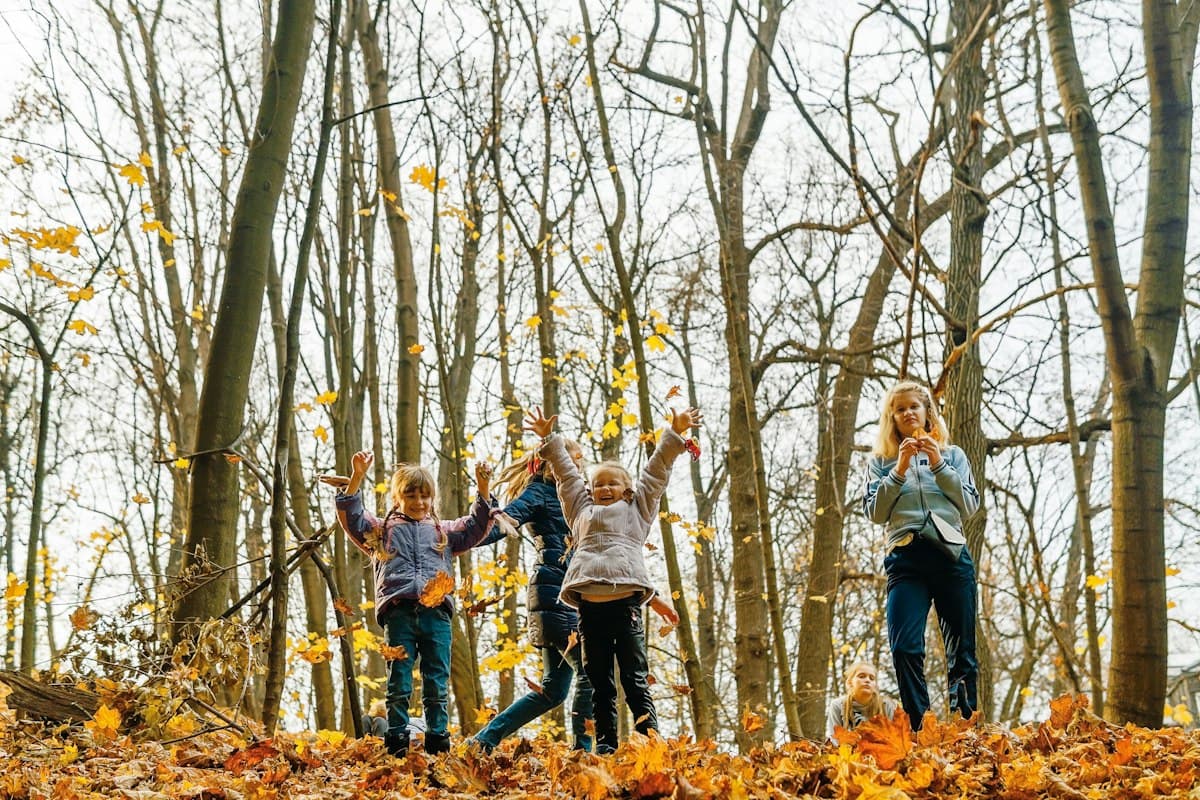
The Toussaint school holidays fall at exactly the moment when nature becomes a fairytale backdrop. Leaves turn from green to yellow, orange and red — and children who wouldn't last five minutes on a trail in July are suddenly racing ahead to collect chestnuts. Autumn has a special gift: it turns a simple walk into a treasure hunt.
Hiking with children in late October and November is different from summer. The days are shorter, the cold comes on fast and rain is possible — but these are also the conditions that make for the most memorable outings. Here's everything you need to know to make the most of the Toussaint break in the great outdoors, with no nasty surprises.
Why Autumn is Ideal for Family Hikes
Paradoxically, autumn is often better than summer for family hiking. The main reasons:
- No heat. Children's fatigue is often caused by heat, not effort. Between 10 and 15°C, kids walk easily without overheating.
- Fewer crowds. Summer trails are packed. In October, you get the peace and freedom to explore at your own pace.
- Nature puts on a show. The autumn colours, mushrooms, berries, animals preparing for winter — there's something to discover at every step.
- Built-in motivation. A child who refuses to walk in summer will always find the energy to hunt for acorns or splash in puddles.
The Toussaint break also benefits from the low-angle autumn light that makes landscapes look spectacular in photos — even on a smartphone.
Matching Distance to Age and Daylight
The Toussaint break has one natural enemy: early nightfall. In France at the end of October, it gets dark by 6 pm — and on a trail, the light can fade very quickly.
Here are realistic distances by your child's age, accounting for this constraint:
| Age | Maximum recommended distance | Total time (breaks included) |
|---|---|---|
| 2–4 years | 2–3 km | 1h30 – 2h |
| 5–7 years | 3–5 km | 2h – 3h |
| 8–10 years | 5–8 km | 3h – 4h |
| 11 years + | 8–12 km | 4h – 5h |
These estimates include play stops, collecting breaks and picnic time — which in autumn tend to run longer than in summer. Better to plan a shorter route and enjoy it fully than to end up rushing back in fading light.
About elevation gain: in autumn, wet leaves make uphills and especially downhills slippery. Opt for trails with limited elevation (under 200 m), or make sure your children's shoes have good grip.
To find routes suited to all abilities, OpenRando's explore page lets you filter by difficulty, distance and area.
Five Autumn Collecting Games to Keep Kids Moving
Autumn has one huge advantage over every other season: nature offers free play materials at every step of the trail. Here are five simple games that turn any walk into an expedition.
1. The Colour Leaf Hunt
Each child tries to find a leaf in every colour (yellow, orange, red, brown, evergreen). Variant: find the biggest leaf, the smallest, the most twisted. Collected leaves make beautiful collages or pressed-flower books.
2. Autumn Bingo
Prepare a 3×3 grid at home: chestnut, acorn, mushroom (don't touch!), cobweb with dew, empty bird's nest, red berry, cork bark, animal track, perfect unbroken leaf. As kids find each item, they cross off the square. First to complete a line wins.
3. The Sound Count
At the halfway point, everyone stops for 2 minutes with eyes closed and counts the different sounds they can hear. Wind in the leaves, a stream, a woodpecker, leaves crackling under a hidden animal's feet. A natural mindfulness exercise that works even on restless children.
4. Build the Squirrel's Cache
With fallen branches, leaves and bits of bark, each child builds an imaginary squirrel's food store. Leave everything in place when you head off — leave no trace, even while playing.
5. Close-up Photography
With a parent's phone or a disposable camera, each child takes 5 photos of things adults wouldn't notice: a spider's thread, a track in the mud, a winged seed, the underside of a mushroom. The results often make a surprisingly beautiful slideshow in the evening.
These activities naturally lengthen outings — add 20 to 30 minutes to the "technical" trail time.
Managing Cold and Wet for Kids
This is the concern that most worries parents. The golden rule of autumn hiking with children: they get cold much faster than adults. Their surface-to-volume ratio works against them, and they'll sweat on the uphills before cooling down sharply when they stop.
The Three-Layer System
Layer 1 — Base layer: a merino wool or synthetic thermal base layer. Cotton is strictly to be avoided: wet with sweat, it chills. Merino wool stays warm even when damp and doesn't smell after a day's walking.
Layer 2 — Insulation: a lightweight packable down jacket that fits in a pocket. Put it on and take it off depending on effort and weather. In autumn, it's essential at rest stops and picnics.
Layer 3 — Protection: a waterproof windproof jacket. In October–November, even if the sky is blue at the start, a shower can arrive. A light compressible jacket is inexpensive and can save a whole outing.
Hands and Head
With young children, the extremities cool first. Light waterproof gloves and a beanie or balaclava can easily add two hours to a comfortable outing. These are the most cost-effective purchases for autumn hiking.
Footwear
Wet grass and damp leaves are unavoidable. Opt for waterproof hiking shoes or, failing that, bring spare socks. A child with wet feet asks to go home — it's a universal rule.
The Snack Break: Fuel for the Trail
On family hikes, the snack break is not a luxury — it's a strategy. The moment when small legs start to fail almost always coincides with a blood sugar dip. A well-planned snack, at the right spot, can turn a struggling outing into a triumph.
When: plan the snack at the halfway point, at a memorable spot (a rock, a viewpoint, a stream crossing). The announcement "in 500 metres, we stop for snacks at the big rock" is a powerful motivator.
What: favour foods that are easy to eat with gloves on and travel well in a pack:
- Cashews, almonds, hazelnuts (perfect autumn choices)
- Dried fruit: raisins, apricots, dates
- Homemade or shop-bought cereal bars
- Dark chocolate (holds up better in the cold than milk chocolate)
- Individually wrapped cheese portions with crackers
The warm drink: a small thermos of hot chocolate or herbal tea is one of the best inventions for autumn hiking with children. The warm drink pause becomes a ritual and often one of the trip's most treasured memories.
Six Trail Types for the Toussaint Break
Here are six trail types that work brilliantly for autumn family hikes during the Toussaint break.
Deciduous Forest Loop
Oak, beech and chestnut forests are ablaze in October. Look for forest loops with minimal elevation (under 150 m) and a distance of 4 to 6 km for ages 5–10. The leaf-covered ground cushions every step and fascinates children.
Discover forest trails on OpenRando
Riverside or Lakeside Paths
Waterways are at their most beautiful in autumn: higher flow, colourful leaves reflected in the water, migrating birds. Riverbanks are often flat — ideal for all-terrain pushchairs and very young children.
Discover water trails on OpenRando
Forêt de Chiberta, Anglet (Basque Country)
A forest of century-old pine trees between the sea and the lakes, just outside Anglet and Biarritz. In autumn, the colours contrast beautifully with the pines. An easy 3 km loop, perfect for families with young children.
Bois de Boulogne, Paris
For families in the Paris region, the Bois de Boulogne offers kilometres of deciduous woodland paths, with the Lac Inférieur as an ideal destination. In October, golden leaves reflect in the water. A perfect circuit for ages 2–8.
Colorado Provençal de Rustrel
If you're in Provence for Toussaint, the Colorado Provençal de Rustrel offers blazing ochre-red landscapes that look even more spectacular framed by autumn foliage. Short circuits (3–4 km), accessible from age 3.
Your Local Patch of Nature
A Toussaint hike doesn't need to be a grand expedition. A local woodland loop of 3 km, a towpath along a canal, a state forest 30 minutes from home: with children, what matters is time spent outdoors and the games you play together, not the destination.
Use OpenRando to find easy trails near you, filtered by level and distance.
For more on planning hikes with children, see our guides:
- Introducing kids to hiking, age by age — the right milestones from age 2 to 15
- 8 easy family hikes in Provence — tried-and-tested routes
- Geocaching on the trail: motivating kids to keep walking — GPS treasure hunting
Happy Toussaint break — and happy autumn trails!
As an Amazon Associate, we earn from qualifying purchases. Links marked with an external icon are affiliate links.
Related reading
Geocaching and hiking: how to motivate kids on the trails
Discover geocaching, the GPS treasure hunt that turns every hike into an adventure for children. Tips, apps, gear and 8 ideal trails in Provence.
Hiking with Kids: The Age-by-Age Guide
From age 2 to 12, how to introduce children to hiking: the right walks for each stage, what to pack, and how to keep them going.
Hiking with a Baby: Complete Guide to Baby Carrier Hiking
How to choose the right hiking baby carrier, prepare your outing, and discover the best baby-friendly trails. A complete guide with practical tips and tested itineraries.