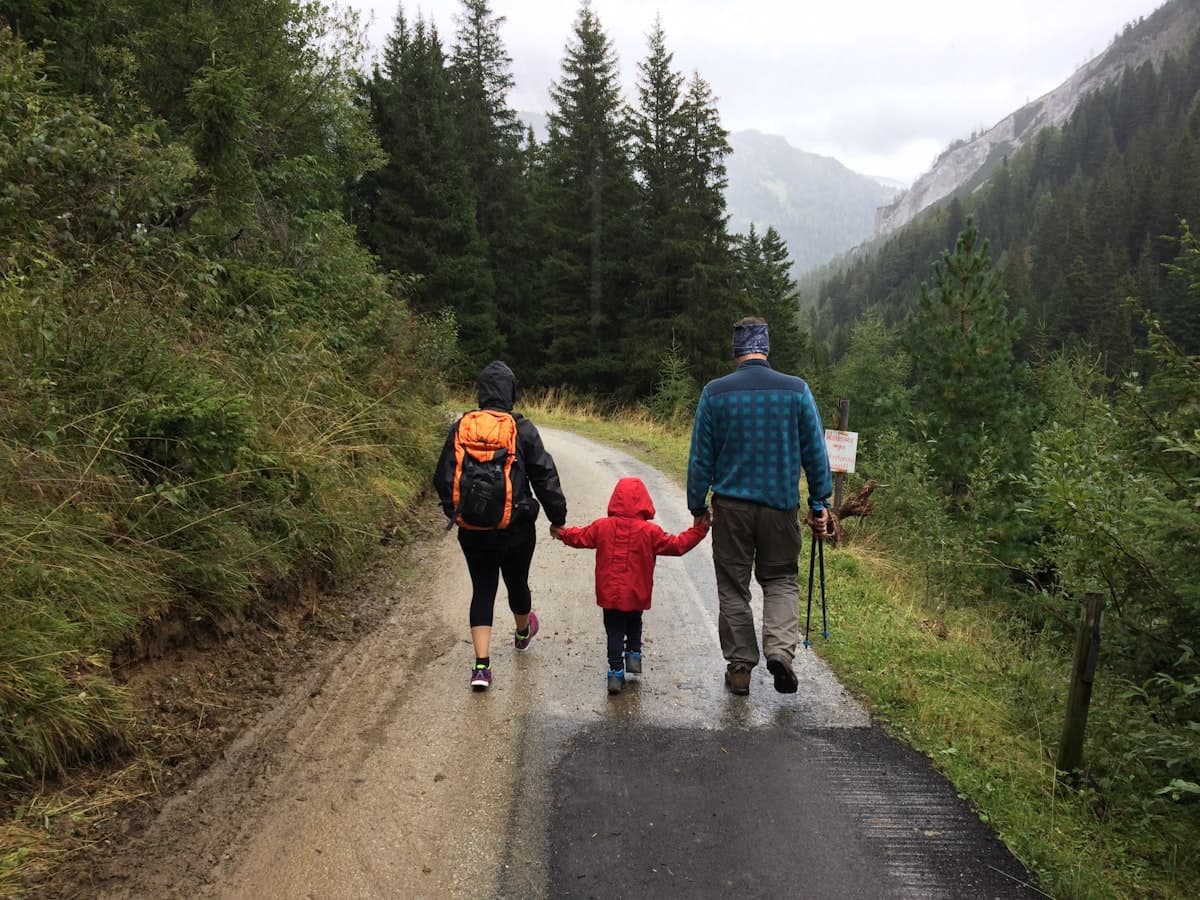
Hiking with a Baby: Complete Guide to Baby Carrier Hiking
Hiking with a baby is not only possible — it's one of the most rewarding experiences you can have as a family. Babies love movement, the sounds of the forest, the wind on their face. And you get to reclaim your freedom to walk, breathe, and reconnect with nature, even with a young child in tow.
The key is the right gear and a few simple rules. With a proper hiking baby carrier, well-chosen trails, and careful preparation, you can be back on the trail within your baby's first months. Here's everything you need to know.
What Age Can You Start Hiking with a Baby?
This is the most common question, and the answer depends on the type of carrier you use.
- Stretchy wrap or soft front carrier: from birth, for short outings (under one hour) on flat terrain. Baby must be in the ergonomic "M position" with knees higher than bottom, back well supported.
- Frame hiking backpack carrier (Deuter, Osprey, Thule...): from around 6 months, once baby can hold their head up independently and their back is strong enough. Some models specify 6 months, others 9 — always check the manufacturer's guidelines.
Choosing the Right Hiking Baby Carrier
This is your central gear investment. A good hiking baby carrier must be comfortable for you and for your child, stable, and suited to the trails you want to hike.
Key Criteria to Evaluate
For your child:
- Ergonomic seat in the "frog position" (M position)
- Integrated or compatible sun canopy
- Secure harness with 5-point buckle system
- Head support for when baby falls asleep
For you:
- Frame weight (typically 2–4 kg empty)
- Maximum load capacity (usually 20–22 kg)
- Adjustable lumbar and shoulder straps
- Pockets accessible while walking
The Most Reliable Models
The three market references are the Osprey Poco (lightweight, comfortable, excellent fit adjustment), the Deuter Kid Comfort (robust, many configuration options), and the Thule Sapling (clean design, highly adjustable). You'll find these frame hiking baby carriers with baby weight limits up to 22 kg, making them companions for several years.
Preparing Your Outing
Choosing the Right Trail
With a baby, priorities change. Forget steep climbs, technical terrain, or long distances. Here's what you're looking for:
- Distance: 3 to 5 km for first outings, no more than 8–10 km before your child walks independently
- Elevation gain: under 150–200 m. Your center of gravity shifts with a baby carrier — steep ascents are exhausting and technical descents are dangerous
- Terrain: wide, well-marked paths without exposed sections or unstable scree
- Shade: prioritize forest trails or those along a stream, especially in summer
On OpenRando, filter by duration (under 2 hours) and difficulty (easy) to find trails suited to your area.
Weather — Top Priority
Babies don't regulate their temperature as well as adults. Two key risks:
- Heat: avoid going out between 11am and 4pm from May to September. Start early (8–9am), seek shade, hydrate frequently. Apply SPF 50 mineral baby sunscreen to exposed areas (face, hands, feet) and protect their head with a UV-protective baby hat.
- Cold: babies get cold quickly, especially when they're not moving (in the carrier, they're passive). In higher altitudes or transitional seasons, bring an extra layer and a light blanket.
What to Pack
With a baby, your pack gets heavier. Here's the essential list:
- Water: plan 500ml per hour of walking for yourself, plus bottles/water for baby as needed
- Diapers: pack twice as many as you think you'll need
- Wipes and sealed waste bag: for changing in the field
- Baby snack: fruit pouch, rice cake, mashed fruit depending on age
- First aid kit: plasters, antiseptic, infant antihistamine, thermometer
- Sun protection: sunscreen, hat, lightweight long-sleeved top
- Extra layer: small down jacket or lightweight baby windproof jacket
- Comfort item: familiar toy or comforter for rest breaks
Golden Rules on the Trail
Taking Breaks
Babies need regular breaks to get out of the carrier, move their legs, and avoid staying in the same position for too long. Plan a break every 45 minutes to 1 hour. Use these moments to:
- Check baby's temperature (back of neck, belly)
- Hydrate everyone
- Change diaper if needed
- Let baby crawl or explore the ground if the area is safe
Hiking Pace
With a baby, hike more slowly than usual. Your balance is different, your center of gravity shifts backward and upward — especially on descents. Use hiking poles to improve your stability, especially on wet or uneven terrain.
Sleeping in the Carrier
Good news: the regular motion of walking easily sends babies to sleep. Anticipate breaks before they doze off, and make sure their head is well supported when they sleep. Most hiking carriers have an integrated chin rest or head support for naps on the move.
8 Perfect Trails for Baby Carrier Hiking in Provence
The following itineraries were selected for their accessibility, safe terrain, and scenic interest. Short, untechnical, with minimal elevation — ideal for baby carrier hiking.
1. Avignon City Walls Loop
Distance: 3.7 km | Elevation: +23 m | Duration: 1h | Terrain: flat path, partly paved
A historical and cultural walk, completely flat, around Avignon's medieval ramparts. Perfect for a first baby carrier outing. No obstacles, no mud, suitable in all seasons.
2. Pont du Gard Loop
Distance: 4.0 km | Elevation: +45 m | Duration: 1h15 | Terrain: well-marked scrubland path
A loop from the right bank parking area through the garrigue with a spectacular view of the Roman aqueduct. Wide path, partially shaded, steeped in 2,000-year-old history.
3. Tour Philippe-le-Bel and Fort Saint-André
Distance: 3.9 km | Elevation: +43 m | Duration: 1h15 | Terrain: urban path and garrigue
Villeneuve-lès-Avignon, facing the papal city, offers this lovely heritage loop between the Philippe-le-Bel tower and Fort Saint-André. Regular, accessible terrain — suitable for carrier or stroller.
4. Lac de Peiron from Saint-Rémy-de-Provence
Distance: 3.8 km | Elevation: +94 m | Duration: 1h30 | Terrain: garrigue and woodland path
A loop through the Alpilles foothills to a hidden lake nestled among the pines. The elevation gain is gentle and gradual, the path well-defined. Stunning in spring with garrigue wildflowers.
5. Frigolet Loop from Barbentane
Distance: 4.5 km | Elevation: +72 m | Duration: 1h30 | Terrain: pine forest and garrigue
This loop from Barbentane winds through pines, oaks, and scrubland toward the Abbaye de Frigolet, a historic Provençal abbey tucked into the hills. Shaded and well-paced.
6. The Fossil Sirens, Notre-Dame
Distance: 4.0 km | Elevation: +68 m | Duration: 1h20 | Terrain: limestone garrigue
A geological short hike through limestone hills, with marine fossils visible in the rocks — the "sirens" of local legend. Well-marked path, uncrowded, perfect for a peaceful discovery.
7. Réalon Gorges and Spring Source
Distance: 4.4 km | Elevation: +72 m | Duration: 1h30 | Terrain: garrigue and limestone path
The Réalon gorges, with their mysterious spring surging from the rock, make for a fascinating natural site. The path is varied, well-marked, with views over the cliffs. Best in spring when the water flows.
8. Sea Views from Les Goudes
Distance: 3.8 km | Elevation: +53 m | Duration: 1h15 | Terrain: accessible coastal path
At the edge of Marseille, Les Goudes offers this coastal trail between coves and sea. Accessible terrain, but stay on the marked path near cliff edges. The Mediterranean views are the reward.
What Parents Remember After Their First Baby Hike
Almost every parent who tries it tells the same story: the surprise of actually pulling it off, the pride, and the pleasant tiredness at the end of the day. Baby sleeps like a log, and you've reclaimed, even just for a few hours, the feeling of being a hiker.
The difficulty will increase gradually. Over time, outings will get longer, elevation will grow, and one day your child will want to get out of the carrier and walk by themselves. That will be a whole new adventure.
In the meantime, every step on the trail — even a short one — is a gift you're giving them, and to yourself.
To find easy family-friendly trails near you, explore the OpenRando map and filter by "Easy" difficulty and under 2 hours duration.
As an Amazon Associate, we earn from qualifying purchases. Links marked with an external icon are affiliate links.
Related reading

Easy Hikes in the Southern Alps: 8 Accessible Routes for All Levels
Discover 8 easy hikes in the Southern Alps: mountain lakes, picturesque valleys and stunning panoramas accessible to beginners and families. Routes, practical tips and GPX tracks.
Hiking with Kids: The Age-by-Age Guide
From age 2 to 12, how to introduce children to hiking: the right walks for each stage, what to pack, and how to keep them going.
Family hiking: 8 easy walks with kids
8 easy family hikes in Provence: short trails, minimal elevation, with fun discoveries for children. All routes with GPX files.