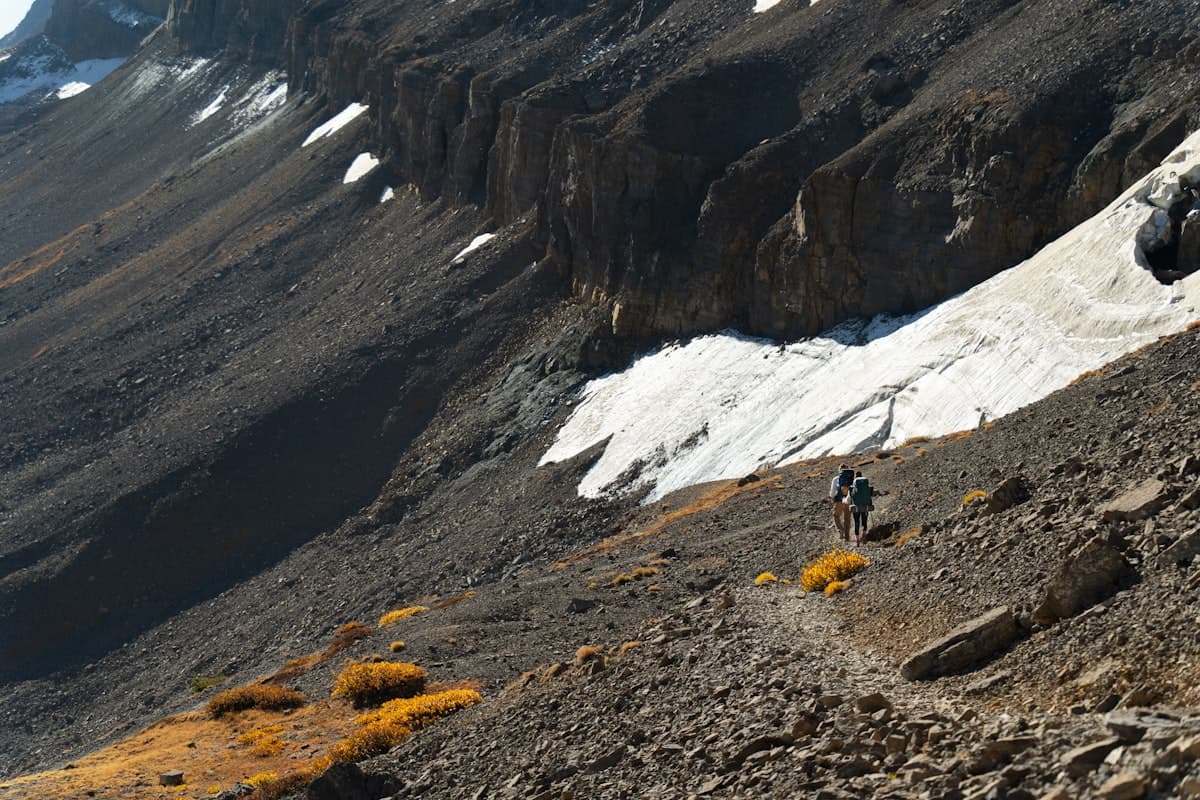
Solo Hiking: Safety Tips and Motivation Guide
Solo hiking. The idea often gives people pause. And yet, those who have taken the plunge will tell you unanimously: it is one of the most intense and liberating experiences that the mountains or trails can offer. No compromises on pace, no negotiation on the route, a direct and total connection with nature — and with yourself.
But solo hiking is not something you improvise. The solitude that sets you free can also become a risk factor if you are not properly prepared. This guide brings together everything you need to know to head out alone safely, and above all, with confidence.
Why Solo Hiking Is an Experience Like No Other
Before talking about safety, let us talk about what draws people to solo hiking. It is not the absence of company that is sought — it is something deeper.
Inner silence. When you walk alone, the mind eventually empties of parasitic thoughts. Around the second or third hour, a kind of presence settles in — you hear the birds, you notice the light on the rocks, you feel your own breath. It is a form of active meditation that group hiking does not always allow.
Total autonomy. You decide when to start, the pace, the breaks, the duration. Feel like spending twenty minutes at a mountain pass sketching the landscape in your notebook? No one is waiting. Feel like heading back early because you are tired? No social pressure.
The pride of the solitary effort. Reaching a summit or completing a challenging route alone brings a different kind of satisfaction — more personal, more intimate. It is your achievement, entirely.
The Fundamentals of Solo Hiking Safety
Tell Someone Before You Leave
This is rule number one, without exception. Before every solo outing, share with a trusted person:
- The name and location of the route (with the OpenRando link or the IGN map reference)
- Your planned departure time and estimated return time
- Where your vehicle is parked
- A contact to call if you have not been in touch by an agreed time
This information can save precious hours in the event of an incident. Mountain rescue teams repeat it constantly: most victims of solo accidents are found because someone reported their absence.
Choose the Right Route for Your Level
When hiking solo, caution takes on greater importance. Opt for well-marked trails with a difficulty level slightly below your usual maximum — not for lack of ambition, but because a twisted ankle alone on a technical path is an infinitely more serious situation than in a group.
On OpenRando, you can filter routes by difficulty and region to find suitable itineraries. Loops like the Picnic-Platz – Barrage Zola loop from Saint-Marc-Jaumegarde (5.5 km, 130 m elevation gain) or the Aiguebrun loop near Buoux in the Luberon (6.8 km, 181 m elevation gain) are excellent trails for first-time solo hikers: well-marked, frequented, and without difficult technical sections.
Check the Weather Carefully
The weather is always important in hiking. When you are solo, it becomes critical. A sudden downpour on a slippery path or a thunderstorm at altitude carry significantly higher risks without someone to help you.
- Check Météo-France (app or website) the evening before and the morning of your departure
- In Provence, be especially wary of the mistral: it can turn a pleasant hike into a gruelling ordeal, particularly on ridgelines
- Do not hesitate to cancel or postpone if the forecast is uncertain — it is the hardest decision and often the wisest one
Essential Gear for the Solo Hiker
Hiking alone requires a more complete kit than when you are in a group. In a group, resources are shared. Alone, you carry everything — and you need everything.
The First Aid Kit
When solo, a first aid kit is non-negotiable. Your first aid kit should contain at minimum:
- Assorted plasters and sterile dressings
- Elastic bandage (for sprains)
- Survival blanket (lightweight, essential)
- Pain relief (paracetamol or ibuprofen)
- Antiseptic skin cleanser
- Tweezers (for ticks or thorns)
- A small notebook and pencil (to record your position in case of signal loss)
Communication: Never Be Unreachable
A charged phone is essential — but do not let it be your only lifeline. In mountain areas, network coverage can vanish within a few steps. Some complementary solutions:
An external battery (power bank). Your phone must stay on all day. A 10,000 mAh portable charger guarantees a full day's use even with the GPS screen running.
An emergency whistle. Basic, ultralight, and potentially vital. Three repeated whistle blasts are the international distress signal in the mountains. Clip one to your pack strap.
A personal GPS beacon. For regular solo hikers in remote or alpine terrain, a GPS beacon like the Garmin inReach lets you send SOS alerts via satellite, even without mobile coverage. It is a significant investment, but it can save lives.
Navigation: Never Rely Solely on Phone Signal
Download your route in offline mode before leaving. Apps like Komoot, AllTrails or Wikiloc allow you to download GPX tracks and navigate without a network connection. A dedicated GPS device is also an excellent option for longer outings.
Always carry a paper map of the area at 1:25,000 scale (IGN Top 25 series). In case of battery failure or a dropped phone, it can prove decisive.
Mental Management: Solitude as a Resource
The First Hours
The first hours of solo hiking are often the most psychologically challenging. The mind stirs, seeks to fill the silence — and sometimes, a mild anxiety sets in. This is normal. Do not try to fight it: let it pass through.
Around the second hour, something shifts. The rhythm of your footsteps takes over, your breathing settles, your thoughts slow down. This is where solo hiking becomes a meditative practice in its own right.
Managing Fear During Minor Incidents
A slight sprain, a burning blister, a path that seems lost: when alone, these minor incidents can generate disproportionate stress. Here is how to respond:
- Stop and breathe. A few slow breaths are often enough to regain control.
- Assess the situation calmly. Where am I? What is the actual difficulty? What is the quickest way out?
- Act methodically. Bandage the ankle, charge the phone, consult the map.
- Call if necessary. 112 works across European mobile networks, including in areas with weak signal. Never hesitate to use it if you are injured and cannot return on your own.
The Power of Routine
Experienced solo hikers know this: routine protects. Fixed departure time, systematic pack check, break every 90 minutes, weather check mid-day. These habits reduce the risk of forgetting something essential and create a sense of control that builds genuine confidence.
Ideal Routes for Your First Solo Hike in Provence
If you are looking to take your first solo steps in Provence, here are some particularly well-suited routes: frequented without being overcrowded, well-marked, with easy bail-out options if needed.
Around Aix-en-Provence: The Picnic-Platz – Barrage Zola loop from Saint-Marc-Jaumegarde (5.5 km, 130 m elevation gain) is ideal for a first solo outing: close to the city, clear trail, easy return.
In the Luberon: The Aiguebrun loop near Buoux (6.8 km, 181 m elevation gain) offers wild, unspoiled scenery in a deep Luberon valley. Beautiful nature, low winter footfall, but accessible from spring onwards.
Near Saint-Rémy-de-Provence: The Lac de Peiron – Viewpoint loop (11.8 km, 228 m elevation gain) in the Alpilles is a substantial route, well-marked, with a panoramic view over the Crau plain and the Camargue. Perfect for a half-day solo outing.
In the Verdon: The Lower Gorges of the Verdon loop (8.5 km, 215 m elevation gain) is a magnificent introduction to the Verdon territory, without the technical passages of the high canyon trails.
Towards Greater Autonomy: The Next Steps
Once you have a few successful solo outings under your belt, you can progressively push further:
- Extend the duration of your outings (from 3 hours to 6 hours, then to a full day)
- Tackle routes with greater elevation gain
- Explore less frequented areas
- Consider solo bivouacking (with a solid understanding of local regulations)
Each step builds confidence, sharpens your safety reflexes, and deepens the relationship you build with nature — and with yourself.
Solo hiking is not a practice for the reckless or the heroic. It is a way of walking, thinking, being — one that anyone can make their own, at their own pace, with the right tools and the right preparation. So, when are you leaving?
As an Amazon Associate, we earn from qualifying purchases. Links marked with an external icon are affiliate links.
Related reading
Hiking safely: the mistakes you absolutely must avoid
Poor preparation, wrong gear, underestimated weather… Discover the 10 most common hiking mistakes and how to avoid them to enjoy the mountains with complete peace of mind.
Hiking After Rain: Muddy Trails and Flooded Streams
Hiking after heavy rain: how to assess trail conditions, safely cross a flooded stream, and know when to turn back.
How to Calculate Elevation Gain on a Hike
Ascent, descent, cumulative elevation gain, difficulty ratings, Naismith's rule: how to size up any hike before you set off.