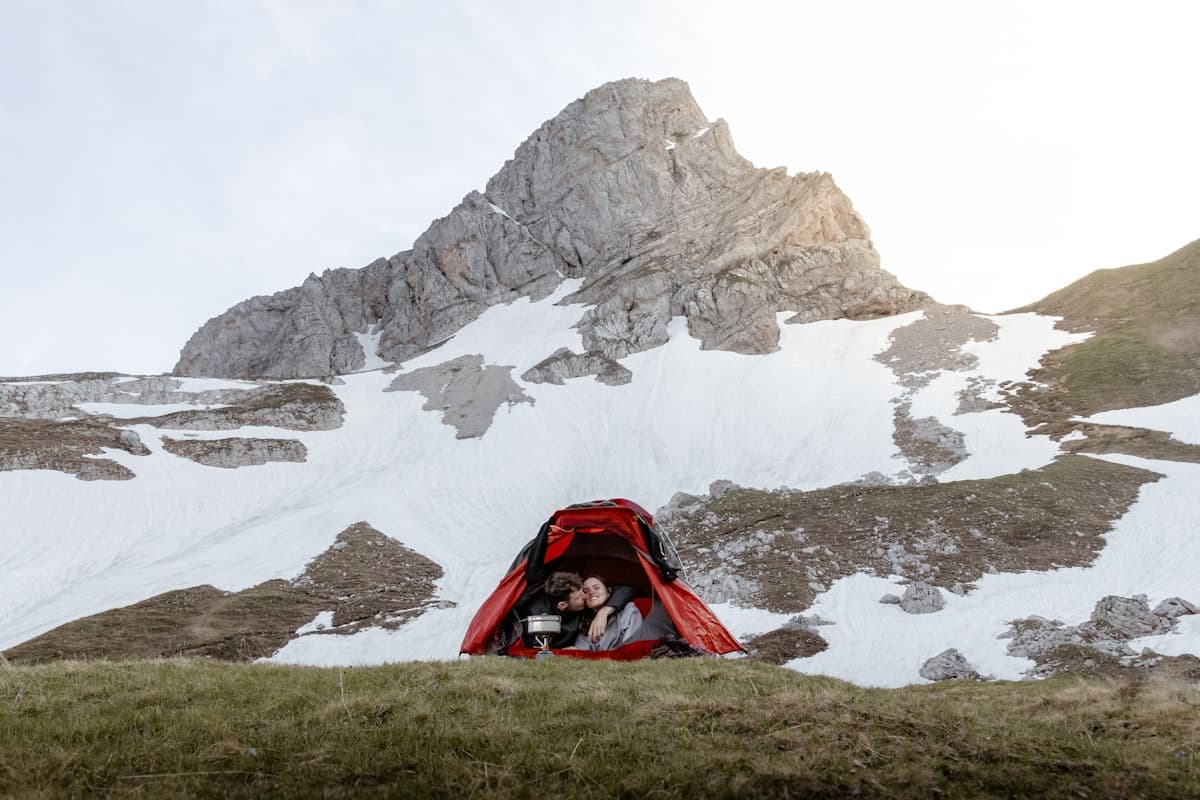
The Best Sleeping Bags for Bivouacking: Complete 2026 Guide
Sleeping under the stars on a mountain ridge, waking up at sunrise to a panorama most people will never see — bivouacking is one of the most intense experiences hiking has to offer. But this freedom comes at a price, and it's called preparation. A badly equipped night in the mountains can quickly turn into a nightmare, and your sleeping bag is without doubt the single most important factor determining whether you sleep well or suffer until dawn.
Choosing a sleeping bag for bivouacking is a multi-variable equation: expected temperatures, altitude, weight you're willing to carry, your budget, and your body type. This guide gives you all the tools to make the right choice — and a few warnings to avoid the classic mistakes.
The Essential Criteria for Choosing a Bivouac Sleeping Bag
Comfort Temperature: The #1 Criterion
All sleeping bags sold in Europe display an EN 13537 rating (or its update, EN ISO 23537). This standard defines three key temperatures:
- Comfort temperature: the temperature at which a woman sleeping in a normal position sleeps comfortably. This is the figure to prioritise.
- Lower limit temperature: the temperature at which a man sleeps without too much discomfort, curled up.
- Extreme temperature: the survival threshold (hypothermia risk beyond this point).
For bivouacking in France and the Alps, here's a general guideline:
| Season / Altitude | Recommended Comfort Temperature |
|---|---|
| Summer in lowlands and low altitude | +5°C to +10°C |
| Summer at altitude (2,000m+) | 0°C to -5°C |
| Spring / autumn | -5°C to -10°C |
| Winter or high mountain | -15°C and below |
Always leave a 5°C safety margin below the expected minimum temperatures. Perceived cold is amplified by humidity, wind, and fatigue.
Fill: Down or Synthetic?
This is the central debate for every bivouac sleeping bag buyer. Each material has its advantages and limitations.
Down (goose or duck feathers)
Down is the reference fill for bivouacking. Its main advantage is its unbeatable warmth-to-weight ratio. A down sleeping bag will always be lighter and more compressible than a synthetic model of the same insulation level.
Another advantage is durability: properly maintained, a down sleeping bag will last 15 to 20 years.
Its Achilles heel? Moisture. When down gets wet, it loses most of its insulating properties. This is why manufacturers have developed DWR-treated (Durable Water Repellent) or hydrophobic down technologies (DownTek, Nikwax Hydrophobic Down), which significantly delay moisture absorption.
Down quality is measured in fill power (cubic inches per ounce, or cuin): the higher the fill power, the loftier and warmer the down at equal weight. For bivouacking, aim for a minimum of 650 fill power, ideally 750+ for premium bags.
High-quality down sleeping bags remain the investment of choice for the regular bivouac hiker.
Synthetic fill
Synthetic fills (Primaloft, Thermolite, Polarguard…) are less compressible and heavier than down, but they retain their insulating properties even when wet. This is a decisive advantage in very rainy environments (Scottish Highlands, Alpine autumn) or for heavy sweaters.
Synthetic bags are also cheaper to buy and easier to wash. For getting started with bivouacking without a massive investment, a good mid-range synthetic bag is an excellent option.
Shape: Mummy or Rectangular?
For bivouac hiking, the answer is almost always mummy (or semi-mummy). This shape follows the body's silhouette, reduces the volume of air to be warmed, and significantly reduces weight and packed size.
Rectangular bags are comfortable for car camping, not for lightweight bivouacking. They weigh more and compress less efficiently.
Some wide mummy bags exist for sleepers who like to move around during the night — a good compromise if you find standard cuts too constricting.
Weight and Packability
In itinerant bivouacking, every gram counts. A sleeping bag typically accounts for 600g to 1.8kg in your pack. Ultralight sleeping bags weighing under 800g for a 0°C comfort temperature do exist, but their price can exceed €500.
For beginners, aim for a bag under 1.2kg. The compression sack (which compresses the bag to its minimum size) is often included — check this at the time of purchase.
Our Selection by Condition
Summer Bivouacking (+5°C to +15°C)
For warm nights from June to September in mid-mountain areas (up to 2,000m), a bag with a comfort temperature around +5°C is sufficient. This is the lightest and most affordable category.
A lightweight 3-season sleeping bag with a 5°C comfort rating will be your best companion for starry summer nights in the Provence region or the Cévennes.
If you regularly bivouac above 2,000m even in July, go down to a 0°C comfort temperature — nighttime temperatures at altitude can surprise you.
Spring/Autumn Bivouacking (-5°C to 0°C)
This is the most versatile and most-used category for experienced hikers. A bag with a comfort temperature between -5°C and 0°C covers 80% of situations in France, from March to November.
3-season sleeping bags with 0°C comfort represent the best versatility-to-price ratio for regular use.
High Mountain and Winter Bivouacking (below -10°C)
For major ascents, Alpine crossings, or winter treks, you need a 4-season sleeping bag with a comfort temperature below -10°C. These bags are typically fitted with high-performance down (800 fill power+), anti-cold zippers, and raised collars to protect the shoulders.
A high-performance 4-season bag is a significant investment, but it can save your life in difficult conditions.
Essential Bivouac Accessories
The Sleeping Pad: Your Shield Against Ground Cold
The ground steals far more heat from you than the air does. A sleeping pad is not optional — it's an absolute necessity. Its insulating capacity is measured as R-value: the higher the number, the better the insulation.
- R-value < 2: summer only
- R-value 2-3: 3 seasons
- R-value > 4: winter and high mountains
Ultralight inflatable pads offer the best weight-to-insulation ratio. Self-inflating models are more practical but heavier. Foam pads compress poorly but are almost indestructible.
The Sleeping Bag Liner
A silk or microfibre liner slipped inside your sleeping bag adds 3 to 8°C of warmth, protects the bag from perspiration (extending washing intervals), and can be used alone on very warm nights. A lightweight accessory (80-120g) with an excellent utility-to-weight ratio.
The Compression Sack
If your sleeping bag doesn't come with a waterproof compression sack, get one. A waterproof compression sack protects your sleeping bag from moisture during rainy hiking days — essential for maintaining the properties of down fill.
Care: Extending the Life of Your Sleeping Bag
A bivouac sleeping bag is an investment. Well maintained, it lasts for decades.
After each bivouac: remove the bag from its compression sack as soon as possible. A compressed bag loses its loft over time.
Storage: store your bag uncompressed in a wide storage sack (often provided) or simply hung on a hook. Never compressed in its stuff sack for weeks.
Washing: machine wash on a delicate cycle at 30°C, with a specialist down cleaner (no fabric softener). Add 3-4 tennis balls to the drum to help the down re-loft. Tumble dry on a low heat setting until fully dry — this can take 3-4 hours. Never wring or spin-dry.
Bivouacking in France: Rules and Best Spots
Bivouacking Regulations
In France, bivouacking is legal but regulated. The rules vary by area:
- National Parks: bivouacking tolerated more than one hour's walk from roads and motorised access, between 7pm and 9am, for a maximum of one night in the same location. Some core park zones are completely off-limits.
- State forests: generally prohibited.
- Mediterranean zone (PACA, Corsica, Occitanie): additional restrictions from June to September due to wildfire risk.
- Private land: always ask the landowner's permission.
The golden rule: no fire, no waste, leave the site exactly as you found it.
Routes for Bivouacking
Bivouacking is particularly magical on multi-day circuits in France. On OpenRando, you'll find many routes that lend themselves to nights in the mountains.
In Corsica, the Mont Incudine Loop – Refuge d'Asinau from Bavella is an exceptional route that takes you into the wild heart of the Regional Natural Park, with opportunities for a night at the refuge or bivouacking amid granite landscapes and Laricio pine forests. For hikers who want to discover the Massif Central, the Refuge de la Jasserie – Crêt de la Perdrix Loop in the Monts du Pilat offers a high-quality experience in a protected environment.
To plan your bivouac, download the GPX file for your route on OpenRando and always check the mountain weather forecast the day before departure.
Key Takeaways
Choosing your bivouac sleeping bag comes down to three fundamental questions:
- In what conditions will I be bivouacking? → Determines the comfort temperature you need
- How much weight am I willing to carry? → Points toward premium down or synthetic
- What is my budget? → Down for regular use, synthetic for getting started
A good bivouac sleeping bag is the investment that changes everything: it transforms an uncomfortable night into an unforgettable moment. Take the time to choose carefully, test it at home before your first outing, and never forget: bivouacking is earned, but the reward — that sunrise from your secret spot — is priceless.
Explore bivouac routes on OpenRando and download your GPX files for total peace of mind on the trail.
As an Amazon Associate, we earn from qualifying purchases. Links marked with an external icon are affiliate links.
Related reading
How to Choose a Hiking Tent: The Complete Guide
Weight, waterproofing, capacity, 3-season or 4-season… Everything you need to know to choose the right hiking tent for your profile and your adventures.
How to Properly Fit Your Hiking Backpack: The Adjustment That Changes Everything
How to adjust your hiking backpack in the right order: hip belt, shoulder straps, load lifters, and sternum strap. The complete method in six steps.
How to Care for Your Hiking Boots: The Complete Guide
Cleaning, drying, waterproofing, leather conditioning: everything you need to know to maintain your hiking boots and make them last for years.