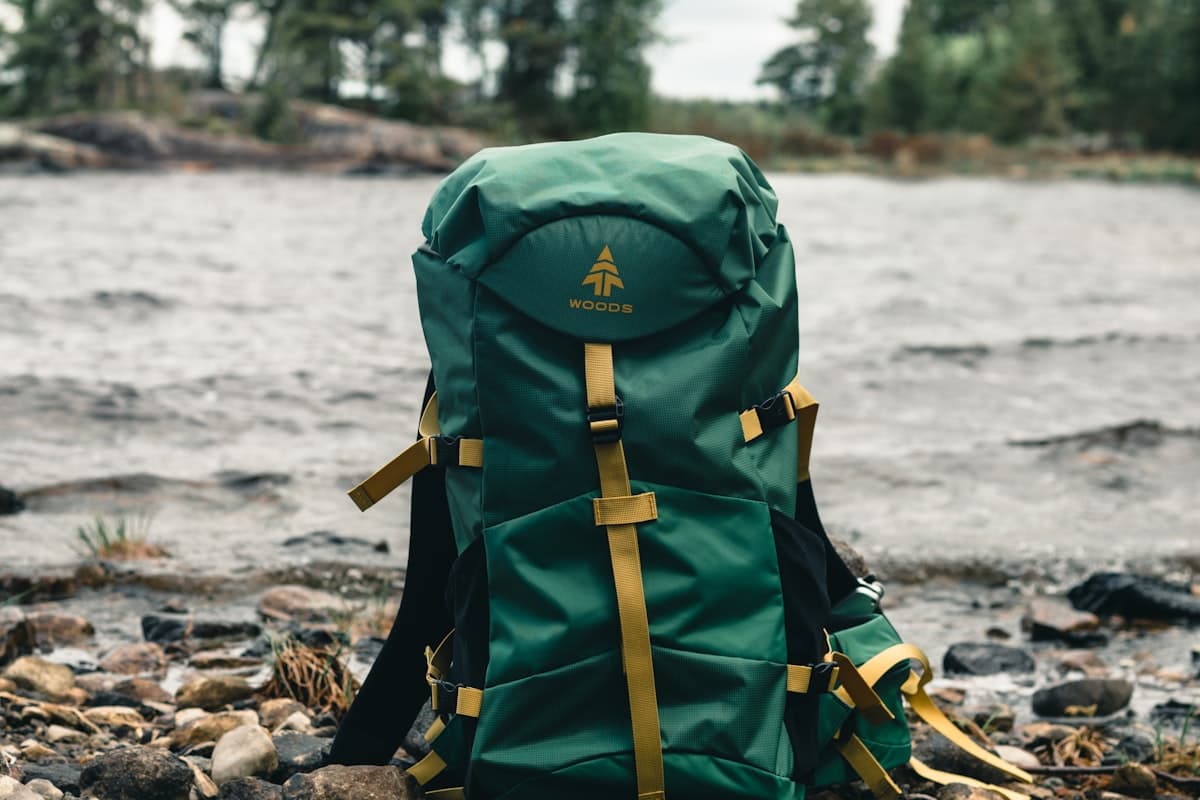
How to Choose a Hiking Backpack: The Complete Guide
After boots, the backpack is a hiker's second most important piece of gear. Too large, and it tempts you to overpack, weighing down your shoulders. Too small, and you're strapping gear to the outside in a precarious balancing act. Poorly adjusted, it turns every climb into a torture session for your back and hips.
Yet choosing the right pack isn't rocket science. You just need to understand a few key criteria — volume, carrying system, adjustments — and match them to your activity. This guide walks you through everything to find a backpack you'll forget you're wearing.
What Volume Do You Need?
This is the first question to answer, and it depends entirely on the duration of your outings.
Trail Running / Fast Hiking Packs (5 to 15 Litres)
Trail running vests are ultra-light packs designed for athletic outings. They hug your body like a second skin and offer just enough room for the essentials: water, energy bars, windbreaker, phone.
Who are they for? Trail runners, fast hikers, outings under 3 hours with no technical gear.
Day Packs (20 to 30 Litres)
The day pack is the ideal companion for the majority of hikers. It comfortably fits lunch, a water bottle, a warm layer, a first aid kit, and a pair of trekking poles.
Who is it for? Hikes of 3 to 8 hours, family walks, discovery outings. This is the most versatile format.
Multi-Day Packs (30 to 50 Litres)
30 to 50 litre packs are built for long weekends and 2 to 4 day hut-to-hut treks. They offer enough space for a sleeping bag, spare clothing, and food without being bulky.
Who are they for? Hut-to-hut treks, lightweight bivouac weekends, organised multi-day crossings.
Expedition / Thru-Hiking Packs (50 to 70+ Litres)
Large trekking packs carry everything you need for full self-sufficiency: tent, sleeping mat, stove, and several days' worth of food. They're the largest packs, but they also feature the most sophisticated carrying systems.
Who are they for? Treks of 5 days or more in full autonomy, bivouac crossings, expeditions.
The Carrying System: The Key to Comfort
A good carrying system is the difference between a pack you forget about and one that tortures you. It's the most important criterion after volume.
The Back Panel
The back panel is the surface in contact with your back. There are three main designs:
- Thermoformed foam: comfortable and lightweight, this is the most common solution on day packs. The foam moulds to the shape of your back and provides good cushioning.
- Suspended mesh: a technical mesh is stretched between your back and the pack, creating an air gap for ventilation. This is the best option in hot weather — your back sweats far less. Ideal for hiking in Provence under the sun.
- Rigid frame: an internal structure (aluminium stays, polyethylene sheet) distributes weight across your entire back. Essential for trekking packs loaded above 10 kg.
The Hip Belt
On packs of 30 litres and above, the hip belt is essential. It transfers 60 to 70% of the pack's weight onto your hips, dramatically relieving your shoulders and back.
What to check:
- Padding should be thick and well-cushioned
- The belt should wrap around your hips (not your waist)
- Hip belt pockets are a genuine bonus for storing your phone, snacks, or map
The Shoulder Straps
Shoulder straps should be wide, padded, and suited to your body shape. Women-specific models feature curved straps that avoid the chest and a higher hip belt.
The load lifter strap (at the top of the shoulder straps) is an often-overlooked but crucial adjustment. It pulls the top of the pack against your back, preventing it from tipping backward and dragging you back on uphills.
How to Adjust Your Backpack
Even the best pack on the market will be uncomfortable if it's badly adjusted. Here's the 5-step method:
- Loosen everything: start with all straps fully released.
- Position the hip belt: it should sit on the iliac crest (the top of your hip bones), not above or below. Tighten firmly.
- Adjust the shoulder straps: pull them just enough for the pack to hug your back without crushing your shoulders. The straps shouldn't carry the weight — they guide the pack.
- Fasten the sternum strap: it connects the two shoulder straps across your chest and prevents the pack from swaying. Don't over-tighten or it will restrict breathing.
- Set the load lifters: these small straps at the top of the shoulder straps pull the pack closer to your back. Pull them slightly forward.
Secondary (But Important) Criteria
Empty Weight
Every gram matters, especially over long distances. A day pack weighs between 500 g and 1.2 kg depending on the model. Ultralight packs sometimes sacrifice carrying comfort and durability — it's a trade-off to evaluate based on your practice.
| Pack Type | Typical Empty Weight |
|---|---|
| Trail (10 L) | 200 – 400 g |
| Day (25 L) | 500 g – 1.2 kg |
| Multi-day (40 L) | 1 – 1.8 kg |
| Trekking (60 L) | 1.5 – 2.5 kg |
Compartments and Pockets
Internal organisation makes it easy to access gear without unpacking everything on the trail:
- Main compartment: the central space for clothing, food, and sleeping bag
- Bottom compartment (base of the pack): handy for isolating a sleeping bag or dirty clothes
- Front mesh pocket: ideal for stashing a damp jacket or something you need to dry
- Side pockets: for water bottles, maps, or trekking poles
- Lid pocket (top flap): quick access to map, sunscreen, or phone
- Hydration sleeve: back panel pocket for a water bladder (Camelbak compatible)
Waterproofing
Most packs are not waterproof. The fabric resists light showers, but sustained rain will eventually seep through, especially at seams and zippers.
Solutions:
- An integrated rain cover is the minimum. Many packs include one in a dedicated pocket at the bottom.
- For sensitive items (sleeping bag, clothes, electronics), use an internal dry bag.
External Attachments
Loops, straps, and gear holders let you attach overflow items to the outside of the pack:
- Pole holders: elastic loops or buckles for storing trekking poles
- Compression straps: reduce the pack's volume when it's not full and stabilise the contents
- Ice axe loop / helmet holder: for alpine activities
- Daisy chains: multi-loop webbing for clipping on extra gear
Mistakes to Avoid
Mistake #1: Buying Too Large "Just in Case"
This is the most common mistake. An oversized pack tempts you to fill it (nature abhors a vacuum), and a heavy pack tires you out faster. Result: you're carrying 15 kg for an outing that needed 8. Choose the volume suited to your regular practice, not the Himalayan expedition you might do someday.
Mistake #2: Ignoring Back Length
Most trekking packs come in multiple back sizes (S, M, L). Your back length (from the C7 vertebra to the iliac crest) determines the right fit. In store, a sales assistant can measure you in 30 seconds.
Mistake #3: Not Testing with Weight
An empty pack always feels comfortable. Fill it with 8 to 10 kg of weight and walk around the store for 10 minutes. Check that the hip belt carries the load, that the shoulder straps don't dig in, and that no pressure points cause friction.
Mistake #4: Neglecting Ventilation
In Provence and south-eastern France, heat is a major factor. A pack with a foam panel pressed flat against your back turns your back into a sauna from the first uphill. Go for models with a suspended mesh back for summer hikes.
Mistake #5: Forgetting the Rain Cover
The Mistral can chase clouds away as fast as it brings them. A sudden storm without protection drenches your gear in minutes. Check that your pack includes a rain cover — or buy one separately.
What Budget to Expect?
| Range | Indicative Price | Typical Use |
|---|---|---|
| Entry level | €40 – €80 | Occasional walks, short day hikes |
| Mid-range | €80 – €150 | Regular hiking, good carrying system |
| High-end | €150 – €250 | Trekking, optimised carrying, technical materials |
| Ultralight | €150 – €300 | Lightweight hiking, Dyneema/DCF fabrics |
Our advice: For regular day hiking, aim for the mid-range (€90–€130). A good 25–30 litre pack in this range will last you for years. Investing in a quality carrying system is more worthwhile than spending extra on an ultralight pack with limited comfort.
Our Picks by Activity Type
For Day Hiking in Provence
For the sun-drenched trails of the Calanques, the ridges of Sainte-Victoire, or the hills of the Alpilles:
- 25–30 litre pack with ventilated back
- Lightweight hip belt with pockets
- Pole holders and side pockets for water bottles
- Integrated rain cover
- Weight: 700 g to 1 kg
For Multi-Day Trekking
For major crossings like the GR9 through the Luberon or the GR4 in the Gorges du Verdon:
- 40–50 litre pack with internal frame
- Padded, moulded hip belt
- Separate bottom compartment for sleeping bag
- Hydration bladder compatible
- Weight: 1.2 to 1.8 kg
For Ultralight Hiking
For lightweight hiking enthusiasts who count every gram:
- 30–40 litre pack in Dyneema or ultralight nylon
- Minimalist carrying system
- No unnecessary pockets, roll-top closure
- Weight: 300 to 600 g
Ready to Load Up and Hit the Trail?
Your backpack is your most faithful trail companion. It carries your water, your food, your comfort. Take the time to choose it, adjust it, and pack it properly — your back and shoulders will thank you with every mile.
Once you're geared up, all that's left is to pick your route. With OpenRando, explore thousands of hikes with GPX tracks, elevation profiles, and interactive maps. Whether you're planning a short walk or a multi-day trek, you'll find the perfect trail to break in your new backpack.
As an Amazon Associate, we earn from qualifying purchases. Links marked with an external icon are affiliate links.
Related reading
How to Choose Hiking Boots: The Complete Buying Guide
High-cut or low-cut, outsole, waterproofing, upper materials… Discover all the criteria for choosing the perfect hiking boots based on your activity and terrain.
How to Properly Fit Your Hiking Backpack: The Adjustment That Changes Everything
How to adjust your hiking backpack in the right order: hip belt, shoulder straps, load lifters, and sternum strap. The complete method in six steps.
How to Care for Your Hiking Backpack: Cleaning, Repairs and Storage
Clean, repair and extend the life of your hiking backpack: washing, zippers, DWR treatment and field repairs — the complete maintenance guide.