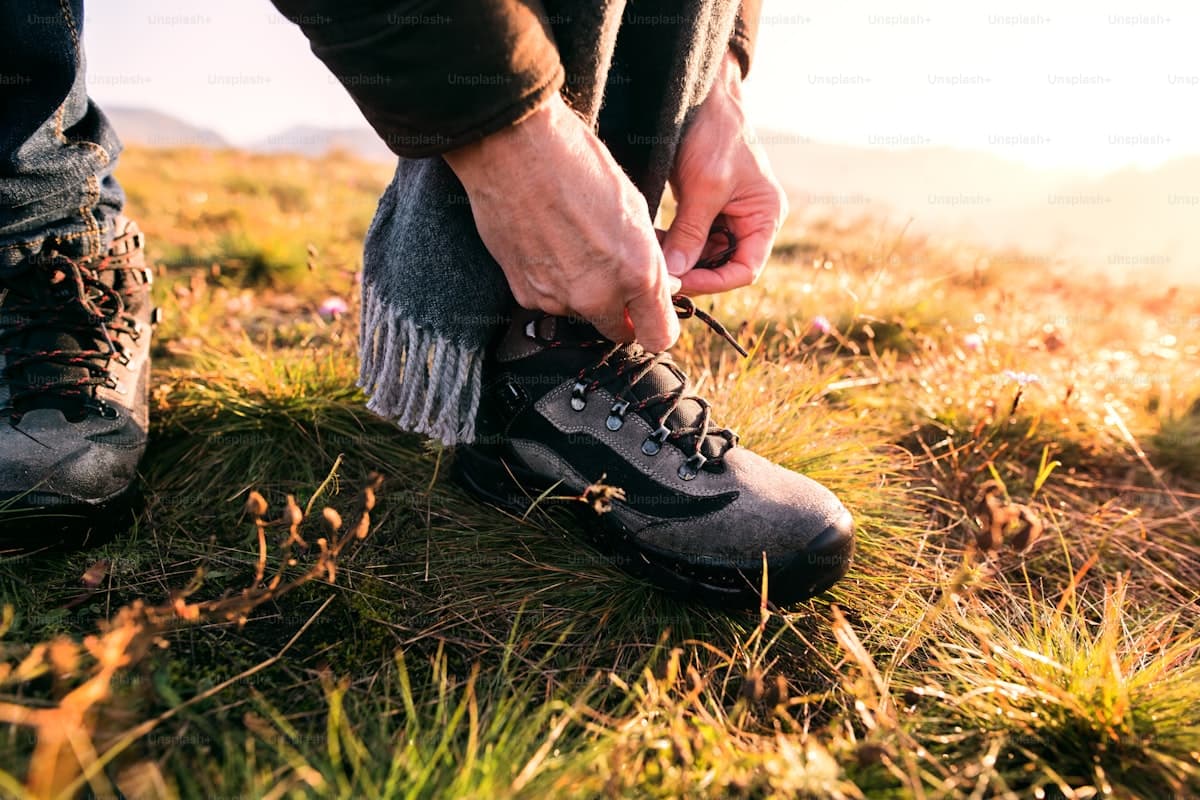
How to Choose Hiking Boots: The Complete Buying Guide
If there's one investment to make before hitting the trails, it's your footwear. A poorly adjusted backpack takes two seconds to fix, a forgotten jacket is forgivable in good weather, but the wrong pair of hiking boots can turn any outing into misery. Blisters, slips, ankle pain: most hiking discomfort starts with the feet.
Yet with dozens of models available in stores and online, choosing the right pair can quickly become overwhelming. High-cut or low-cut? Gore-Tex or not? Stiff sole or flexible? This guide gives you all the keys to making the right choice, whether you're a beginner or a seasoned hiker.
Understanding Hiking Boot Types
Not all hiking boots are created equal, and there's no one-size-fits-all model. The right choice depends on your activity, terrain, and trip duration.
Low-Cut Shoes (Approach / Trail)
Low-cut hiking shoes look like reinforced trainers. They're lightweight, flexible, and offer great ankle freedom of movement.
Who are they for? Experienced hikers on maintained trails, fast hikers, or light trail runners. Also ideal for short walks (under 3 hours) on flat terrain.
Advantages:
- Lightweight (often under 800 g per pair)
- Immediate comfort, no break-in period
- Good ventilation
Limitations:
- No ankle support on technical terrain
- Limited protection against rocks and roots
- Less durable than mid or high-cut models
Mid-Cut Boots (Intermediate)
Mid-cut boots rise above the ankle without fully enclosing it. They're the most popular compromise.
Who are they for? The vast majority of hikers, from beginners to experienced. Perfect for day hikes on varied terrain.
Advantages:
- Good ankle support without excessive rigidity
- Protection against rocks and debris
- Terrain versatility (trail, forest, light scree)
Limitations:
- Slightly heavier than low-cuts (900 g to 1.2 kg)
- Some models need a short break-in period
High-Cut Boots (Trekking / Alpine)
High-cut trekking boots fully encase the ankle with a rigid upper. They're designed for difficult terrain and long outings with a heavy pack.
Who are they for? Multi-day treks, alpine routes, technical trails with scree and snow patches.
Advantages:
- Maximum ankle support
- Very rigid sole, ideal for rough terrain
- Reinforced protection (toe cap, high upper)
- Some models are crampon-compatible
Limitations:
- Heavy (1.2 to 1.8 kg)
- Break-in period required
- Less comfortable on easy trails
The Essential Criteria for Choosing Well
The Outsole: Your Contact with the Ground
The outsole determines your grip and stability. It's a criterion that's often underestimated.
The lugs should be deep (at least 4–5 mm) and well-spaced to shed mud. Vibram outsoles are the industry benchmark — they offer excellent grip on wet rock, dirt, and grass.
Sole stiffness varies by intended use:
- Flexible: comfortable on easy trails, natural walking feel
- Semi-rigid: versatile, good compromise for day hiking
- Rigid: stability on technical terrain, essential with a heavy pack or on scree
Cushioning plays a crucial role on long distances. Good heel cushioning absorbs impact on descents and protects your joints. Models with an EVA or PU midsole offer the best balance between cushioning and durability.
Waterproofing: Gore-Tex or Not?
This is one of the most common debates among hikers.
Boots with a Gore-Tex membrane (or equivalent: OutDry, eVent) are waterproof and breathable. They keep your feet dry in rain, dew, and shallow stream crossings.
Advantages of a waterproof membrane:
- Dry feet = fewer blisters
- Comfort in wet conditions
- Wind-chill protection
Disadvantages:
- Less breathable than non-membrane mesh
- Warmer in summer (risk of excessive perspiration)
- Takes longer to dry once wet inside
Our advice: In Provence and southeastern France, where the climate is dry and warm for much of the year, a waterproof membrane isn't essential for summer outings. However, it's very welcome in spring, autumn, and for altitude hikes where weather changes quickly.
The Upper: Support and Protection
The upper is the part of the boot that wraps around your foot and ankle.
Materials:
- Full-grain leather: robust, durable, naturally water-resistant, but heavy and slow to dry. Ideal for trekking.
- Nubuck leather: softer than full-grain, attractive look, good durability/comfort balance.
- Synthetic (mesh + reinforcements): lightweight, quick-drying, breathable, but less durable. Perfect for day hiking.
The toe cap is a rubber reinforcement that protects toes and sides of the foot against impacts. It's essential on rocky terrain — and Provence has plenty of that.
The Lacing System: A Detail That Changes Everything
A good lacing system lets you precisely adjust the tightness for different zones of the foot:
- Moderate tightness at the front to let your toes move
- Firm tightness at the instep for support
- Adjustable tightness at the ankle depending on uphill or downhill
Lacing systems with hooks at ankle level let you differentiate upper and lower tightness. This is a real plus for downhill comfort: loosen the top to free the ankle.
Trying On Boots: The Golden Rules
The fitting is the most important step. A boot that's perfect on paper can be a nightmare on your feet.
When to Try?
In the late afternoon. Your feet swell during the day (up to half a size more). By trying boots in the evening, you ensure they'll be comfortable even after several hours of walking.
How to Try?
-
Wear your hiking socks (not everyday socks). Merino wool socks are the gold standard: they regulate temperature, wick moisture, and reduce friction.
-
Lace up properly: tighten the instep well, leave room for your toes.
-
The finger test: standing with your full weight on the boot, you should be able to slide one finger between your heel and the back of the boot. If it's too tight, go half a size up.
-
Walk on an incline: going downhill, your toes shouldn't hit the front of the boot. This is the number one cause of black toenails while hiking.
-
Test both feet: we often have one foot slightly larger than the other. Choose the size of the larger one.
Common Mistakes to Avoid
Mistake #1: Buying Too Small
This is the most common error. On descents, your foot slides forward. If the boot is too tight, your toes hit the front with every step. Result: blisters, black toenails, pain. Always go half a size to a full size above your usual shoe size.
Mistake #2: Neglecting Socks
The best boots in the world are useless with bad socks. Forget cotton (it absorbs sweat and stays damp, promoting blisters). Invest in 2–3 pairs of merino socks or technical synthetic ones.
Mistake #3: Hitting the Trail Without Breaking In
Leather or stiff-upper hiking boots need a break-in of 20 to 50 km. Wear them around town and on short walks before setting off on a multi-day trek. Synthetic models are generally comfortable from day one.
Mistake #4: Choosing Looks Over Comfort
A hiking boot isn't a fashion shoe. Colour and design matter little compared to comfort, grip, and durability. Try several brands and models — each manufacturer has different shapes (Salomon tends narrow, Meindl tends wide, for example).
Mistake #5: Ignoring Maintenance
Well-maintained boots last two to three times longer:
- Clean them after every outing (soft brush + lukewarm water)
- Remove the insoles for drying
- Never dry them near a heat source (radiator, direct sunlight)
- Regularly waterproof leather models with a suitable waterproofing spray
What Budget to Expect?
Hiking boot prices vary considerably depending on the range and intended use:
| Range | Indicative Price | Typical Use |
|---|---|---|
| Entry-level | €60 – €100 | Occasional walks, easy trails |
| Mid-range | €100 – €180 | Regular hiking, varied terrain |
| High-end | €180 – €300 | Trekking, alpine, intensive use |
Our advice: For regular use (1 to 2 outings per month), aim for mid-range (€120–€160). It's the best value for quality, price, and durability. A good pair in this range will last 800 to 1,200 km.
Our Picks by Activity Type
For Day Hiking in Provence
For the sunny trails of the Gorges du Verdon, the ridges of the Alpilles, or the hills of the Luberon:
- Mid-cut, Vibram outsole, breathable mesh
- Waterproofing optional (depending on season)
- Weight: 800 g to 1.1 kg
For Multi-Day Trekking
For long-distance routes like the GR9 through the Luberon or the GR51 along the coast:
- High-cut, nubuck leather or reinforced synthetic upper
- Waterproof membrane recommended
- Rigid sole, good cushioning
- Weight: 1.1 to 1.5 kg
For Fast Hiking and Light Trail
For sporty outings on technical trails:
- Low-cut, highly grippy outsole
- Breathable mesh, quick-drying
- Low drop (4–8 mm) for a natural stride
- Weight: 500 to 800 g
Ready to Lace Up and Hit the Trail?
Choosing the right hiking boots is an investment that will carry you for hundreds of kilometres. Take the time to try them on, don't skimp on quality, and above all: trust your feet. They'll have the final say on the trail.
Once you're well shod, all that's left is to choose your route. With OpenRando, explore thousands of hikes with GPX tracks, elevation profiles, and interactive maps. Whether you're looking for a family stroll or a sporty trek, you'll find the perfect route to break in your new boots.
As an Amazon Associate, we earn from qualifying purchases. Links marked with an external icon are affiliate links.
Related reading
How to Choose a Hiking Backpack: The Complete Guide
Volume, carrying system, adjustments, compartments… All the criteria for choosing the ideal hiking backpack based on your activity, trip duration, and body type.
How to Care for Your Hiking Boots: The Complete Guide
Cleaning, drying, waterproofing, leather conditioning: everything you need to know to maintain your hiking boots and make them last for years.

How to prepare your first hike in Provence: a practical guide
Everything you need to know for your first hike in Provence: choosing the right trail, gear for the Mediterranean climate, best seasons, and 8 easy trails to get started.