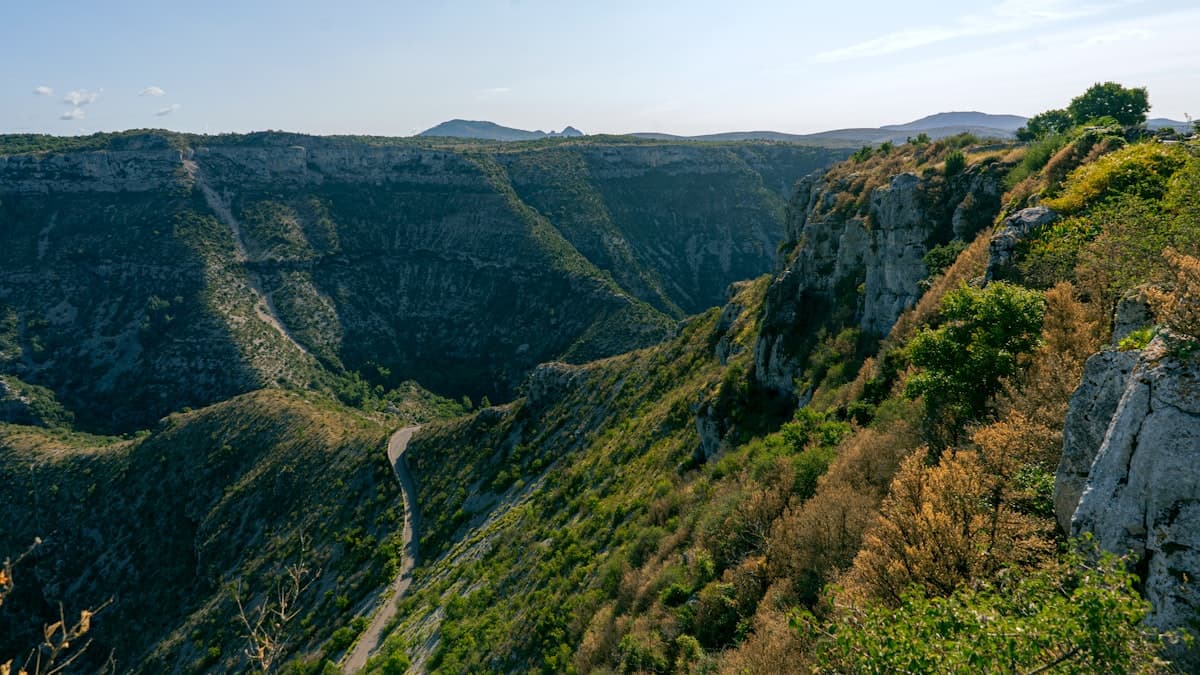
The 10 best hikes in the Cévennes
The Cévennes — a UNESCO World Heritage Site — are France's wild heart. Between gorges carved into granite, centuries-old chestnut forests, schist hamlets clinging to ridgelines and wind-swept limestone plateaus, every trail here tells an ancient story. This is where Robert Louis Stevenson crossed the mountains with his donkey Modestine in 1878, inspiring one of the most celebrated walking travel books ever written.
Today, the Cévennes offer exceptional terrain for hikers: over 3,000 km of waymarked trails, remarkable biodiversity (griffon vultures, otters, red deer), and a unique atmosphere that blends the South of France with mountain wilderness. Whether you're after a family-friendly walk along the Gardon river or a challenging ridge hike above the clouds, this massif delivers.
Here are our picks for the 10 best hikes in the Cévennes.
1. Le Ranc de Banes and the Jumeaux — above Sumène
Distance: 14.4 km | Elevation: +737 m | Level: Intermediate | Duration: 5h30
This loop from Sumène reveals one of the most striking panoramas in the Gard Cévennes. The Ranc de Banes is an impressive rocky cirque carved into schist, topped by two characteristic pinnacles nicknamed "the Twins" (les Jumeaux). The climb through chestnut forest is gradual, with expanding views over the Vidourle valley.
At the summit, the view opens onto the entire Cévennes — from Mont Aigoual to Pic Saint-Loup and across the causses. The descent follows a balcony path that skirts the cliffs, with a few technical passages to keep things interesting.
The highlight: the rock formations at the top, sculpted by erosion into a chaos of perfectly balanced stones.
2. Cascade Loop on the Vidourle — Dolmen de la Galaberte
Distance: 14.2 km | Elevation: +279 m | Level: Easy | Duration: 4h
An accessible hike that weaves together water, prehistoric heritage and Cévennes landscapes. From Fabre, the trail follows the banks of the Vidourle — a capricious river that swings between summer droughts and spectacular flash floods. Natural swimming pools are perfect for a dip in summer.
The Dolmen de la Galaberte, perched on a grassy ledge, is one of the best-preserved megalithic monuments in the area. This 5,000-year-old stone structure is a reminder of the ancient and dense human presence in these hills. Make sure your feet are comfortable with a good pair of lightweight waterproof hiking shoes — ideal for riverside trails.
The highlight: the main waterfall, where the Vidourle drops over a rocky ledge in a frame of Mediterranean forest — breathtaking after autumn or spring rains.
3. Saint-Martial Loop — The Cévennes family hike
Distance: 14.9 km | Elevation: +522 m | Level: Intermediate | Duration: 5h
Saint-Martial is one of those timeless Cévennes hamlets — schist houses with lauze-stone roofs, abandoned shepherd huts, and terraced fields slowly reclaimed by maquis scrubland. The loop from the village explores the surrounding ridges via isolated farmsteads and chestnut groves that turn golden in autumn.
The route is varied: sunken lanes, paths edged with dry-stone walls, open ridge sections with views toward the Larzac plateau. Perfect for hikers looking to immerse themselves in authentic, rural Cévennes.
The highlight: the ancient terrasses (agricultural terraces) being steadily reclaimed by vegetation — silent witnesses to centuries of peasant farming life.
4. At the Gates of the Cévennes
Distance: 15.6 km | Elevation: +437 m | Level: Intermediate | Duration: 5h
This trail explores the boundary between Mediterranean garrigue and the Cévennes proper — a fascinating botanical and climatic transition zone. Within a few kilometres, you pass from holm oaks and cistus scrub to chestnut and beech trees, feeling the air cool and the atmosphere shift completely.
The hike offers views over the first Cévennes foothills, with their jagged ridges and deep-cut valleys. It's an ideal introduction to understanding the geography and ecological richness of this unique territory.
The highlight: the gradual shift in landscapes, perfectly illustrating the ecological diversity of the Cévennes — from Mediterranean sunshine to mountain freshness in just a few steps.
5. Pic d'Arbousse and Signal de Saint-Pierre — from Saint-Jean-du-Gard
Distance: 17.2 km | Elevation: +654 m | Level: Challenging | Duration: 6h
Saint-Jean-du-Gard is the tourist heart of the Cévennes — the terminus of the historic steam train and starting point for many trails. This ambitious loop climbs to Pic d'Arbousse (846 m) and Signal de Saint-Pierre, two summits offering contrasting views: the lush Gardon valley on one side, bare ridges on the other.
The ascent through chestnut forest is particularly beautiful in autumn, when chestnuts carpet the paths and the colours turn russet and copper. For a long day out, a good pair of lightweight trekking poles will spare your knees on the descents.
The highlight: the view from Signal de Saint-Pierre across the full length of the Gardon valley — and on clear days, all the way to the Mediterranean.
6. Viewpoint Loop — Vallée de l'Arre from Bez-et-Esparon
Distance: 17.4 km | Elevation: +651 m | Level: Challenging | Duration: 6h30
The Arre valley is one of the most beautiful in the Cévennes, less frequented than the Gardon or Vidourle valleys. This loop from the charming village of Bez-et-Esparon climbs to a belvedere that takes in the entire valley in one sweeping glance — a jaw-dropping spectacle.
The trail alternates between cobbled mule tracks (the old transhumance routes known as drailles), mixed forest and gorse moorland. The descent via the north-facing slope is cooler and more humid, with tree ferns and babbling streams threading between boulders.
The highlight: the ancient drailles — transhumance paths traced over centuries of livestock movement, some still perfectly paved with rounded river stones.
7. Mialet Viewpoint Loop — Gardon de Mialet from Corbes
Distance: 17.8 km | Elevation: +546 m | Level: Intermediate | Duration: 6h
The Gardon de Mialet is one of the wildest rivers in the Cévennes. This trail from Corbes follows it through its most enclosed section before climbing to the ridges above Mialet — a Gard village known for the Musée du Désert, a key site of Huguenot resistance history.
The path hugs the river for kilometres, crossing polished granite slabs, fording shallow streams (waterproof boots recommended) and passing natural bathing spots. The climb to the ridge is rewarded with a bird's-eye view down onto the valley and Mialet village.
The highlight: the pink granite slabs on the valley floor, polished smooth over millennia of erosion — you can walk on them barefoot in summer.
8. Serre de la Toureille Loop — Col de Peyrefiche
Distance: 14.2 km | Elevation: +596 m | Level: Intermediate | Duration: 5h
The Serre de la Toureille is a long ridge separating two Cévennes valleys. From Saint-André-de-Majencoules, the climb to the Col de Peyrefiche follows a forest track through ancient beech groves — a world apart from the Provençal garrigue.
Once on the ridge, the view extends west toward the Cirque de Navacelles and east to the rounded summits of the high Cévennes. The descent on the far side reveals a landscape of gorse moorland and high-altitude meadows where small flocks still graze.
The highlight: the Col de Peyrefiche itself — an ancient crossroads from which mule-drivers once headed down to the markets of the plain. The granite cross still standing there has watched centuries of passers-by.
Practical tips for hiking in the Cévennes
Essential kit
The Cévennes combine varied terrain with rapidly changing conditions. Here's what you need:
- Waterproof hiking boots with ankle support — trails are often wet and rocky
- A 25–35 litre pack with an integrated or clip-on rain cover
- A packable waterproof jacket even in summer (afternoon storms arrive fast)
- At least 2 litres of water — springs are not always accessible
- IGN 1:25,000 map (blue series) for your area
Accommodation on the trails
The Cévennes are well set up for long-distance walkers: gîtes d'étape in villages, bed and breakfast in traditional mas farmhouses, and a handful of unmanned shelters on the ridges. The GR70 (Stevenson Trail) and GR67 (Cévennes tour) both have a dense network of accommodation.
Don't miss
- Mont Aigoual: the summit of the Cévennes (1,565 m), with its historic weather observatory and views to the sea on clear days
- Cirque de Navacelles: a fossilised meander of the Vis river — one of the most spectacular geological curiosities in the Languedoc
- Florac: the capital of the Cévennes National Park, a great base for exploration
- Le Pont de Montvert: where the Camisard uprising began in 1702 — Protestant Cévennes history is woven into every village
OpenRando in the Cévennes
Find all these hikes and dozens more on the OpenRando map, with downloadable GPX tracks, field photos and hiker reviews. Filter by difficulty, distance or elevation gain to find the perfect route for your level.
The Cévennes resemble no other French massif. Neither Alps nor Pyrenees, neither Mediterranean nor Massif Central — they are all of these at once, in a unique blend of wildness and human history. Every hike here is a plunge into a landscape that has resisted the centuries.
Grab your poles — the Cévennes are waiting.
As an Amazon Associate, we earn from qualifying purchases. Links marked with an external icon are affiliate links.
Related reading
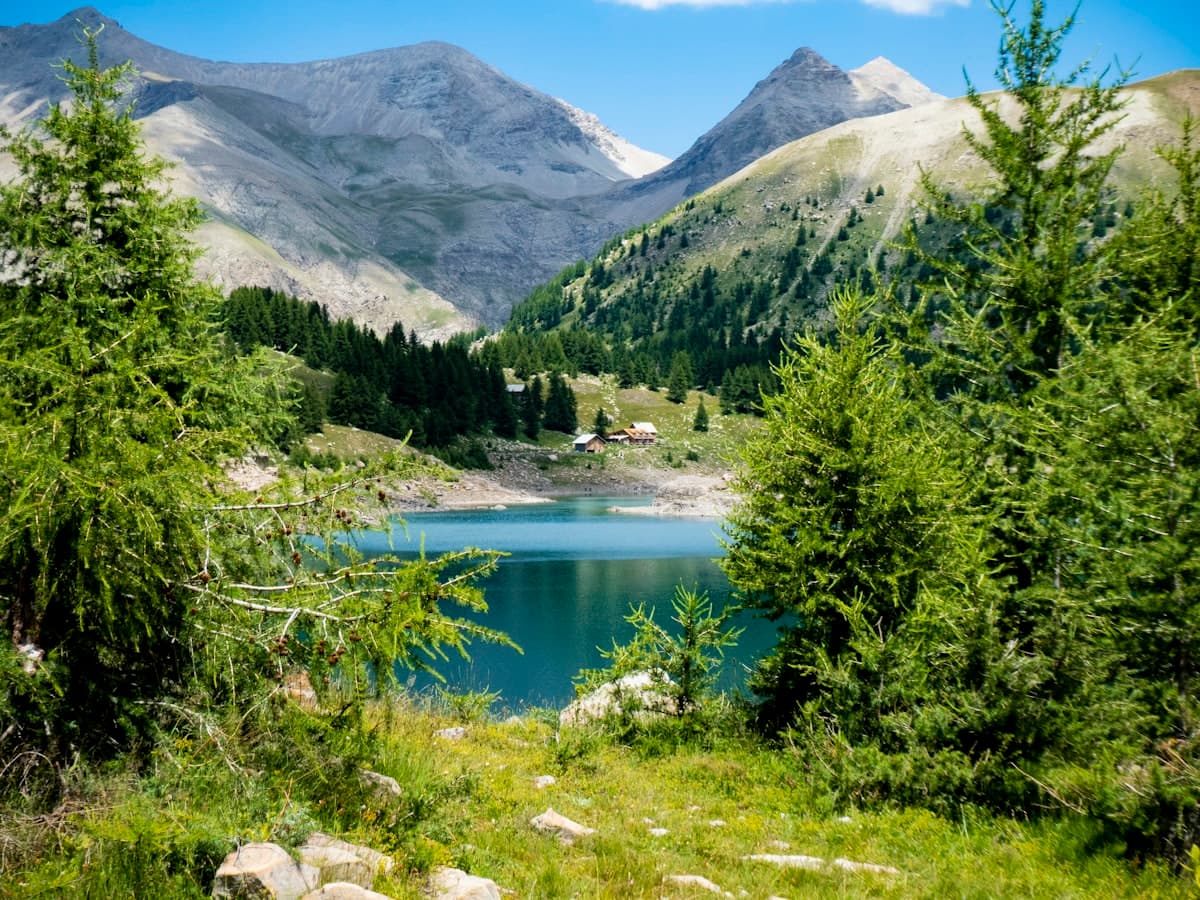
The Mercantour trails: 10 wild hikes
Discover 10 wild hikes in the Mercantour National Park: high-altitude lakes, Italian mountain huts, glacial valleys and breathtaking views between the Alpes-Maritimes and the southern Alps.
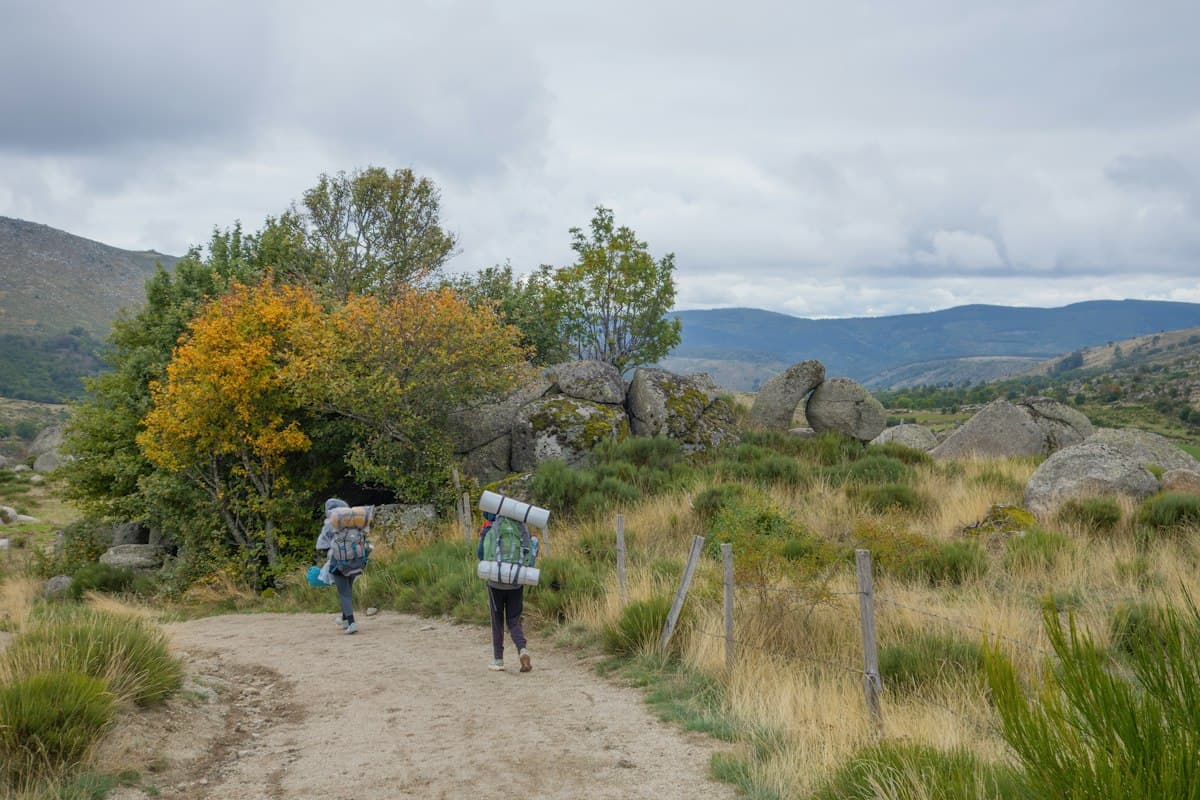
Mont Lozère on Foot: 6 Hikes to Discover the Roof of the Cévennes
Six hikes on Mont Lozère: Finiels summit, transhumance drailles, granite chaos and stone hamlets. The complete guide to the granite massif of the Cévennes.
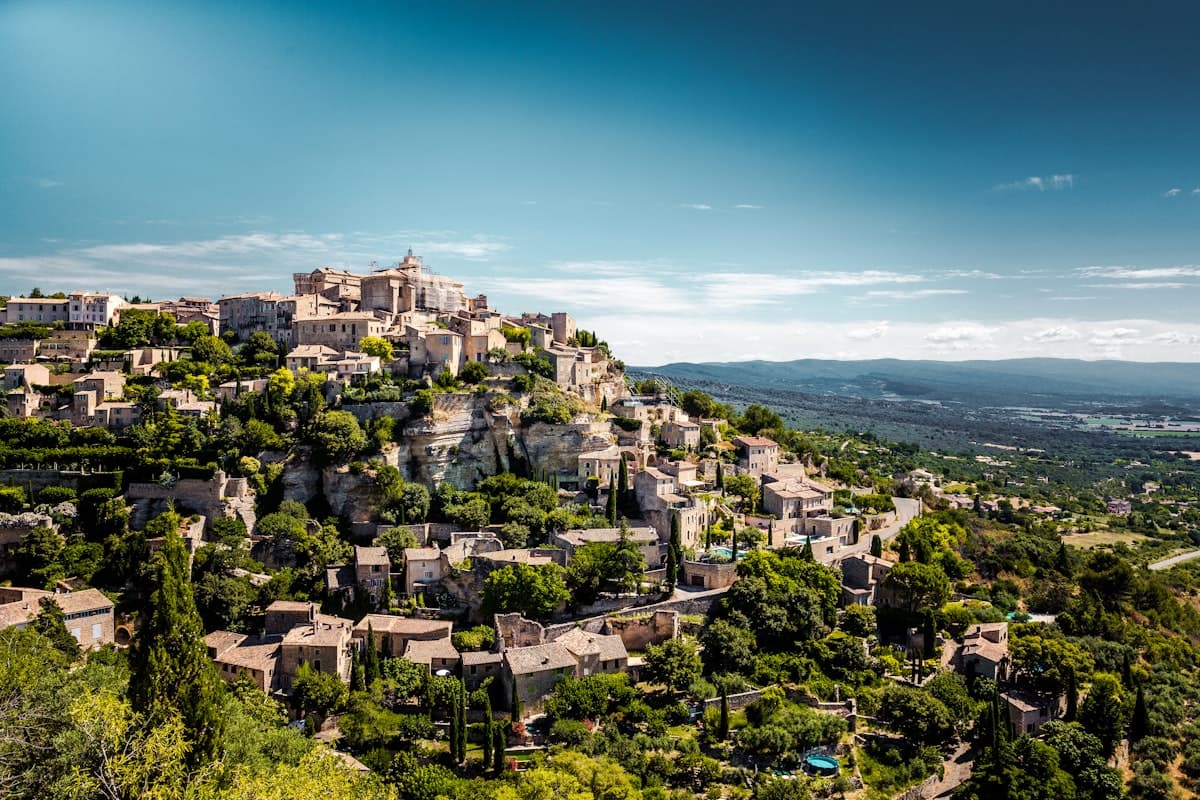
The 10 Most Beautiful Hikes in the Luberon
Discover our selection of the 10 most beautiful hikes in the Luberon: perched villages, wild gorges, cedar forests and stunning Provençal panoramas. Routes, tips and GPS tracks.